
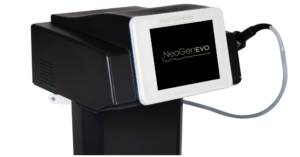
Neogen Plasma Treatment


Neogen Plasma Treatment Cheshire Middlewich


What is Neogen Plasma?

Neogen Plasma is a device made by Energist in Wales, which has become one of the most popular skin rejuvenation treatments.

It improves the skin surface, treating pigmentation and poor texture while boosting collagen and elastin to reduce wrinkles and fine lines and simultaneously tightening the skin.

Unlike traditional laser treatments that work only on the skin’s surface, Neogen also penetrates deeper layers, making it a superior option for anyone seeking to reverse signs of ageing, repair sun damage, or improve overall skin texture and tone.


How does Neogen Plasma work?

The device passes inert nitrogen gas through a high frequency energy field, which converts it into plasma — the fourth state of matter, alongside solid, liquid and gas. The handpiece delivers that plasma energy to the skin as heat.

Two things separate it from a laser. It does not target a colour in the skin, so it is not seeking out pigment or water, and it heats the whole treated area evenly rather than in a pattern of dots, so nothing is left untreated in between.

The heat reaches into the dermis, the deeper layer where collagen and elastin are made, and the controlled injury there starts the skin’s own repair process. Most of the work is done here — new collagen builds up and supports and firms the skin from within.

The heat also makes the skin peel, and that is how the changes at the surface happen. The treated outer layer stays in place as a natural dressing while the skin underneath regenerates, then sheds, reducing visible signs of sun damage and rough texture. How much peeling you get depends both on the strength of the treatment and on how your own skin responds: at lower settings it is usually minimal flaking and at higher settings more significant, but some people peel a good deal more than others at the same setting.

Some tightening is visible straight away, but most of the improvement builds gradually over the months that follow, as the new collagen forms.


Is it similar to a Plasma Pen device?

No, it is very different from handheld devices, which create tiny injuries on the skin’s surface. Neogen uses nitrogen gas, which it converts into plasma energy. This energy treats the skin more uniformly on the surface and penetrates deeper into the skin. It improves both the epidermis and dermis layers, stimulating collagen production over time while treating a range of skin concerns.
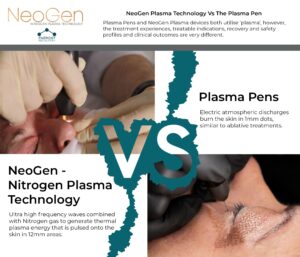
Neogen Plasma Treatment Cheshire difference between plasma pen


What does a Neogen treatment involve?

Cheshire Lasers uses the latest Neogen Plasma EVO Device, which has a range of settings to control the energy and enable various treatments, from mild to moderate to more aggressive.  This ensures the outcome of the treatment chosen for you is predictable and reliable, with minimal risk of complications.

A handpiece delivers the nitrogen plasma energy and rapidly heats the skin, creating a controlled injury.

Most patients describe the feeling as warm but not painful. The intensity of the heat, however, can vary depending on the depth and intensity of the treatment. Lighter treatments feel milder, while more intensive sessions produce a stronger sensation that may require a topical anaesthetic.

The injury to the top layer leads to some superficial shedding of skin cells. This improves the skin’s texture, especially fine lines,  age spots, and acne scars. It also triggers your body’s natural healing response, creating healthy new collagen and elastin, resulting in immediate skin tightening and firmer, tighter skin over time.

Whether you’re looking to enhance the overall appearance of your skin or target specific concerns, Neogen offers a tailored approach that meets your individual needs and downtime.


Which areas can Neogen Plasma treat?

At Cheshire Lasers, we mainly treat the face with Neogen Plasma; however, we also treat the body.

This is the only treatment we can use to treat the eyelids.


What skin issues can it treat?

Neogen plasma skin rejuvenation is a versatile treatment that addresses a wide variety of skin concerns, including:

  • Hooded eyes
  • Eyelid laxity (inc. crow’s feet folds, heavy lids, under-eye folds)
  • Lines & wrinkles
  • Large pores
  • Pigmentation (sunspots, freckles)
  • Poor texture
  • Sun damage /photodamage
  • Skin laxity
  • Actinic (solar) keratosis
  • Scars
  • Stretch marks

These improve in two different ways. Large pores, fine lines, skin laxity and hooded lids improve because Neogen builds new collagen and elastin. Collagen is what supports the skin around each pore, and as it is lost with age that support goes, so the pores widen and look larger — rebuilding it firms the support again. Pigmentation, sun damage and poor texture improve as the treated surface peels away and is replaced. Scars and stretch marks improve through a combination of the two.

Read more about our treatments for large pores
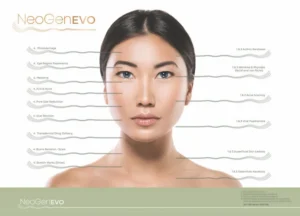
Neogen Treatment concerns and areas Cheshire


What are the benefits of Neogen skin rejuvenation?

If you’re considering Neogen skin rejuvenation at our Cheshire Lasers Clinic, here are some of the key benefits that make this treatment stand out:

  • Non-Invasive: Neogen is a non-surgical, non-invasive treatment with minimal discomfort and downtime.
  • Quick Recovery: Most patients can return to their daily routine shortly after treatment, with any redness typically subsiding within a few days.
  • Long-Lasting Results: The skin continues to improve for months after the treatment as collagen production is stimulated.
  • Safe for All Skin Types: Neogen plasma technology is safe for all skin tones and types, making it a versatile option for anyone seeking rejuvenation.
  • Customisable Treatment Levels: Whether you’re looking for a mild refresh or a more intensive anti-ageing solution, Neogen can be tailored to your specific skin needs.

What to expect during your Neogen treatment

Before your Neogen treatment, we ask that you attend a consultation with one of our specialists. They will assess your skin and create a treatment plan to suit your needs.

During the procedure, the practitioner will use the plasma device to deliver controlled energy to the treatment area, creating a warming sensation as the nitrogen plasma works its magic.

Sometimes, we will apply a topical anaesthetic, but this is only necessary if you are opting for a deeper treatment. Depending on the intensity of the treatment, sessions usually last between 30 minutes to an hour.

After treatment, we will give you some products to use on your skin for the next few days to ensure you avoid any products that may irritate or delay the healing process.
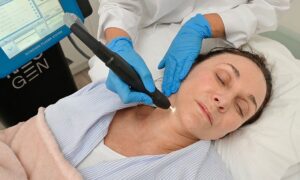
Neogen Plasma Treatment Cheshire


What do I need to do before and after my Neogen Plasma treatment?

View the Cheshire Lasers Neogen Treatment Information guide here. It covers pre-treatment and post-procedure advice to prepare you for your Neogen journey.


View information about patients’ Neogen Plasma treatments and before and after images.


How do I book a Neogen skin rejuvenation treatment?

If you’re ready to experience the incredible benefits of Neogen skin rejuvenation treatment, decide whether to start your journey with a low-intensity or a more intense doctor-led one. Then book a consultation to discover how Neogen can transform your skin and help you achieve your aesthetic goals.

Contact us on 01606 841 255 or book online:

Book your Consultation with our Neogen aesthetician for a low-level treatment here.

Book your Consultation with Dr Johnson for a medium or high-level treatment here. 


How much is Neogen Plasma treatment?

Neogen Plasma starts from £200 for a small area such as the upper lip or half eye. A full face treatment starts at £500, depending on the energy level used.

Neogen is sometimes included in special offers — see this month’s offers.
View our Neogen treatment prices here


RadioFrequency Microneedling


Dermaforce microneedling


At Cheshire Lasers, we use Dermaforce to deliver RadioFrequency (RF) Microneedling. This advanced treatment combines microneedling with Radiofrequency (RF) technology to effectively treat a large number of cosmetic concerns, with excellent results.

This combination treatment has become more and more popular recently due to improvements in the way the technology is used to deliver better results. It is also more popular due to its extensive coverage on social media and in the press.


How RadioFrequency Microneedling Works

Insulated fine gold-plated needles deliver Bi-Polar Radio Frequency (RF)  into the skin. The depth of the treatment varies depending on the skin concerns that need treating. The radiofrequency energy heats the tissue in the region of 55 – 65°C and, depending on the depth, will stimulate cell renewal, new collagen, increased hydration and resurfacing.

how RadioFrequency Microneedling Works

how radiofrequency microneedling works


How is New Collagen Stimulated?

The energy/heat released into the skin causes immediate trauma to the existing mature, dehydrated collagen cells causing contraction and damage to this tissue. This damage stimulates a fibroblast action (fibroblasts are the connective tissue cells that produce collagen and elastin) which results in the production of new collagen and an increase in the diameter of the collagen fibres. The spaces between the fibres are also reduced.

This result causes an increased density of the dermal layer giving a skin-tightening effect.


What Can RadioFrequency Microneedling Treat?

  • Loose and Sagging Skin
  • Fine Lines and Wrinkles
  • Pitted Skin
  • Uneven skin texture
  • Stretch Marks

Which areas can it treat?

We usually recommend a full-face treatment rather than treating specific facial areas. However, we can focus more on specific areas if they need more improvement.

Areas that RF Microneedling work well on include:

  • Crows feet
  • Neck and décolletage
  • Perioral/ Mouth area
  • Jowls and jawline
  • Large pores
  • Scaring

RF Microneedling can also treat areas on the body, including hands, arms, knees and abdomen.


Before and after RF Microneedling

before and after RF microneedling treatment

After one treatment at Cheshire Lasers. before and after RadioFrequency Microneedling

Before and after supplied by the manufacturer


Contraindications to RF Microneedling

  • Pregnancy, recent pregnancy or breastfeeding
  • Pacemakers
  • Metal Implants near the treatment area ( within 2.5cm ) Exclude fillings and most dental work.
  • Infected or inflamed skin
  • Any active infection
  • Uncontrolled Diabetes and Epilepsy
  • Some Auto-Immune Conditions
  • Active Cancer
  • Keloid Scarring (historical or current)
  • Skin-thinning medication, including Roaccutane and steroid medication
  • Anticoagulant Medication
  • Selected Immunosuppressants
  • Hernia or Mesh near the treatment area

If you have a history of cold sores, you must discuss this at your consultation.


Intervals Between Other Treatments.

For the following cosmetic procedures, allow a two-week window before and after treatment:

  • Botox
  • Superficial Peels
  • Microdermabrasion
  • IPL / Laser

If you have had the following procedures in the treatment area in the last 18 months, you will require a medical assessment to assess your suitability:

  • Dermal Fillers
  • Sculptra
  • Skin Boosters
  • Threads

If it is in a different area, treatment can be commenced 2-8 weeks later, depending on your assessment.

  • Stop retinol products and Prescription Vitamin A treatments three days before treatment and restart at least three days after, or once the skin has fully recovered.

What is an RF Microneedling Treatment Like?

The treatment can be uncomfortable due to the needling and the heat generated. We can reduce the discomfort by applying anaesthetic cream before your treatment.

During the treatment, your skin will go red and will start to feel warm, like sunburn.

during a RF microneedling treatment

During Treatment


skin appearance after an RF microneedling treatemnt

Shortly after Treatment


You will see red squares on your skin due to heat energy and the vacuum in the handpiece. These squares usually go in a few hours, but sometimes it can take a few days for them all to go from the face, and even longer after body treatments.

  • Up to 24 hours: you will possibly experience erythema and mild swelling.
  •  2–3 days: reduced erythema and minor skin dryness and flaking.
  • 3–4 days: potential dryness.
  • 4–5 days: full recovery.
  • 4–6 weeks: improvement in collagen health visible.

Side Effects after RF Microneedling

Expected side Effects Include:

  • Redness for up to 24 hours
  • Mild Swelling up to 24hrs
  • Dryness and Flaking for around three days

Complete recovery usually occurs 3 to 5 days after treatment.

Less Common Side Effects Include:

  • Bruising
  • Prolonged redness or red patches for several days
  • Prolonged dryness and flakiness for a week

Please contact us if you experience any other side effects after your treatment,


Pre-Treatment Advice:

  • Stop using ‘active’ skincare three days before treatment (ie. AHA, BHA, Retinol (Vitamin A)).
  • Avoid direct sun exposure before and after treatment.
  • Excessive facial hair, beards and moustaches need to be clean-shaven prior to treatment.
  • Avoid the use of aftershaves and perfumes on the treatment area.

Post-Treatment Care

  • Avoid direct sunlight for 24 hours, and no sunbeds during your Dermaforce course.
  • Do not apply spray tan or self-tan for 2–3 weeks post-treatment.
  • Use SPF 50 sunscreen.
  • Avoid touching the skin directly after treatment.
  • Keep skin dry for 24 hours and avoid scratching
  • Avoid active skincare for 3–5 days after treatment.
  • No swimming for 24 hours
  • No exercise or strenuous activity that will cause sweating until the skin has recovered.

Post-Treatment Suggestions

  • Use a clean pillowcase.
  • Use hydrating and anti-inflammatory skincare.
  • Avoid non-mineral makeup for 24 hours.
  • Avoid swimming, hot tubs, saunas and active exercise for 48 hours.
  • Consider the environment. Hot, humid conditions can contribute to excess inflammation.
  • Avoid shaving area for 24–48 hours
  • Do not allow pets to lick the skin
  • Face masks should be disposed of and not reused.
  • Do not pick flaky skin.
  • Drink plenty of water

RadioFrequency Microneedling Prices

Radiofrequency microneedling starts at £350 for a single area such as the neck or décolletage. A full face treatment is £400, or £525 including the neck. Prices are per treatment.

Radiofrequency microneedling is often included in our aesthetician special offers — see this month’s offers.


Book a consultation

Book a consultation here.


EndyMed Jawline Shaper


endymed jawline mini shaper treatment cheshire


What is the EndyMed Jawline Shaper Treatment?

Cheshire Lasers Clinic is excited to introduce the Endymed Mini Shaper.

This innovative handpiece has a unique concentric electrode surface, which provides focused 3DEEP Radiofrequency energy deep into the skin for maximum results. The Mini-Shaper is the most effective handpiece available today for treating the jowls and under the chin.

The Mini Shaper stimulates collagen production and increases fat cell turnover. This allows us to contour the jawline and deliver an effective tightening action to treat sagging, lax skin as well as improve tired, dull skin.


How does the EndyMed Jawline Shaper work?

The shaper handpiece delivers controlled radiofrequency energy delivery exactly where it needs to be. The radiofrequency energy penetrates the dermis down to 7mm which is much deeper than our other treatments.  The Mini-Shaper offers nearly twice the power than other similar-sized RF treatment handpieces on the market. It also maintains tissue heat for long after the treatment is complete, providing extremely effective heating.

The heat energy stimulates existing collagen and encourages the production of new collagen to give tighter, firmer more lifted skin. It also focuses on fat cells which helps reduce the heaviness of the jawline to deliver an improved contour.

The following diagram demonstrates the treatment area:
endymed jawline mini shaper treatment cheshire


How soon can I see results?

Results can be seen immediately but a course of treatments are required for the best long-term results.

The pictures here show the results before and after only one treatment. These results are short term and will improve and last longer after a course of treatments.
before and after endymed jawline mini shaper treatment cheshire

before after endymed jawline mini shaper treatment cheshire
Ultraformer Jowl Treatment


Who is the EndyMed Jawline Shaper Treatment suitable for?

This treatment is suitable for all skin types. We highly recommend it if you have heavy drooping jowls or have skin laxity and sagging under the chin.


Is there any downtime?

The EndyMed Jawline Shaper treatment is painless with little to no downtime. You may experience some redness in the treated areas, but this will subside within a few hours.


How many treatments will I need?

We recommend a course of six treatments for optimal results. Ideally, we like to book the treatments every 1-2 weeks.

Following the initial treatment course, we recommend one treatment every 2-3 months thereafter to maintain the best possible results. However, some people are happy with the results of a maintenance treatment every 3-6 months.


How much is an Endymed Jawline Shaper Treatment?

View the prices for our Endymed treatments here.

View our Special Offers for Endymed Treatments here. 


Am I suitable for any other Jowl Treatments?

Find out about Cheshire Lasers’ other Jowl Treatments here. 


More Endymed Jawline Shaper before and after images:

endymed jawline mini shaper treatment cheshire


Semi Permanent Makeup Removal


laser semi permanent eyebrow removal


If your semi-permanent makeup or microbladed eyebrows have not turned out as you hoped, they can usually be faded. Brows sit in the middle of your face, and most people who come to us have been unhappy with theirs for some time before they ring.

We use a Q-switched laser to break down the unwanted pigment, either across the whole brow or in a smaller area you want changed. It is a gradual process over several treatments rather than a single fix. Everything below explains what is involved, how long it takes and what your brows will look like in between.

How do you remove Semi Permanent Makeup and microbladed eyebrows?

At Cheshire Lasers, we use our Lynton Lumina Q Switched laser to remove semi-permanent makeup eyebrows and micro-bladed eyebrows. This is the same machine we use for removing conventional tattoos. Unfortunately, it is not possible to remove eyeliner or lip liner this way.


Can you correct an area instead of removing the entire brow?

Depending on your concern, we can treat small areas to correct your eyebrows, or we can treat the whole eyebrow.


How does laser Semi Permanent Makeup removal work?

The laser cracks the semi-permanent makeup pigment tattooed into the skin to create smaller pigment particles. The body then breaks down these smaller particles and removes them slowly over time.


How often will I need treatment?

We normally recommend a treatment every 6 -12 weeks. This depends on how quickly you want it to fade.


How many treatment sessions will I need?

Most people need between 3-6 treatments. This will depend on whether you want the pigment to fade or go completely.


What unwanted effects can happen?

The commonest unwanted reactions often seen after laser treatment of semi-permanent make-up are:

  • eyebrow hair reduction
  • a change in the colour of brow pigment

Approximately 10% of the eyebrow hairs can be destroyed due to the laser treatment. Although we move these hairs out of the way during the removal process to prevent this as much as possible. In most cases, these hairs grow back, but the outcome varies from person to person.  Eyebrow hairs can also temporarily go paler, but you can tint these a week after the treatment.

The laser oxidises the pigment in the skin during treatment; when this occurs the pigmentation can change colour. Depending on the pigment, it can go darker in colour, or the colour can change to an orangey/rusty colour. Once the pigment is oxidised it can then be treated in subsequent treatment.


What will my brows look like after treatment?

You may see frosting and whitening of the pigment immediately after treatment, it is also common to see some pinpoint bleeding and some swelling. The reaction usually settles after 1-2 weeks.


How long after removal before I can have new Semi Permanent Makeup?

After laser treatment, we recommend you wait 8-12 weeks before commencing treatment.

Please ask us the exact time we recommend you wait as this will depend on many factors.


How soon after having my brows done can they be removed?

It is common for us to get an enquiry a day a or two after a brow treatment. This may be because the results are asymmetrical, poor shape, too dark, or just a poor result.

Given that brows are central and frame the face, even minor technical errors can be impactful, leading patients to seek rapid corrective treatment.

Unfortunatly we need to wait a minimum of 6–8 weeks after the original treatment before commencing laser removal.

Why is this delay necessary?

  • The epidermis must be fully restored to reduce the risk of blistering, scarring, and dyspigmentation.
  • Cosmetic pigments oxidise and settle over several weeks; treating too early can cause unpredictable colour shifts (e.g., red, orange, or yellow).
  • Swelling and erythema post treatment increases the risk of adverse effects.
  • Brows often appear darker for 7–14 days post-procedure; premature removal may be unnecessary.

How much is laser treatment of Semi Permanent Makeup?

Treatment Price
Consultation and patch test £30
Brow correction, treating a small area of the brow £66
Full brow treatment £78

Prices are per session, and most people need between three and six treatments. The patch test must be carried out at least seven days before your first treatment.

Book a consultation and patch test

You can view all our laser prices here


Before and after images of laser Semi Permanent Makeup removal


An eyebrow before and after semi-permanent makeup removalBefore and after one treatment

before and after tattoo brow removal

Before and after two treatments  and then four treatments (also had brow hair tint)

laser eyebrow treatments Cheshire


IPL and Laser Red Vein Removal


laser hair removal pigmentation thread vein removal Cheshire


Here at Cheshire Lasers, we offer a wide range of facial and body vein treatments. You can read an overview of all the treatments available for the different areas here.

For most people we find our Laser and Intense Pulsed Light (IPL) Treatments are the most effective treatments for removing facial veins.

At Cheshire Lasers, we mostly use our very effective Lumina AQS system made in Holmes Chapel by Lynton Lasers to remove thread veins. Is a very effective system that quickly removes veins that are too small for other removal techniques. The system has an IPL handpiece to remove small thread veins and red flushing and a laser handpiece for more stubborn larger veins.


Which Veins / Red lesions can Laser and IPL treat?

We can treat most red skin lesions on the face with our Lynton system, including thread/spider veins, rosacea, spider naevi, cherry angiomas and port-wine stains. We can also treat spider naevi and cherry angiomas anywhere on the body.

If you have leg veins – Cheshire Lasers recommends Sclerotherapy thread vein removal find out more here. 


How does IPL / Laser Red Vein Treatment work?

Laser and Intense Pulsed Light (IPL) are both light treatments. Lasers use a single, focused wavelength for precise targeting compared to IPL, which employs a broad spectrum of wavelengths, making it versatile for treating various red skin concerns.

The intense pulsed light system releases precisely controlled short pulses of filtered light that are absorbed by the blood cells, heating them to a point where they are destroyed. Following treatment, the vessels that contain them are also destroyed and reabsorbed by the body, leaving little or no trace of the original lesion.

Laser therapy for thread veins works by emitting concentrated beams of light that selectively target and heat the blood vessels, causing them to coagulate and collapse. Over time, the body naturally absorbs the collapsed vessels, gradually fading and reducing the appearance of thread veins.


Am I suitable for IPL Red Vein Treatment?

The fairer the skin, the easier the treatment.
Small solitary thread veins, spider naevi, and rosacea respond the best.
We can not recommend this treatment if you are pregnant or breastfeeding. You are also not suitable if you are on medication that makes your skin sensitive in general ( e.g. steroids) or makes it sensitive to light.
If you have a suntan or a dark skin type, you are not suitable for this treatment, and we would recommend Advanced Electrocautery instead.


What does an IPL / Laser Red Vein Treatment involve?

You will be asked to put on goggles to protect your eyes.

Depending on the treatment, we may apply a layer of chilled gel on the area to guide the light into the skin. We target the laser or IPL handpiece on the skin needing treatment and releasing light energy. We then move the handpick and target the neighbouring area.

Our laser technician will then use our cryo machine to cool the area and apply a cooling gel.


How does the treatment feel?

Most patients describe the discomfort as uncomfortable but acceptable. Sensations vary, but most describe the discomfort as a very quick hot pin prick.


Is IPL Red Vein Treatment Safe?

After treatment, the area may go red and feel warm for a few hours. Sometimes delicate skin areas such as the cheeks or décolletage could be red and slightly swollen for up to 48 hours and sometimes small blisters may form. The vessels should fade quickly. Rarely the skin may become lighter or darker, or larger blisters may develop.


How long does each treatment take?

Treatments typically take from 15 to 45 minutes, depending on the type and size of the lesion.


How many treatments are necessary?

Most people need between 1-5 treatments. This depends on the severity of the problem and how well it responds to treatment.
Treatments should be 4 to 6 weeks apart.


How do I arrange a Vein Removal at Cheshire Lasers?

Before starting your treatment, you will need a consultation appointment and a patch test to ensure you are suitable for the procedure.

Our Level 4 NVQ laser and IPL technician will provide a full consultation. The consultation helps to identify your expectations and gives you a complete explanation of the treatment.

Our technician will take a medical history to confirm your suitability for treatment. They will go through a consent form with you if you wish to start treatment. They will discuss the treatment in detail and what you should and should not do to avoid side effects to achieve the best results. Our technician will give you some written information to remind you of all the important information.
They will then perform a test patch to assess how you react to the treatment on a small area.


Who performs the IPL and Laser Red Vein Removal treatments at Cheshire Lasers?

At Cheshire Lasers, our NVQ Level 4 IPL and Laser technician performs all our facial thread vein removal treatments.


Before and after images for the Removal of Facial Red / Thread Veins with Laser and IPL:

thread vein removal Cheshirethread vein removal Cheshire


View our Cheshire Lasers – Laser and IPL Thread Vein Removal Leaflet.


How much is laser and IPL thread vein removal?

Laser and IPL treatment for facial thread veins starts from £60 for a single thread vein, and £100 for an area such as the full nose or chin. Prices are per treatment, and two to five treatments are usually needed. A consultation and patch test costs £30.


View Cheshire Lasers Price List for IPL Thread Vein Removal here.


Find out our pre and post-treatment information if you are considering booking this treatment here.


To book at Cheshire Lasers phone 01606 841255, or book your consultation and patch test online.

Book a laser / IPL red vein consultation


View other ways to contact us to book here.


Ultraformer Wrinkle Treatment


Cheshire Lasers is excited to now have the Ultraformer MF2 wrinkle treatment.

The sensitive and shallow regions around the eye, the mouth and the forehead can now be treated with ultrasound technology with ease due to the newly developed MF2 Ultraformer Treatment.


What can the MF2 Ultraformer Wrinkle Cartridge treat?

The great news is that we can improve fine lines and wrinkles with only one treatment. However, we recommend a course of around three treatments for best results. Different people respond differently and have different skin needs and starting points.


Ultraformer MF2 treatment areas: the forehead, around the eyes and around the mouth


The MF2 handpiece being used on the forehead, around the eyes and around the mouth


You can view our Ultraformer MF2 before and after images here.


Ultraformer MF2 Treatment Areas:

The Upper Lip

We have treated upper lips with the Ultraformer MF2 with considerable success so far. This is an excellent treatment for smokers lines and would suit someone who is afraid to have Dermal Fillers but wants improvement to the area with no downtime.

This treatment is also suitable for someone who has had fillers in that area already, and the lines are starting to come back, but they are not ready for more fillers.


The Perioral Area

The area in the image is treated to improve fine lines and wrinkles. This treatment improves the smoker’s lines and the cobblestone effect that can occur in this area due to age and sun damage.


Diagram of the MF2 focal points around the mouth


The Under Eye Area

We have seen impressive results after treating the under-eye area with the Ultraformer MF2.

This area is challenging to improve; previous treatments often required many repeat sessions and provided only slight improvement, or were too invasive and required extended downtime.

MF2 treatment may require only three treatments, with no downtime.

You can also treat the crow’s feet and part of the upper eyelid with this treatment.

Diagram of the MF2 treatment points around the eyes


Fine Lines on the Cheeks

The Ultraformer MF2 handpiece being used on the cheek


The forehead

The Ultraformer MF2 handpiece being used on the forehead


Ultraformer MF2 before and after images

View more of our patients before and after images here. Under-eye area before and after Ultraformer MF2 treatment


Read the science about how the Ultraformer Treatment works


Does the Ultraformer MF2 treatment hurt?

The treatment feels like warm pulses of ultrasound energy, which may feel uncomfortable for some people. The treatment around the mouth and perioral areas may make the teeth feel momentarily sensitive.


How many Ultraformer MF2 treatments will I need?

Some people will see a small improvement after one treatment but generally, we recommend a course of 3 treatments once a month. However, this depends on the severity of the condition and each client’s collagen stimulation response.

At Cheshire Lasers, we have found fine lines and wrinkles that have been there a few years have needed 2-3 treatments. Whereas lines that have been there many years have required at least 5 or 6 procedures.


Can I have the Ultraformer MF2 treatment if I have Botox or fillers?

The MF2 treatment is an alternative treatment to fillers; however, it can be used alongside a filler treatment to create even better results.
If a dermal filler is in the treatment area, we ask that you leave three months for the filler to integrate with the tissues before having an Ultraformer treatment. For Botox, the MF2 treatment can be performed in the same area 2 weeks after the injections.


How long will the Ultraformer MF2 results last for?

After the final treatment session, it will take 60-100 days for collagen to stimulate and for full results to become visible. The results can last up to 12 months. However, most people like to have a maintenance treatment every 2-4 months.


Are there any side effects to the Ultraformer MF2 treatment?

Common side effects after the treatment are redness and swelling. This normally reduces within a few hours, and you can go back to your regular daily activities straight away.

Bruising can occur, which is more likely around the eye area.


Am I suitable for an Ultraformer MF2 treatment?

We do not recommend the Ultraformer treatment if you are pregnant or breastfeeding.

If you have teeth implants in the treatment area or metal braces. However, Invisalign braces, veneers and fillings are all fine.


Prices for the Ultraformer MF2 Wrinkle Treatment:

Ultraformer MF2 treatments start from £100 for the under eyes or the upper lip, and £150 for the full eye area or the perioral area. Prices are per treatment.

View our Ultraformer prices here.


View our Ultraformer MF2 before and after images here. 


Read the science about how the Ultraformer Treatment works


Check out these videos demonstrating the new Ultraformer wrinkle treatment at Cheshire Lasers Clinic.

Treating the under-eye area with the Ultraformer Wrinkle Treatment at Cheshire Lasers:


Ultraformer III Jowl, Neck & Jawline Treatment


before and after ultraformer jowl treatment


Why does Cheshire Lasers use Ultraformer lll?

Ultraformer III is the latest non-surgical technology using High-Intensity Focused Ultrasound (HIFU) and Micro-Macro Focused Ultrasound (MMFU). It.It delivers safe, non-invasive face, neck, and body lifting treatments.
Ultraformer III is not only good for skin lifting and tightening; it also helps with lines, wrinkles, pores, skin tone, and laxity.


How does Ultraformer III work?

Ultraformer is a revolutionary skin-lifting and tightening treatment that uses gentle, safe, time-tested ultrasound energy at a micro-focused level to create powerful results.
The Ultraformer reduces the fatty deposits in the jowl and jawline area, which pull the face down. It also stimulates the growth of new collagen over time, strengthening and toning your skin from deep within and creating a lifting and tightening effect.

View the science of how Ultraformer works and how it differs from Radio-frequency here.


What parts of the body can the Ultraformer treat?

Ultraformer III results excel the most when treating the jowl, jawline and neck. At Cheshire Lasers, we highly recommend this Ultraformer for tightening up the jawline, to reduce sagging jowls and neck. It is especially effective in people who have heavy jowls.

It is also fantastic for treating wrinkles around the eyes and mouth this is discussed on a different page here.

The Ultraformer III can also be used to treat other areas of the body including the abdomen. The therapist can select various attachments to suit the skin in the treatment area.


How long does the Ultraformer Jowl treatment take?

Ultraformer has a fast shooting speed, which means a jowl or jawline treatment takes only 40 minutes. The upper neck and jowl area treated together can take about an hour.


How many Ultraformer treatments will I need?

One treatment is often enough for most people; however, you may require a second one for the best results.
A second treatment will usually be carried out around five months later.
The results can last up to a year and sometimes can last 18 months. Most people arrange another treatment when the results start to wear off.


When will I start to see the results of Ultraformer?

Some people can see results immediately after a jowl/jawline Ultraformer treatment.  This is due to heat stimulation during the treatment, which can make your skin look more rejuvenated, fresher, tighter and firmer.

The ultimate results develop 60 to 100 days after the treatment, when the collagen regeneration becomes noticeable. As collagen production can be ongoing, most patients will continue to see the effects of treatment improve sometime after the session.


Is Ultraformer treatment painful?

During the treatment, you will feel warm pulses of ultrasound energy deep under the skin, which causes the collagen and muscle layers to contract. Some people may find this uncomfortable, but others report no pain with the treatment at all. Some people will need to take some simple painkillers before the treatment; however, this depends on the pain sensitivity level of each individual, the area to be treated and the size of the area to be treated.


What is the recovery time for Ultraformer treatments?

You can go back to work and routine life immediately after the treatment.


Does Ultraformer have any side effects?

Heat levels created by the Ultraformer device are not damaging to the surrounding tissue, as it only targets the treated area. The energy is delivered to the deeper levels of the skin, and not to the upper layers. This means there should be no visible signs on the skin’s surface after the procedure.

The most frequently reported side effects are:

  • Swelling
  • Redness
  • Tingling of the skin
  • Tenderness
  • Bruising

The only other noticeable effects will be lifting and tightening.

There may be slight redness for up to an hour or so following the treatment.

A small percentage of patients may have slight swelling, tingling or tenderness to touch over the treated area, but these are mild and tend to last no more than a few days.

Bruising can occur and is usually minor but can be more severe, especially in people who are prone to bruising.

A small proportion of people may experience slight tingling or tenderness in the area treated for several weeks as the growth of new collagen occurs.


Is Ultraformer Safe?

Ultrasound technology has been used by medical professionals for scans, including pregnancy scans for over 50 years.

Ultraformer has been cleared by the Korean FDA after demonstrating safety in clinical studies. Tens of thousands of treatments have been performed worldwide without any significant adverse events.


Can I receive Botox and fillers in addition to Ultraformer Treatments?

Yes you can; however, we usually advise you have the Ultraformer treatment a month before you have any injectable treatments if they are in the same area.

In the past, Ultraformer treatments could not be carried out directly over fillers injected in the previous three months. It is now believed that it is safe to treat over fillers. However, we recommend a consultation with Dr Johnson first to make sure you are suitable. She can assess your face, what fillers you have had and where, and then decide on the best treatment plan for you.

You can have Botox on the same day if you are having the treatments in different areas. If the treatments are for the same area,  we normally recommend you leave a 2-week window between treatments.


Cheshire Lasers Ultraformer Jowl Reduction results:

before and after ultraformer jowl treatment from Cheshire Lasers


View before and after images for face and neck and body treatments here.

View a recommendation from the famous Dr Sebagh from London and Paris.
Read the Cheshire Lasers Ultraformer Leaflet here.


Am I suitable for any other Jowl Treatments?

Find out about Cheshire Lasers’ other Jowl Treatments here. 


Ultraformer Face Prices:

Ultraformer III with our aestheticians starts at £400 for a single area such as the jowl or neck to jawline. Neck and jowl together is £500.

Ultraformer treatments are often included in our special offers — see this month’s offers.

View our Ultraformer prices here


Ultraformer Reviews:

The procedure was quick and painless with instant results. Immediately my skin was tighter and brighter. No downtime was needed whatsoever, I applied makeup and returned to work the next day. Friends and work colleagues all commented on how well and fresh I looked…this was only after a day or so after the treatment. Over the following months, the appearance of my skin kept improving and my cheek areas became more ‘plump’ and my forehead tighter. The results from the full face treatment for me lasted around 10-11 months. I would highly recommend the ultra former procedure. Carrie S.


After 12 years of trying to smooth out my jawline, I have at last received a treatment which is totally amazing. A facelift, threads and expensive treatments for jowls had not helped at all. At Cheshire Lasers I was treated with the ULTRAFORMER 3 HIFU Jawline treatment and immediately noticed a difference. After 3 months the results were even more obvious and still progressing. I am delighted with my profile and can highly recommend this procedure for a great confidence boost. Lynda M aged 63.


Tattoo Removal


Tattoo removal Cheshire


Tattoo removal takes a course of treatments rather than a single one, and some tattoos fade more readily than others. Black, blue and red respond best; green, yellow and purple are harder. Below you will find what is involved, how it feels, how the skin looks afterwards and how many sessions are usually needed.

Tattoo removal at Cheshire Lasers


Cheshire Lasers uses a Q-switched laser made by Lynton, a few miles down the road in Holmes Chapel. Q-switched lasers are the only type of laser that are safe and effective for the removal of tattoos.

This laser is very effective but expensive to buy, run and maintain, which is reflected in our prices.


What type of tattoos can our lasers fade?

Our laser can fade away tattoos of various size and colour. Tattoos are of two main types: the Indian ink amateur tattoo or the multi-coloured, professional tattoo.


What colour tattoos can it fade?

Single-colour tattoos usually respond best to laser tattoo removal. Multi-coloured, professional tattoos are much more difficult to eradicate completely.

Black, blue and red colours in the tattoo respond best to treatment, but green, yellow and purple pigment can be more difficult.

Green coloured tattoos require different lasers for successful treatment, and we may need to recommend a specialist clinic with a ruby laser to remove this colour.


At Cheshire Lasers tattoo removal is popular for people who:

  • Wish they had never got a tattoo
  • Who are looking to fade a tattoo for a new design
  • Need to remove a tattoo to help pursue a career

What happens during a tattoo removal treatment?

Active Q-switched lasers that generate a high powered beam of laser light in an extremely short pulse are the most suitable lasers for tattoo removal. The light is absorbed by the tattoo ink particles, breaking them down into smaller pieces, enabling your natural immune defences to absorb and disperse the ink. A gradual fading of the tattoo occurs over a series of treatments.

The skin is cleaned and the laser applicator is passed over the tattoo releasing quick pulses of light. You will hear an audible clicking noise as the ink particles shatter. After treatment, we will apply a dressing to keep the area clean and dry.


What does it feel like?

Most clients describe the sensation as similar to a hot pin prick or the flick of an elastic band. Whilst mildly uncomfortable, most people tolerate the treatment well. A skin cooling device may be utilised to reduce any discomfort.


How does the skin look after a tattoo removal treatment?

An instant whitening of the skin occurs but this generally fades quickly. The area is likely to feel tender for a few hours and can be red and swollen for up to 48 hours.  Initially, the tattoo is unlikely to look any different but will fade over 4 to 8 weeks as the body breaks down and disperses the pigmentation.


What is the recovery period?

Some tattoos can graze or blister. If this happens, leave the area to heal naturally. After your treatment, we will apply a dressing. Keep the area dressed and covered until the area heals. This matters most if you develop blistering or grazing. It is also important not to pick the area while it is healing.

Very rarely the skin may become lighter or darker, or larger blisters may form.

Changes to skin texture and scarring are possible, though very uncommon, and are more likely if grazes are not allowed to heal naturally. There may be loss of natural tanning ability in the area treated which usually improves with time.


How many treatments will I need?

This depends on a number of factors such as the density and colour of the tattoo and the age of the tattoo. Amateur tattoos can be quick to remove, taking 1 to 6 treatments, whereas professional tattoos vary considerably and can take up to 14 treatments. We recommend you have your treatments every 6 to 12 weeks. The laser breaks the ink into fragments and your own body clears them away over the following weeks, so the tattoo carries on fading between appointments. The longer you leave between treatments, the more fading happens on its own and the fewer sessions you may need overall. There is no advantage in rushing, unless you want the tattoo gone as soon as possible — in which case six weeks is the shortest gap we would recommend.

Treatment can take 10 minutes to 30 minutes depending on the size of the tattoo.

Can a tattoo be faded rather than removed?

Yes. If you are planning a cover-up, a new design usually sits better over a lighter tattoo, so the aim is to fade the old one rather than clear it completely. Most of our clients who ask for fading need between two and four treatments to achieve what they want. We can also work on part of a tattoo only, removing a name or a section while leaving the rest alone.

It is worth asking your tattoo artist how light they need the area to be before you start, so we can plan the right number of sessions between us. Fading uses the same laser as removal and feels the same, with the same aftercare, and it begins with the same consultation and patch test. Prices are by the size of the area treated, as below.


How much is tattoo removal?

Treatment Price
Consultation and patch test £30
XX-Small tattoo £45
X-Small tattoo £66
Small tattoo £100
Medium tattoo £135
Large tattoo £185
X-Large tattoo £240

Prices are per session. Amateur tattoos can take as few as 1 to 6 sessions, while professional tattoos need considerably more. The patch test must be carried out at least seven days before your first treatment.

Book a consultation and patch test


Before and after tattoo removal images

tattoo removal Cheshire middlewich


View all our laser prices here.


Pigmentation Removal with IPL / Laser


At Cheshire Lasers, we use our very effective Lynton Lasers Lumina Machine a for IPL and Laser for pigmentation removal.

laser pigmentation removal Cheshire


Intense Pulsed Light offers a very effective treatment for pigmented marks such as age/liver spots and freckles that appear on the face and hands.

Laser treatment can remove deeper, larger areas of pigmentation such as birthmarks. Both treatments are non-invasive and result in a more even skin tone.


Consultation Procedure

Prior to any treatment our Level 4 IPl and Laser technician will provide a full consultation.

The consultation identifies your expectations and provides a complete explanation of the treatment. A medical history is taken to confirm suitability for treatment and if you wish to proceed a written informed consent is obtained and a test patch is performed to confirm that there are no adverse skin reactions to the light.


How do Intense Pulsed Light and Lasers work?

Intense Pulsed Light systems release precisely controlled very short pulses of filtered light that are absorbed by the melanin in freckles, sun spots or liver spots. The pigmented area absorbs the light and is heated, and is removed by skin renewal. Following treatment, the pigmented area turns darker and may crust. Over the following weeks, the pigmented area will gradually flake away from the skin leaving little trace of the original mark.


How is the Pigmentation Removal treatment carried out?

You will be asked to put on goggles to protect your eyes. In Intense Pulsed Light treatments, a layer of chilled gel is applied to the area to guide light into the skin. The area may also be cooled to increase comfort during treatment. The light applicator is placed on the skin and a short pulse of light is released. The applicator is then moved to the neighbouring area and the process is repeated until the entire area is treated. The chilled gel is removed and the area cooled.


Am I suitable for treatment?

We can treat most pigmentation marks such as age/liver spots and freckles that appear on the face and hands.

However due to the way IPL and Lasers work we cannot treat you if you have:

  • Dark skin ( type 4-6)
  • Tanned skin (even if it is a few weeks old)
  • Skin with fake tan remaining

We can only treat skin types 1-3 for pigmentation removal.

We can not treat all pigmentation, large, dark moles can not be treated, nor can we treat large areas of pigment of the body. The pigmented marks that respond the best are superficial lesions such as those caused by sun damage (sun spots) and freckles.

If you are not suitable for treatment, we have a range of highly effective alternative treatments, such as Cysteamine Cream, we can advise you about.


How does the treatment feel?

Most patients describe the discomfort as moderate and acceptable. No anaesthesia is required. Sensations vary but most describe it as a very short hot pinprick.


What should I expect after the IPL / Laser Pigmentation Removal treatment?

The area will be tender for several days after treatment. After Intense Pulsed Light treatment, the lesion will darken and may appear more obvious, but will gradually fade and ‘flake’ off over the following weeks. After laser treatment, an initial whitening of the area is seen which quickly fades and the pigmentation will fade over the following few weeks. It is important that any crusts are not picked so the skin can heal naturally.


What are the side effects of an IPL / Laser Pigmentation Removal treatment?

Provided you do not have dark skin or tanned skin, patients experience very few side effects.

You may experience redness, which can be quite obvious immediately afterwards. This usually reduces quickly in a few hours and disappears within a few days.

The skin of some patients becomes darker where the pigment was treated but this usually flakes off after a few days but can take up to a week.  Sometimes the skin becomes lighter and sometimes small blisters may form in the treated area.


How long does each treatment take?

The length of each treatment will depend on the type and size of lesion present, but a typical session will take 15 to 30 minutes.


How many treatments are necessary?

The number of treatments will depend on the type and size of the pigmented mark present, but most marks need about 2 to 4 treatments. Sometimes only one is needed, and rarely 5. Treatments should take place approximately every 4 to 6 weeks. Occasionally marks do not respond well, and we will know about this after your patch test and first treatment.


How much is laser and IPL pigmentation removal?

Laser and IPL pigmentation removal starts from £60 for a single pigment spot. Prices are per treatment and depend on the size of the area treated. A consultation and patch test costs £30.


View Cheshire Lasers Prices for Pigmentation Removal with IPL / Laser here.


View further pre and post treatment information if you are considering booking this treatment here.


To book at Cheshire Lasers phone 01606 841255, or book your consultation and patch test online.

Book a laser / IPL pigmentation consultation


ThermaClinic Radiofrequency


thermaclinic radiofrequency treatment Cheshire


ThermaClinic is a Radiofrequency treatment available at Cheshire Lasers. It offers an effective and comfortable way to achieve facial skin tightening and wrinkle reduction. After a course of treatments, you can enjoy tighter, younger looking skin with improved skin tone, texture and elasticity.

The ThermaClinic is a safe, clinically proven system for treatment of facial wrinkles and skin tightening. Virtually pain-free, the ThermaClinic with AMFLI technology (Automatic Multi-Frequency & Low Impedance RF) tightens skin and renews facial contours by reshaping your skin.


Is the treatment effective?

Yes – the system has been designed by dermatologists and proven to be highly effective for hundreds of people.

Cheshire Lasers has been providing ThermaClinic Radiofrequency treatments for almost 10 years and it is still very popular.

View our before and after images.

View other pictures.


How does ThermaClinic Work?

A bipolar applicator transmits Radiofrequency (RF) energy into the skin. The energy gently heats the skin which promotes accelerated collagen production and contraction of collagen fibres to restructure and tighten the skin.


What does a ThermaClinic treatment involve?

A thin layer of gel is applied to the face and an applicator delivering the Radiofrequency current is moved in circular motions to warm the skin. The desired skin temperature is reached quickly and then maintained for 2 to 3 minutes. Typically each treatment session lasts 30 to 45 minutes. The gel is removed and a cooling lotion is applied.


Am I suitable for treatment?

Yes, ThermaClinic is suitable for most individuals. However, if you are pregnant or breastfeeding, treatment is not advisable. If you have metalwork in the facial area, please discuss this with us further. Simple fillings and dental implants are usualy not a problem but metalwork inserted following facial fractures and metal braces can be a problem.


What should I expect after treatment?

Your skin may be pink for a short time after treatment but this will subside quickly. You can continue with life as normal and will not need any special aftercare. Immediately after treatment, the contraction of collagen fibres improves skin elasticity and the skin may appear firmer. However, the benefits are progressive and the full effect is generally seen 2 to 3 months after a series of treatments. See one of our case studies.

View a video of this treatment


How many treatments are necessary?

A course of 6 to 8 treatments – at 1 to 2 weekly intervals.


How does the treatment feel?

Treatment is not painful – most people actually comment on how pleasurable and relaxing the heating sensation is! Treatment is comfortable due to the unique, multi frequency technology of ThermaClinic.


Are there any side effects?

Side effects are extremely rare.
You can experience slight, short term discomfort.
Oedema (swelling) and erythema (redness) can occur but will disappear within a few minutes or hours.
Very rarely you may notice a red blemish on the face where skin may have got too hot. This usually settles after a few days.


Consultation procedure prior to treatment

At Cheshire Lasers, we ask that you undergo a consultation with one of our aestheticians before starting a ThermaClinic Radiofrequency treatment. They will asses your medical history and confirm you are suitable for treatment. It is also important that we discuss and understand your expectations so they can discuss whether the treatment will provide you with the results you are hoping for. They will then ask you to complete a consent form.


What do our Cheshire Lasers Clients think About Thermaclinic Radiofrequency?

Review from Alex:

I have been having ThermaClinic treatments regularly for a number of years now and I have found that the treatments help to give a lifting and firming effect on my face and neck. I especially like this treatment as it is comfortable and pleasant to have done and does not irritate my sensitive skin in any way. I also feel that the treatments are good value for money when compared with other anti-ageing treatments. I would definitely recommend ThermaClinic, at Cheshire Lasers, to help improve skin elasticity and maintain firmness.

Review from Judith:

I have been having ThermaClinic radiofrequency treatment at Cheshire Lasers for several years now. After the initial course of 6, I saw an improvement in my skin and softening of my forehead, eye and upper lip wrinkles. I continued to have maintenance treatments every 6 to 8 weeks and overtime my wrinkles were zapped away and have not come back. My friends seem to be more and more aged looking and wrinkly each year, but I have not aged hardly at all thanks to ThermaClinic.

Review from Clare:

I have recently started a course of Thermaclinic treatments. I was very nervous as I have not had treatments like this before. I have enjoyed the treatments as they are relaxing. So I am excited to see the end result as even after a few treatments my skin looks and feels much healthier. Quite a few people have said how well I look. I would definitely recommend ThermaClinic to people who want to look better but are nervous about having more invasive treatments


View Cheshire Lasers pictures before and after a ThermaClinic Radiofrequency.


View Cheshire Lasers ThermaClinic Radiofrequency Leaflet.