Dr Teri Johnson MBChB is the Medical Director of Cheshire Lasers and has led the clinic since it was established in 2008. She qualified in medicine at Liverpool University in 1993 and was a GP partner at The Oaklands Medical Centre in Middlewich for 25 years, retiring from general practice in June 2025 to concentrate on aesthetic medicine.
She is registered with the General Medical Council, a full member of the British College of Aesthetic Medicine, an appraiser of aesthetic doctors for BCAM since 2015, and a Save Face accredited practitioner.
She first trained in botulinum toxin and dermal fillers with BCAM in 2006 and has trained in aesthetic medicine continuously since. Her full aesthetic training record from 2006 onwards is listed on her own website.
Dr Teri treats a focused range of areas herself with wrinkle-relaxing injections, dermal fillers and collagen stimulators. Our associates and specialists carry out other treatments at the clinic. If you are a new patient and would like to see her, please complete this New patient enquiry form. She can review your details and advise whether she can help with your concern; if not, she can recommend the best person to see.
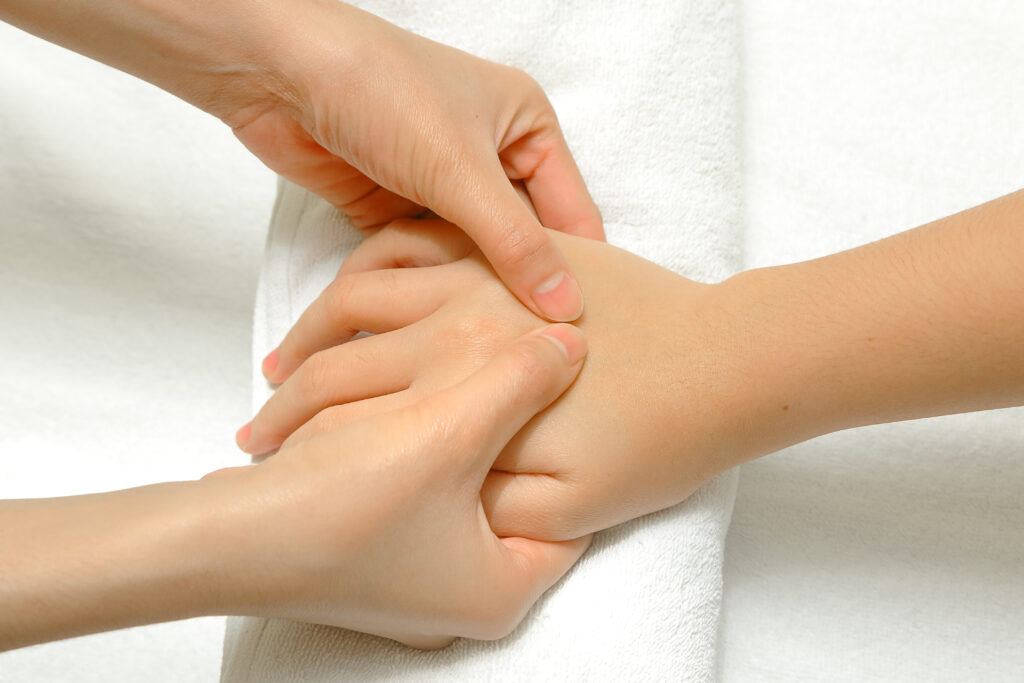
Hand reflexology is a natural, non-invasive therapy that promotes relaxation, relieves tension, and supports overall well-being. By applying gentle pressure to specific reflex points on the hands, this technique stimulates the body’s natural healing process, encouraging balance and improved function in corresponding organs and systems.
Relaxation & Wellness at Your Fingertips
Hand Reflexology can be offered as an alternative to Foot Reflexology, and is delivered as with foot Reflexology working on the various points that correspond with body organs and pressure points. It is a gentle and non-invasive therapy ideal for those who wish to experience the benefits of Reflexology via the hands. Sharron Roughton has experience of offering this to younger clients who may prefer this to foot Reflexology. Particularly suitable for Anxiety and Stress and coping with difficulties with school life.
What are the Benefits of Hand Reflexology?
Reduces Stress & Anxiety – Helps calm the nervous system and promote relaxation.
Eases Pain & Tension – Supports relief from headaches, joint stiffness, and muscle discomfort.
Improves Circulation – Encourages better blood flow and oxygenation.
Supports Digestion & Hormonal Balance – Aids in relieving bloating, constipation, and hormonal fluctuations.
Boosts Energy Levels – Restores vitality by enhancing overall well-being.
Enhances Sleep & Relaxation – Helps promote deeper and more restful sleep.
During a treatment session, Sharron will gently massage and apply pressure to key reflex points on your hands. Sessions are deeply relaxing and can be enjoyed as a standalone treatment or alongside other therapies.
Discover the benefits of hand reflexology and experience the power of holistic healing—because wellness is truly in your hands!
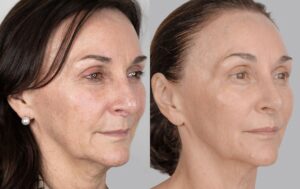
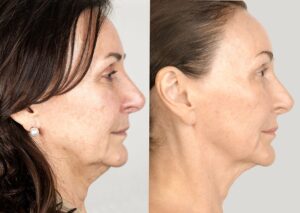
Shirley Ballas, known for her role as a judge in Strictly Come Dancing, has shared her incredible ‘non-surgical face lift’ results with NeoGen Plasma. Having had regular treatments over the last two years, she has shared her experience, including her fantastic before-and-after photos.
Her results are after 12 treatments over the last two years.
View Shirley’s videos about her treatments here:
Nicki Chapman
Nicki Chapman, a TV and BBC2 radio presenter, revealed her results in 2023. She was conscious of her jawline. Here, she shares her Neogen experience.
Neogen Plasma Before and After Images
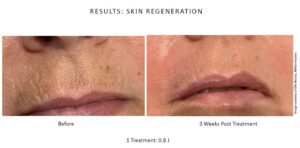
The following before and after images are courtesy of other Neogen Plasma Clinics.
Upper Lip Skin Rejuvenation on a lower setting
After one treatment on a medium/high setting
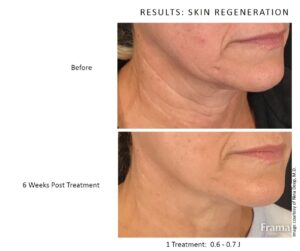
Neck Rejuvenation after one low-setting treatment
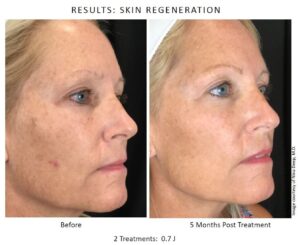
Before and After two low-setting treatments
View another video about several Neogen Plasma Treatment journeys.
Cheshire Lasers’ Patient Information for Neogen Plasma Treatments
Please read the following information before any Neogen Plasma treatment at Cheshire Lasers. It is important you follow the advice given for optimal results and to reduce the risk of unwanted reactions.
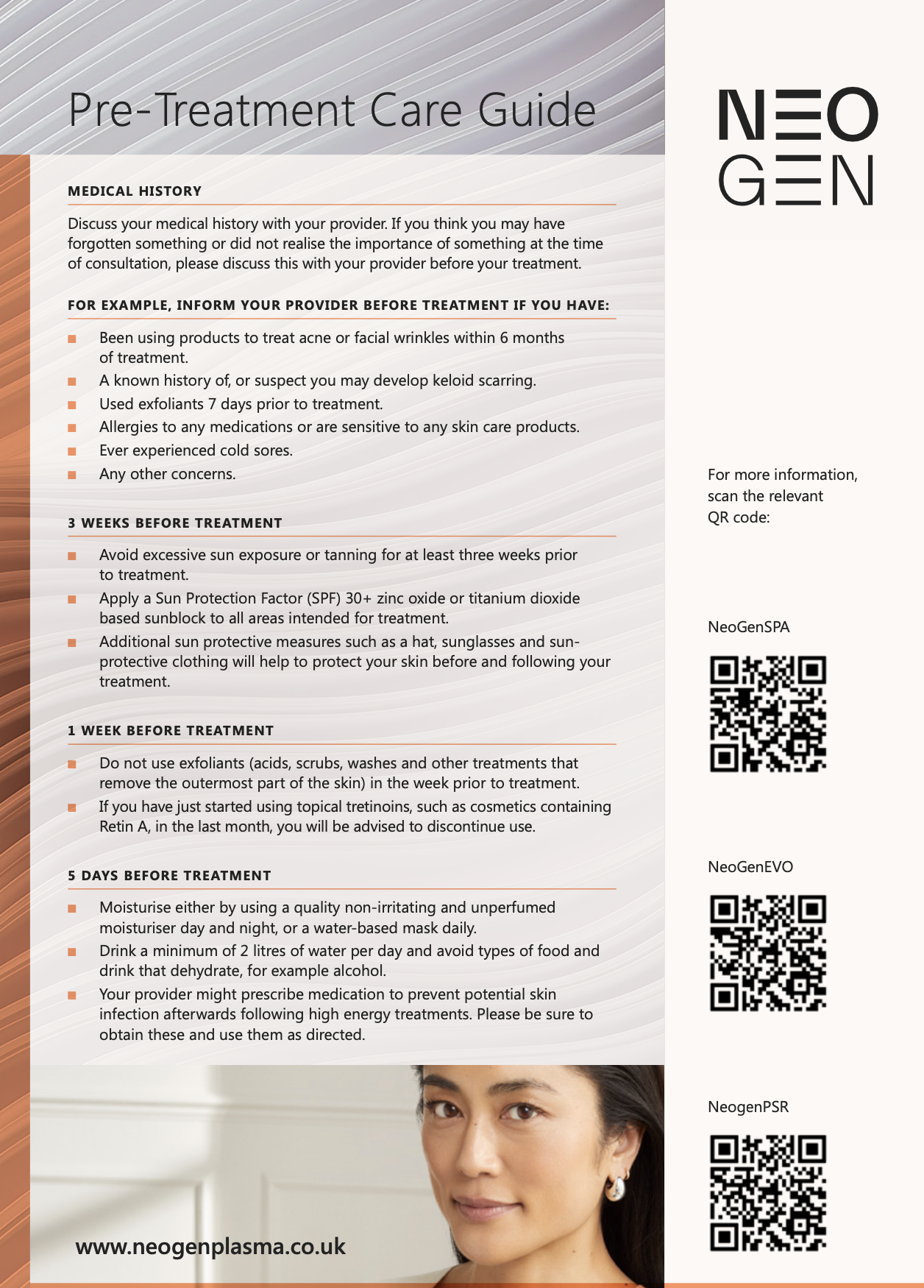
How should I prepare for my Neogen Plasma Treatment?
Three weeks before the procedure
Avoid excessive sun exposure or tanning for at least three weeks
Use a Sun Protection Factor (SPF) 30+ zinc oxide or titanium dioxide-based sunblock to the treatment areas
Additional sun protective measures such as a wide-brimmed hat, sunglasses and sun-protective clothing
Consider starting a collagen or amino acid supplement for skin to enhance the results and make sure your body has all the nutrients required for optimum results.
One week before the procedure
Avoid all Exfoliants (scrubs, washes and other treatments that remove the outermost part of the skin)
Avoid products with AHAs, BHA and PHAs
Avoid all products with retinol, retinals, and tretinoin.
Avoid fake tan
Five days before treatment
Moisturise twice daily with a quality non-irritating, unperfumed product.
Drink a minimum of 2 litres of water per day
Avoid food and drinks that cause dehydration e.g alcohol
Consider taking an electrolyte supplement to ensure maximum hydration
The evening/day before the appointment,
Remove all hair from the treatment area
Do not take anti-inflammatories or antihistamines, as they will reduce the results of your treatment.
On the day of the treatment
Please don’t wear any makeup.
Do not use mascara
No perfume or cologne near the treatment area
Contact lenses
You must remove contact lenses before treatment. You can reinsert the immediately after.
What to Expect During Your Neogen Treatment
Before your Neogen treatment, we ask that you attend a consultation with one of our specialists. They will assess your skin and create a treatment plan to suit your needs.
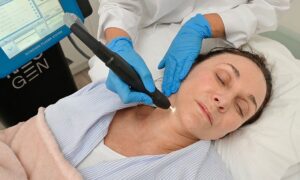
During the procedure, the practitioner will use the plasma device to deliver controlled energy to the treatment area, creating a warming sensation as the nitrogen plasma works its magic.
Sometimes, we will apply a topical anaesthetic, but this is only necessary if you are opting for a deeper treatment. Depending on the intensity of the treatment, sessions usually last between 30 minutes to an hour.
After treatment, we will give you some products to use on your skin for the next few days to ensure you avoid any products that may irritate or delay the healing process.
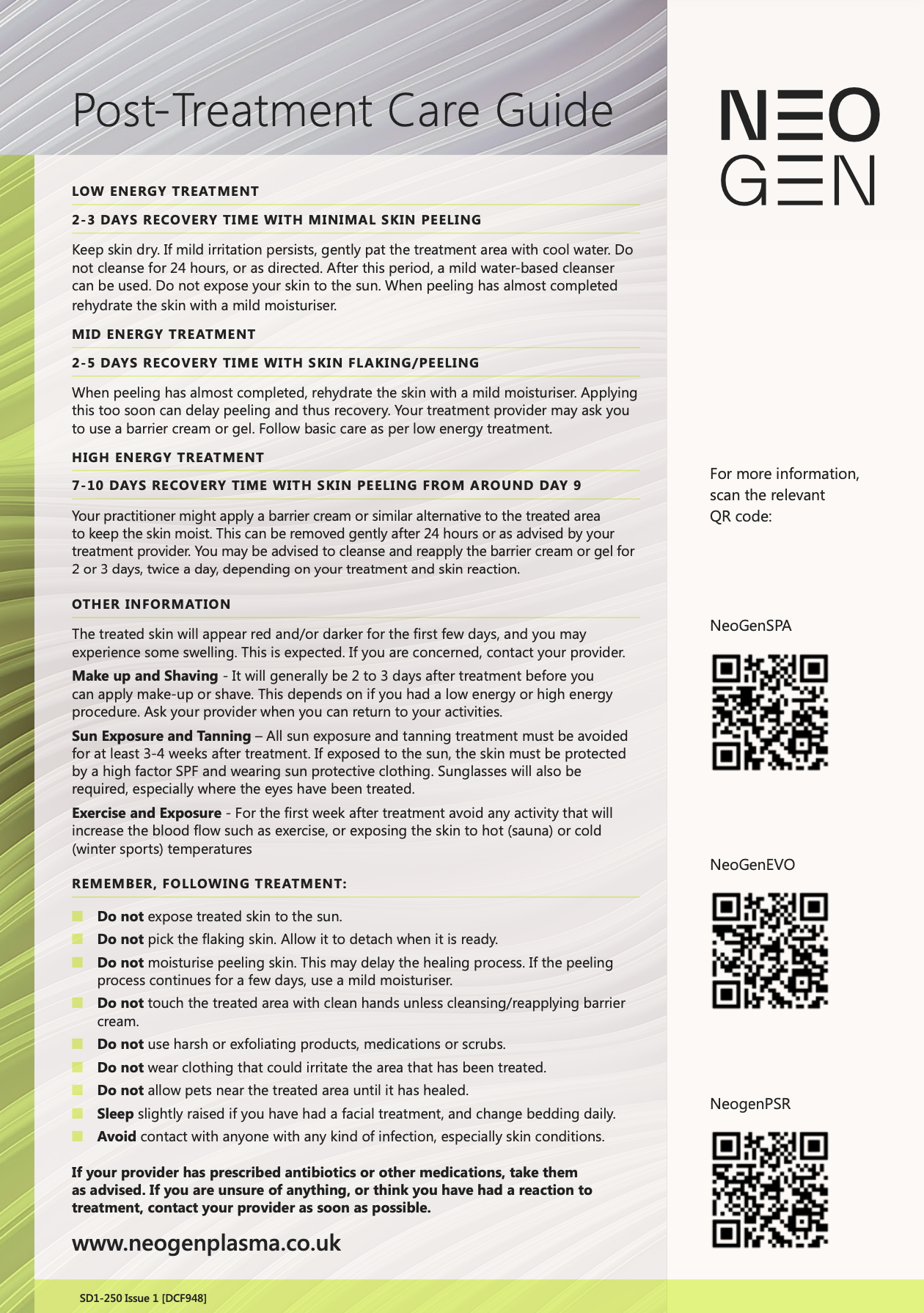
Neogen Plasma Post-treatment Advice
Avoid Sun Exposure for four weeks after treatment.
Allow the peeling to occur naturally. Do not pick! Picking may result in an infection or scar.
Do Not apply any moisturiser until advised ( this depends on the level of your treatment), as applying hydrating products too early delays the peeling process.
For the first 24 hours:
Like a mild sunburn, your skin may feel warm and pink for several hours. It will be fragile, so treat it gently.
For all levels of treatment:
Do not cleanse the treated area for 24 hours.
Skin to be kept dry
Always wash your hands thoroughly using antibacterial soap before touching treated areas
Flaking Phase
Low Energy Treatments
Immediately after treatment, you will feel like you have a mild sunburn; your skin may feel warm and look pink for several hours. It will be fragile, so treat it gently.
You may need two, occasionally three days of recovery time with minimal, if any, skin peeling /flakiness.
After low-energy treatment, the skin must be kept dry for 24 hours.
After this period, you can use a mild water-based cleanser.
The old skin will come off as you wash your face; however, you may not be aware of it.
Avoid going outside the day after treatment to prevent exposing your skin to the sun.
We will provide you with the following aftercare:
A mild cleanser to use for the first few days after treatment.
All Skin Med Regenerating Growth factor serum ampules to apply for the day of treatment and the 2-3 days
All Skin Med Replenishing Cream to apply from day 3 unless you have some peeling. In which case, apply when peeling has almost completed.
Mineral SPF 50 to apply every day to protect the skin from the sun.
You can return to your usual skin routine 3-4 days after your skin has fully recovered.
You can apply makeup once your skin has recovered, usually on day three or four.
Mid-level Energy Treatment
There will be a recovery time of two to five days, with more noticeable skin flaking and peeling.
The skin will generally start to flake within two to five days.
Allow the skin to peel before applying moisturiser/rehydration unless it persists for a few days.
Apply a mild moisturiser or rehydration gel once the peeling is close to completion. Applying a moisturiser too soon can delay the peeling.
We will provide you with the following aftercare:
A mild cleanser to use for 7 days after treatment.
All Skin Med Regenerating Growth factor serum ampules to apply for the day of treatment and the 4-5 days
All Skin Med Replenishing Cream to apply from day 4 or 5, unless you have some peeling. In which case, apply when peeling has almost completed.
Mineral SPF 50 to apply every day to protect the skin from the sun.
You can return to your usual skin routine 5 days after your skin has fully recovered.
You can apply makeup once your skin is less sensitive, usually on day three or four.
Allow the peeling to occur naturally. Do not pick! Picking may result in an infection or scar.
High-Level Energy Treatment
Seven to ten days recovery time with skin peeling from day nine. The treatment area will appear red or sometimes darker for several days. You may also notice some swelling
Your practitioner might apply a barrier cream to the treated area to keep the skin moist normally; you should leave this on for 24 hours. After this, you may cleanse and reapply the barrier cream for 2 or 3 days, twice a day,
During the recovery time:
Do not use anti-ageing/exfoliating/harsh products
Avoid unintentional touching of the treated areas, such as rubbing your eyes
It is important that the treated skin is left in place until it is ready to flake.
Avoid exercise where skin may become flushed or sweaty
Avoid any hot or cold environments, e.g. sauna
Avoid contact with pets in the treatment area
Start to use a mild cleanser only when instructed.
Try to sleep on your back following treatment of the face. Using extra pillows can help
For higher-intensity treatments, change the pillowcase daily until you have healed.
Contact Cheshire Lasers if you have continued pain, blistering, oozing or concerns about itching in the treated area
After flaking
After your skin has flaked, it is important to resume the use of a zinc oxide or titanium dioxide-based SPF 30+ sunblock to decrease the possibility of hyperpigmentation
Resume use of a high-quality mild moisturiser.
New skin will have formed underneath the layer of treated skin that flakes this will be fragile and must be treated gently.
It is normal for the skin to have lighter and darker areas as it heals.
This is usually temporary and will fade within approximately 1 – 6 months.
The treated area will most likely heal without any pigment changes.
When can I return to make-up or shaving and activities:
It will generally be 2 to 3 days after treatment before you can apply makeup or shave. This will depend on whether you had a low-energy or high-energy treatment.
We will advise you about this at your consultation.
What possible reactions may I experience after a Neogen Plasma Treatment?
Cheshire Lasers has provided the information above to reduce the risk of unwanted reactions from your Neogen Plasma Treatment.
It is extremely important you follow our advice to reduce the risk of complications from the Neogen treatment.
Common skin reactions depending on the depth and intensity of your treatment include:
Temporary swelling
Mild acne flare
Milia (tiny white bumps), which resolve on their own
Contact dermatitis is a localised skin irritation most often due to harsh product use
Petechiae are small red or red-blue spots that make up a rash.
Singeing of hair which will grow back
Possible complications
Continued pain, swelling or blisters
Herpes cold sore activation treatment
Hyperpigmentation
Infection
Scarring – Although very rare with NeoGen®, it is important to follow all post-treatment instructions carefully
What if you experience a problem after a Neogen Plasma Treatment?
If you experience an unexpected reaction following your treatment, please contact Cheshire Lasers immediately so we can manage it and reduce the risk of further complications.
How do I Book a Neogen Skin Rejuvenation Treatment
If you’re ready to experience the incredible benefits of Neogen skin rejuvenation treatment, decide whether to start your journey with a low-intensity or a more intense doctor-led one. Then book a consultation to discover how Neogen can transform your skin and help you achieve your aesthetic goals.
Dr Kathryn Hazlehurst MBCHB MRCGP is a GP trained in Medical Aesthetics. She is registered with the GMC and is from Holmes Chapel, Cheshire.
Dr Hazlehurst trained with the Harley Street Institute in anti-wrinkle (Botox) injections and dermal fillers in Medical Aesthetics in 2022 and, since then, has attended multiple treatment courses to perfect her knowledge and skills. She joined the Cheshire Lasers team at Cheshire Lasers as an associate in January 2024. She owns her own business, Dr Hazlehurst Aesthetics, focusing on high-quality, natural results to boost natural-looking beauty.
She uses a range of dermal fillers, but uses Stylage the most.
Skin lesion removal
Dr Hazlehurst removes benign (non-cancerous) skin lesions for cosmetic reasons only, using cryotherapy or electrocautery. Before you book, you must have seen your GP or a dermatologist for a diagnosis that confirms the lesion is benign. She does not provide skin lesion checks, mole mapping or other mole-checking services.
£50 taken off the price of your first treatment with her.
She can perform selected treatments during the consultation. ( Skin lesion removal and Botox)
Removal / Treatment of Skin Lesions such as Skin Tags, milia, Sebaceous Hyperplasia, Xanthelasma, Dermatosis Papulosa nigra, spider naevus/ Campbell de Morgan spots and thread veins
One or Two Lesions /one small patch of thread veins
£140
Follow-up treatments for one Lesion
£80
Additional Lesions
£80 extra for each one.
Depending on size and amount.
Dr Kathryn Hazlehurst mainly uses Stylage Dermal fillers at Cheshire Lasers.
What is Stylage?
Stylage is the name of a group of hyaluronic acid dermal fillers from Vivacy that are exclusively made in France.
Their products include Stylage S, L and Lips; they vary in viscosities. The different types help improve the appearance of wrinkles and lines and contour the face and lips. Stylage fillers have undergone extensive clinical testing to demonstrate their safety and efficacy for aesthetic use, reassuring patients and healthcare providers.
Like other hyaluronic acid fillers, Stylage gradually breaks down over time. This natural degradation process allows for flexibility in treatment outcomes and adjustments as needed.
Why is Stylage different to other hyaluronic acid fillers?
Stylage products also contain Mannitol, which protects the hyaluronic acid against oxidative stress and minimises gel degradation.
Mannitol is an antioxidant that prevents free radical damage and helps lessen side effects like swelling and bruising.
Is a Stylage Treatment painful?
Most of the range contains lidocaine, a local anaesthetic, which reduces discomfort and pain at the treatment site, resulting in a more comfortable treatment.
Dr Hazlehurst also applies a topical lidocaine gel before treatment to improve your comfort further,
Dr Hazlehurst uses the following Stylage products at Cheshire Lasers:
Stylage Special Lips
Specially designed to treat all indications related to the ageing of the lips.
Lip volume augmentation.
Rehydration of the lips.
Definition of lip contour.
Stylage XL and Stylage XXL
For restoring volume in the face.
They are long-lasting dermal fillers that last 12-18 months. They are great for sculpting cheeks and defining chins and jawlines.
Stylage M and Stylage L
For filling moderate to deep lines and visibly smoothing the skin’s surface. Treatment areas include the nose-to-mouth lines and marionette lines.
CACI add-on treatments
( Available with Classic CACI or Super CACI)
Add on CACI Hand Treatment £20
Add on CACI and Biorepeel Hand Treatment £60
Add on a Face Biorepeel for £60
Add on a Face Hydrotone Hydrating Mask £12
Add on an Eye Revive Treatment for £42
pHformula skin assessment, sensitivity test and introductory facial, £50. The appointment takes about an hour, which includes the skin assessment and sensitivity test. The facial itself is 35 to 40 minutes.
Use the following link to book a consultation for Botox and Dermal fillers at Cheshire Lasers with Dr Teri Johnson, Dr Kathryn Hazlehurst and Dr Kyra Drinnan here:
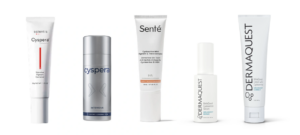
Cysteamine cream is a skin-lightening agent used to treat hyperpigmentation disorders such as age spots, melasma, and post-inflammatory hyperpigmentation. Dermatologists have recommended it for several years since it became available in the UK.
Cyspera Cysteamine Cream was the first brand available in 2019, and it became popular due to published evidence supporting its effectiveness. A few years later, it was discontinued and replaced by Cyspera Intensive, which has also been discontinued in the UK.
What is the difference between DermaQuest Cysteamine Serum and Cream, Cyspera and Cysteamine HSA
The original Cyspera contained 5% Cysteamine cream and came in a 50g tube. Cyspera Intensive, contained 7% Cysteamine cream with added ingredients such as AHAs to enhance pigmentation reduction, Isobionic-Amide, which is an anti-inflammatory B3 derivative and other ingredients to mask the smell slightly because the ingredients could not be combined in the tube it comes in a 30ml dual pump. This product has been discontinued in the UK. These were both mask treatments which needed to be washed off after 15 minutes.
Senté Cysteamine HSA Pigment & Tone Corrector contains 5% Cysteamine Cream in a 50ml tube. It also contains B3 niacinamide and HSA, which in combination improve skin tone by treating pigmentation and reducing redness or inflammation. Senté Cysteamine HSA Pigment & Tone Corrector should be applied like a mask on the problem area and washed off after 15minutes.
DermaQuest MelaQuest Cysteamine Serum and DermaQuest MelaQuest Cream with Cysteamine also contain antioxidants- Glutathione and Ginko Biloba to reduce inflammation and skin sensitivity, a tyrosine inhibitor – Kojic Acid to help reduce pigmentation and Snow Algae, which improves the skin’s collagen and cellular defence.
DermaQuest MelaQuest Cysteamine Serum contains 4% Cysteamine, which is shown to be as effective as prescription 4% hydroquinone and DermaQuest MelaQuest Cream with Cysteamine contains 3% Cysteamine. Both of these products can be left on the skin, which makes your daily routine easier. They still have an aroma, but this is masked by some of the other ingredients. For best results, Dermaquest advises you to use the serum and then the cream twice daily.
Some people may try the serum first on its own and add on the cream if they would like to enhance the results.
Skin Sensitivity with the Different Cysteamine Creams
Cysteamine is known to cause irritation for some users, which is why the latest versions include ingredients to counteract it.
Sante, however, uses its HSA compound to provide a soothing repair base for the Cysteamine cream, making it more suitable for sensitive and red skin.
Dermaquest uses glutathione and Ginkgo biloba to reduce inflammation and skin sensitivity,
How to use the different Cysteamine Creams
For all products: If you have never used it, begin with a patch test. Then, apply every other day to the treatment area and increase to everyday use as tolerated.
For Cyspera and Senté products:
Do not wash the skin before application.
If it is necessary to wash, you must wait for one hour before applying Cyspera and 20 minutes before applying Senté Cysteamine HSA Pigment & Tone Corrector
Apply a thin layer on the pigmented skin you wish to treat
Leave on for 15 minutes
Remove by washing the area with a gentle face cleanser.
Gently pat your face dry and apply a gentle moisturiser and SPF if in the day
Do not leave on for more than 15 minutes.
Intensive phase: Once per day for up to 16 weeks.
Maintenance phase: Twice-weekly, once per day, indefinitely.
Use a high SPF sunblock to prevent activating the pigmentation.
For best results, you need to make sure you are consistent and apply products daily.
How does Cysteamine work?
As the name implies, the cream contains cysteamine, a metabolite of L-cysteine and a natural cellular component. L-cysteamine inhibits melanin production in the skin in several ways, which is why it is so effective.
It works as an Antioxidant and inhibits the Tyrosinase enzyme, reducing melanin precursors and therefore decreasing pigment production.
A randomised, double-blind, placebo-controlled clinical trial confirmed the efficacy of cysteamine cream in treating epidermal melasma.
Pigmentation usually reduces after six weeks of consistent use. It takes 8 to 16 weeks of regular use to achieve optimal results
Contraindications to use:
Cysteamine cream should not be used if you are pregnant or breastfeeding.
Can I use Cysteamine in the summer?
You can use this treatment any time of year, regardless of sunlight intensity; it is not a photosensitiser.
I have a dark skin tone; can I still use it?
Yes, it is suitable for all skin types and skin tones.
What are the side effects and risks?
Local side effects at the site of application may include:
Temporary heating up or burning sensation and redness
More persistent irritation and dryness, which you can treat with an emollient.
This reaction may happen during the first few days of application and are generally mild with the newer products.
If you experience sustained redness, irritation, or dry skin, stop using Cysteamine and hydrate the area with your basic hydration cream. You can try to resume gradual application once your skin has recovered.
If you have not used Cysteamine Cream before and want to purchase it, you are welcome to arrange a consultation to discuss how to use it and add it to your routine.


 After one treatment on a medium/high setting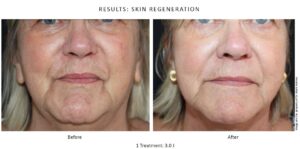
 Before and After two low-setting treatments