Emotional Freedom Technique ( EFT) is a very powerful but gentle way of releasing emotional, mental and physical pain.
EFT uses a process that works with the energy meridians of the body, balancing the body’s energy system and removing any disturbance or emotional blocks to the energy flow around the body.
Very simply, EFT is a form of acupuncture, except you use your fingers instead of needles on the energy meridians.
It works by gently tapping on specific meridian points on the face and hands, whilst at the same time using spoken affirmations.
Within a couple of sessions, all negative and pent-up emotions may be released, enabling you to reduce stress, tension or pain.
The process is easy to memorise, and within just one session, you will have the skills to use EFT on yourself for any situation you may find yourself in, and as it is portable, you can use it anywhere.
EFT is effective in treating a wide range of conditions, including:
Addictions and cravings
Anger
Anxiety and panic attacks
Headaches and migraine
Joint and back pain
Phobias
Post-traumatic stress disorder
Self-esteem and poor self-image
Sports injuries and performance anxiety
Stress and mental health issues
Who Provides Emotional Freedom Technique at Cheshire Lasers?
Cheshire Lasers can help with your fertility journey. Sharron Roughton specialises in Reflexology and has training and experience treating couples for fertility and women throughout their pregnancy.
It is estimated that 1 in 7 couples in the UK will experience fertility issues every year, this is approximately 3.5 million people (NHS, 2017). The psychological effects of being unable to get or stay pregnant can be absolutely devastating. Some people get caught in a cycle of expectation and disappointment every month, which can add considerably to the stress they are already experiencing. For some this can lead to anxiety and low mood. Some people also find it difficult to talk to family and friends and can often feel isolated.
How can Reflexology help with Fertility?
Busy lives can impact your natural fertility and conception. Balance in a woman’s or man’s emotional and physical well-being is extremely important in the attempt to conceive. Reflexology has been used for fertility, pregnancy, and childbirth throughout history. Reflexology assists in re-balancing the mind and body, bringing about body balance.
Whilst fertility reflexology can never claim to cure any particular condition, it works by balancing all the of body systems particularly the endocrine system, enhancing your own natural fertility.
Encouraging the body to work in a more harmonious way can create a healthier environment for pregnancy to occur. Fertility Reflexology promotes your body’s balance and encourages the body to function efficiently.
Using Reflexology, Sharron can help you through your fertility journey, be it pre-conceptual care, infertility or pregnancy. Sharron has undertaken specialist training in Reflexology for infertility and pregnancy care. She is happy to treat couples at any stage in their fertility planning. If they are enhancing their general health before trying for a baby, experiencing problems with conception or need support and guidance during IVF or pregnancy.
During a treatment, Tara will perform an initial consultation to ensure the treatment is right for you. She will then ask you to lie on your side on a therapy bed. Tara will gently insert a candle in the first ear and then the other.
The treatment includes a relaxing facial massage to encourage lymph flow, and you have the option of having some complimentary Reiki to finish.
Scalp Micropigmentation is also known as “SMP”, “Medical Scalp Tattoo” or “Medical Hairline Tattoo”. It is a non-surgical, cosmetic solution for males and females who suffer from hair loss and thinning hair. It creates the illusion of real hair.
Using the most advanced precision machine and medical-grade ink, this treatment places small dots into the dermal layer of the skin on your scalp (just beneath the surface).
This procedure can be used to create new hairlines, fill in thinning areas of stubble, cover areas of Alopecia, camouflage scaring from hair transplants and add density to thinning, longer hair.
If your hair loss or thinning hair makes you feel self-conscious, then Scalp Micropigmentation will offer you instant, natural-looking and truly life-changing results.
Do you have Hair Transplant Scars?
Scalp Micropigmentation can camouflage your scars from FUT and FUE hair transplants. This non-surgical treatment makes them appear less visible to the eye. Medical-grade ink replicates your natural hair follicles and gives the illusion of real hair. It is an excellent solution for males and females, offering instant, natural looking and genuinely life-changing results.
Frequently Asked Questions
Deciding to have Scalp Micropigmentation / Medical Scalp Tattoo treatment can be very difficult, and you will undoubtedly have many unanswered questions. Below are some answers to the most frequently asked questions.
How does it work?
The pigment shade is matched to the colour of your natural stubble or hair. Over 3 – 4 sessions, layers of the medical tattoo pigment are built up in the scalp to create the coverage and density you desire. You will need to wait at least two weeks between each session.
How long will my Results last?
The pigment will last for 3 – 5 years. This will vary from person to person and depends on various personal and environmental factors. We recommend a top-up every 12 – 18 months to help keep the pigment intensity.
What Pigments do you use?
Helena uses medical-grade pigments which contain only natural ingredients. The pigment inserted into the scalp dont contain heavy metals like tattoo inks; therefore, it will never change its colour and will only fade gradually lighter over time.
What colours are your pigments?
There are ten shades of pigment, ranging from Light Grey to Black. For the best results, clients’ hair colour must be Light Grey to Black or Dark Brown.
Is Scalp Micropigmentation painful?
The majority of clients find the treatment bearable and feel minimal discomfort.
But if the procedure does become too uncomfortable, then an anaesthetic numbing cream can help reduce the discomfort. You can also take x2 Paracetamol or Ibuprofen 1 hour before your treatment.
Will my head be red after my treatment?
Your head will be red after each session, and this will settle down within 2 – 3 days. The degree of visible redness will depend on your skin’s sensitivity and colour. You should not be in any discomfort after the treatment has finished.
What makes a good result?
Scalp Micropigmentation creates a natural and realistic illusion of hair follicles. Your hairline will be soft, and feathered and complement the angles of your facial features. The layers of dots will work together to give a 3D illusion.
Will my Scalp Micropigmentation be noticeable?
The beauty of scalp micropigmentation is that it gives you instant and natural looking results. You will be amazed by how the majority of your close friends and family will not notice that you have had the treatment done. If you decide to tell them, they will be overwhelmed at how natural and realistic your results are.
Who cannot have Scalp Micropigmentation done?
Unfortunately, you cannot have this treatment done if you suffer from: Systemic Lupus Erythematosus, Keloid or Hypertrophic scars, TB, Tumours, Growths, Cysts, Alcohol or Drug Addiction, HIV Positive, are pregnant, nursing, or undergoing Chemotherapy or Radiotherapy.
What Guarantee do you offer?
Helena offers a six-month guarantee. If any fading occurs during the first 6 months after your treatment, she will top up that area for you free of charge.
Why choose Scalp Micropigmentation at Cheshire Lasers?
Here at Cheshire Lasers, we understand that losing your hair can be a very sensitive subject to discuss. It is important that you find the right clinic for your treatment, but most importantly, the right Technician and Artist you can trust.
Scalp Micropigmentation at Cheshire Lasers is carried out byHelena Fryer, an independent visiting specialist. Helena’s before-and-after results are extremely impressive. The treatment not only gives her clients the look of a full head of hair again but really helps to build their self-confidence. Consultations with Helena are free of charge.
Electrolysis is carried out at Cheshire Lasers by Helena Fryer.
Electrolysis has the longest known track record for long term effective results for hair removal. Dr Charles Michel first used it successfully in 1875 to remove ingrown eyelashes.
What is Electrolysis?
Electrolysis is performed by inserting a very fine, flexible disposable needle into the hair follicle. Then a tiny amount of current is applied to destroy the lower part of the follicle. This stops any more hairs from growing from that particular follicle.
The destruction is carried out by heat (thermolysis), a chemical reaction (galvanic) or both blended together (blend). Virtually any area (apart from the inside of the nose and inner ear) can be treated.
Electrolysis is particularly good for clients who are not suitable for IPL laser treatment – for example those with grey / blonde hair and hairs in moles. It is also very effective for treating the stronger hairs associated with hormonal hair growth, especially on the face.
Why do people have unwanted hair?
Statistics show that most people have facial or body hair, which they feel detracts from their appearance. Superfluous hair growth is often the result of normal changes in which both males and females undergo throughout life. As humans advance through puberty, pregnancies, menopause, midlife and ageing, fluctuations in hormone levels in both genders may cause increased hair growth in areas that have never before been affected. Excessive hair may also be hereditary, due to medication side effects and even stress. It can be associated with endocrine dysfunction, which may cause irregular menstrual cycles, ovarian disorders, and diabetes or thyroid irregularities.
What areas can you treat with Electrolysis?
Electrolysis can be performed on any normal, healthy skin except for hair from the mucous membranes inside the nose, inside the ears, moles (unless you can provide a written release from your GP), and any known area with skin conditions. As the process can be quite time consuming, it is best suited to small areas such as the face or abdomen.
How long will my treatment session last?
The average treatment ranges from 15 minutes to 1 hour. Many electrolysis clients find weekly or biweekly sessions of 15 to 60 minutes to be most effective the amount of time per treatment depends upon the reaction of the skin to treatment, and the client’s sensitivity. Timing also depends on what part of the body is being treated. The first treatment could last about 15 to 30 minutes, increasing to 60 minutes as the client’s sensitivity lessens.
How much hair can you remove in 1 session?
This is very much dependent upon the sensitivity of the client.
What will I feel during the treatment?
Even the most sensitive person should be able to tolerate the treatments. The careful, skilful insertion of the sterile, disposable, micro-fine electrolysis probe into the hair follicle should not hurt. The mild tingling from electrolysis treatment energy is quick, and then it’s over. The hair slides out of the hair follicle with ease, so does not feel like it was plucked or tweezed.
How can I remove hair growth between treatments?
It’s best not to use any other methods between treatments, like tweezing, waxing, or depilatories. However, extremely heavy growth can be trimmed with small manicure scissors or shaved with an electric razor.
How do I book an Electrolysis session?
Helena is not taking on any new clients at the moment.
She is, however, continuing to see her existing clients for top-up treatments.
For more information and to book a follow-up appointment, contact Helena directly:
Consultant plastic surgeon Rajiv Grover confirmed that the long-term use of Botulinum Toxin (Botox) delays the ageing process in the upper face.
The study came about after Grover carried out several consultations with patients seeking a second facelift (some years after having the first with a different surgeon) and began to notice differences between those who had used Botulinum Toxin over several years and those who had not.
Patients who had been receiving Botulinum Toxin injections consistently since their first facelift were far less likely to require a brow lift than those who had not, however, there were no significant differences in the bottom halves of their faces regardless of whether or not they had used Dermal Fillers in the cheek, jowls or neck.
This initial anecdotal evidence led Grover to carry out a formal study on 68 patients who had requested a secondary facelift following a previous one some years earlier. Out of these 68 patients, 24 had received Botulinum Toxin treatment regularly for over nine years.
Grover assessed the effects of ageing on the forehead and brow in three ways:
The height of the brow itself above the pupil of the eye was measured
Digital imaging software from Canfield USA to measure how much the brow had dropped with age by analysing pictures from youth and comparing these with current pictures
The need for a surgical brow lift, as a measure of the ageing process.
What did the study show?
The study reported that the patients who had received over nine years of regular Botulinum Toxin had significantly higher brows than those who had not, with an average difference of over 3mm.
The photograph analysis backed this up, finding that the inevitable drop in brow height caused by gravity and muscle movement during the ageing process was on average significantly smaller in the patients who had received Botulinum Toxin, indicating an alteration of the ageing process.
These results meant that Grover thought fewer of the Botulinum Toxin-treated patients needed a surgical browlift at the time of their facelift surgery than the Non-Botulinum Toxin group. In fact, only two of 24 Botulinum Toxin treated patients (8%) received a brow lift, compared with 24 out of the 44 remaining Non-Botulinum Toxin group (54%).
“This is the first study of its kind to look at the anatomical effects on the ageing process from long-term use of Botulinum Toxin,” said Grover. “By rebalancing the facial muscles it appears that Botulinum Toxin reduces the changes of drooping of the forehead and brow seen with ageing. The aim of this study is not to recommend that people take Botulinum Toxin in a long-term fashion but it is important that surgeons analyse in a scientific way what the long-term effects of treatment are in order improve safety for our patients.”
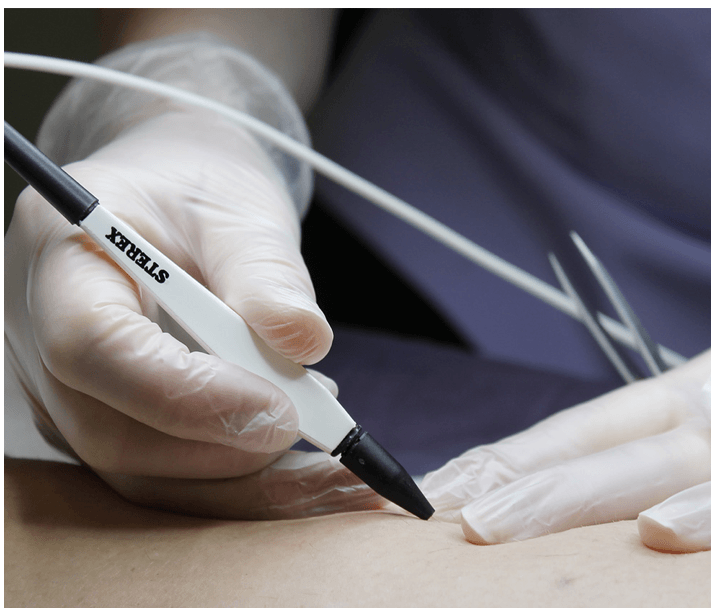
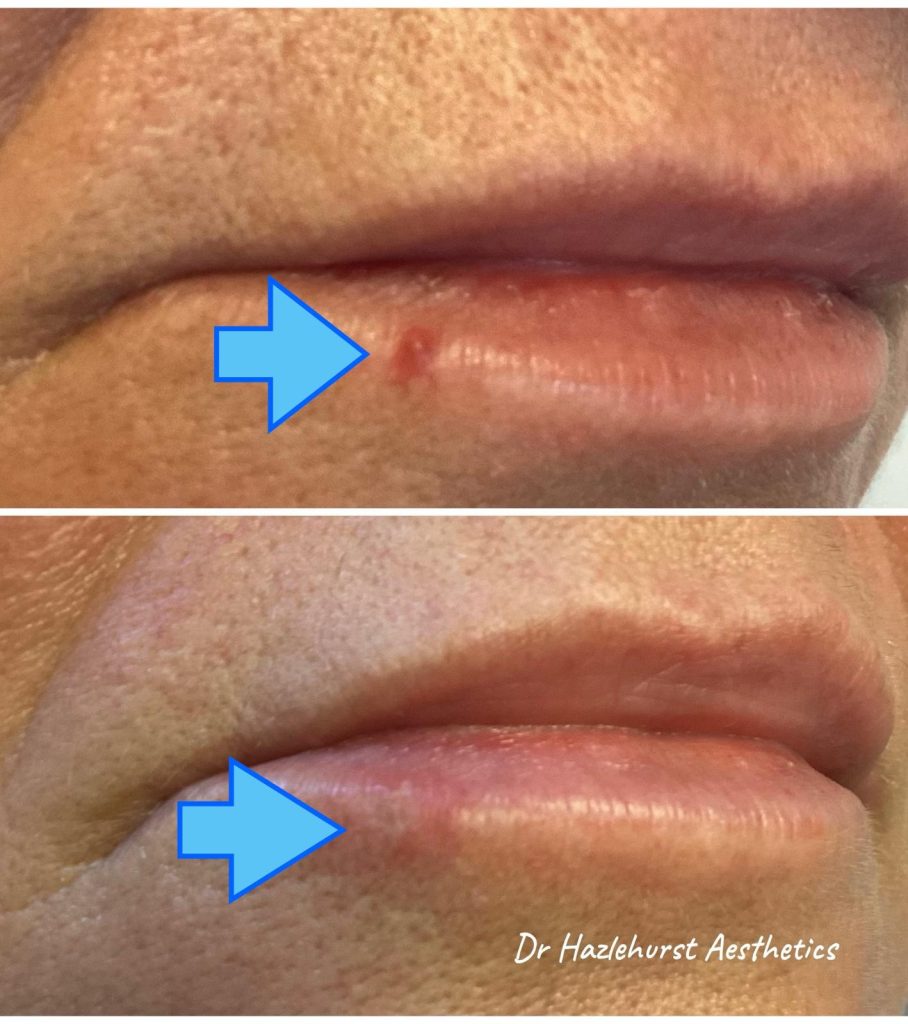
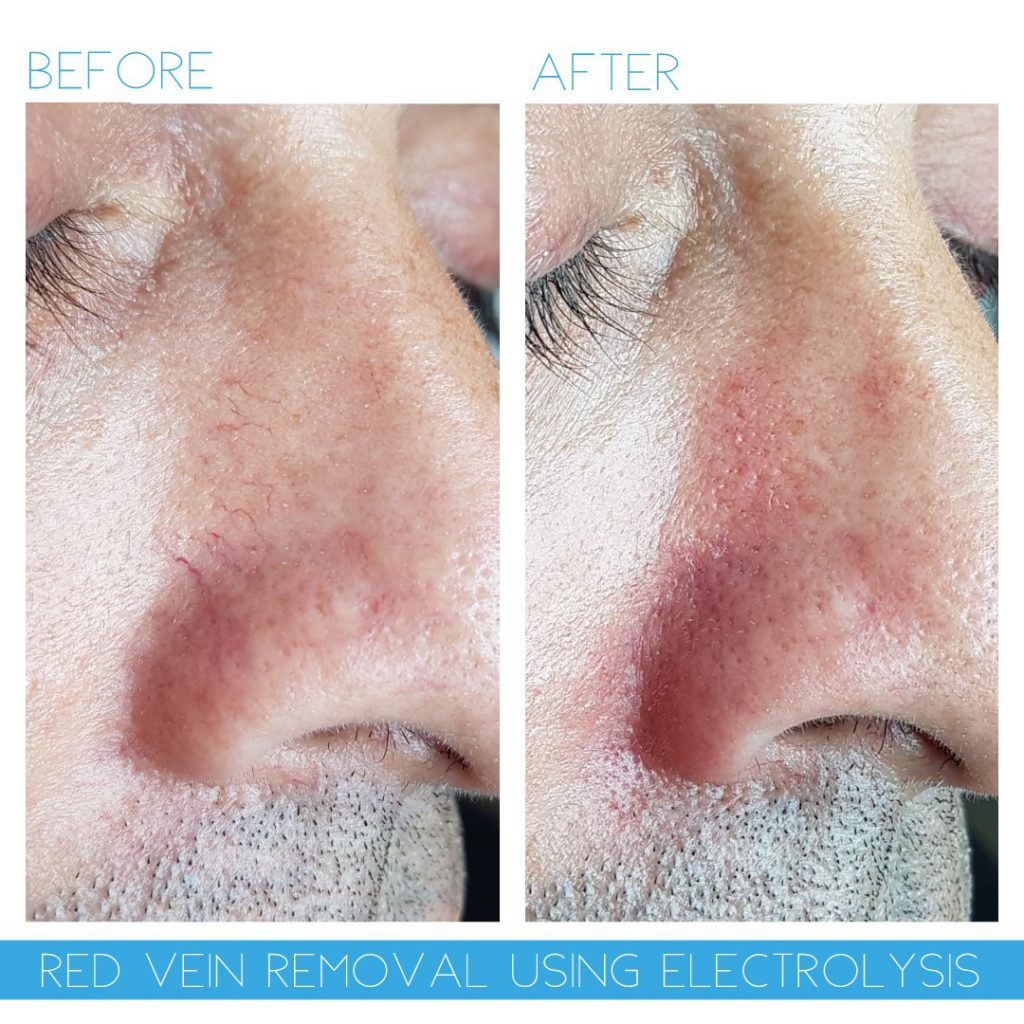
Advanced electrocautery has been used for over 100 years as an effective means of permanent hair removal & treatment for skin lesions. It comes with the advantage of being able to target very specific parts of the body and can be used to get remove or reduce skin lesions & skin conditions such as skin tags, moles, verrucas, blood spots, birth marks, seborrheic keratosis, facial thread veins and skin warts. These skin imperfections can cause people to feel very self-conscious, but can usually be removed quickly & easily.
Skin tags often appear on the body in areas of friction, such as under the arms, around the neck and around the groin. Whilst they don’t post any harm, they can be unsightly and catch on clothing. Advanced electrocautery can effectively remove skin tags with little discomfort.
A viral infection in the skin causes warts and can appear anywhere on the body. Electrocautery treatment is an effective way to remove warts from the skin.
Moles are a very common skin condition in people of any age. Whilst they’re not usually harmful, they may be unsightly if they’re in prominent places such as the face. Advanced Electrocautery can remove/shrink moles very effectively.
Verrucas
Electrocautery treatment can effectively treat Verrucas. They appear on the feet and can be uncomfortable; they may spread via communal showers such as those found in gyms or swimming pools.
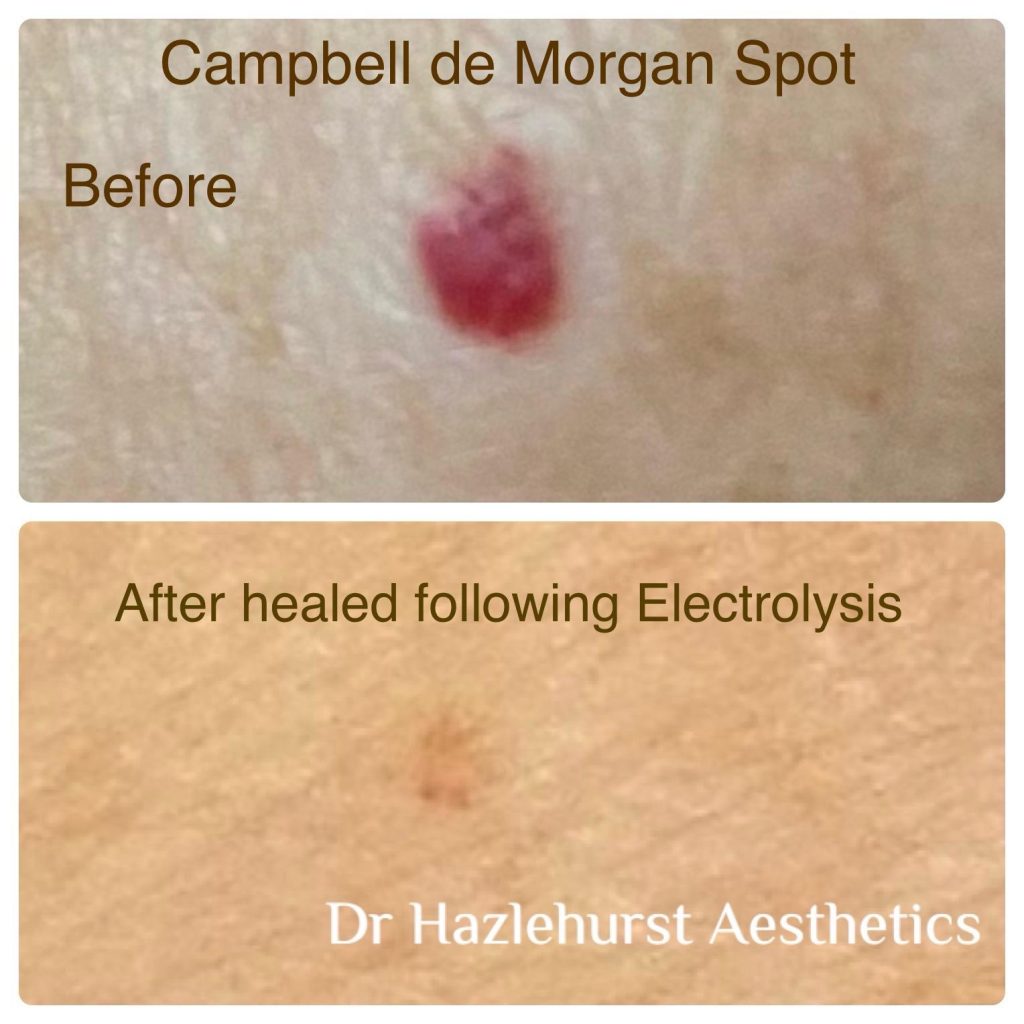
Blood spots (Campbell de Morgan spots /cherry angiomas)
Electrocautery can effectively treat blood spots. Blood spots are red, vascular blemishes that can occur at any age but are much more common in men than women.
Age spots
Age spots occur because of an accumulation of lipofuscin due to ageing. Electrolysis can remove age spots quickly and effectively in men and women of all ages.
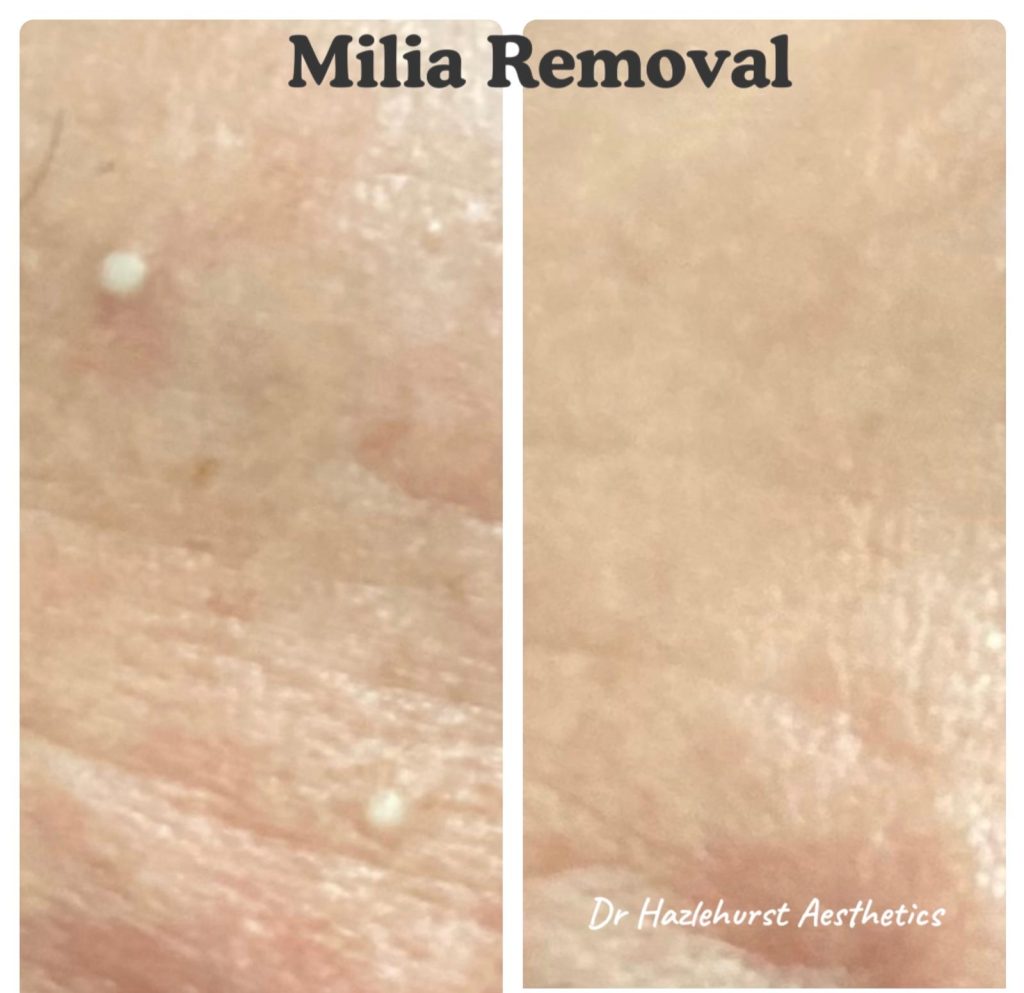
Milia are hard, white keratin bumps that vary in size often seen around the eyes and cheeks. Electrocautery is effective at treating milia without leaving any marks behind.
Sebaceous hyperplasia
These bumps are the result of damage, which leads to overproduction of sebum by the sebaceous gland. The damaged sebaceous glands can become enlarged or blocked. This turns them into bumps that may be soft or hard, with a white or yellow surface. They respond very well to electrocautery.
Seborrheic keratosis is one of the most common noncancerous skin growths in older adults. A seborrheic keratosis usually appears as a brown, black or light tan growth on the face, chest, shoulders or back. The growth has a waxy, scaly, slightly raised appearance & responds well to electrocautery.
Cysts
Cysts can vary in size and can be due to a range of problems. Electrocautery can treat cysts that develop due to sebum build under the skin. Smaller cysts can be treated successfully using electrocautery treatment to dry up the cyst’s contents.
Syringoma
Syringomas are small, flesh-coloured bumps commonly appearing around the eyelids and upper cheeks. Electrocautery can reduce the size of the bumps without leaving any marks behind.
Facial Thread Veins (Spider Naevi and Telangiectasia)
Spider Naevi and Telangiectasia are dilated blood vessels that cause the appearance of redness on the skin. They often appear on the cheeks or over the face. Electrocautery can treat them effectively without damaging the skin.
Scars
Scars are difficult to treat and whilst electrolysis cannot change the shape or colour of a scar, it can sometimes smooth out the skin and remove the raised appearance of scars.
Advanced electrolysis and advanced electrocautery — what is the difference?
They are the same treatment. The machines use the same technology; it is usually called advanced electrolysis when a therapist performs it and advanced electrocautery when a doctor does. Doctors often use more advanced machines.
How do Electrolysis and Electrocautery work?
Electrolysis is a permanent hair removal process that works by treating the base of the hair follicle with a tiny amount of electricity and therefore eliminating its ability to grow new hair. A tiny needle is inserted into the hair follicle and the current is applied.
Electrocautery also generates energy to heat & shrink various skin lesions or conditions.
Is Advanced Electrocautery Painful?
Not normally.
Depending on your electrocautery treatment, you may not need any anaesthetic, but we can use topical or an injectable treatment to provide you with an experience that’s comfortable and with minimum pain.
Can Electrocautery treat skin imperfections on any part of the body?
Yes. The only exceptions to this are the nostrils and inner ears.
How many treatments will I need?
This will vary from one patient to the next and also depends on the reason for your treatment.
The number of treatments you need depends on the problem.
A single skin tag is easy to remove in one treatment
However, some problems, such as warts and thread veins, require a course of treatment and can recur at a later date.
How long will my treatment session last?
The average treatment ranges from 15 to 30 minutes. It will depend on how many lesions you need to remove. The amount of time per treatment also depends upon the reaction of your skin to treatment and your sensitivity.
What are the side effects?
Side effects of electrocautery are usually minimal to some crusting and redness around the treated areas for a few days. An area may remain pink for a few weeks after treatment.
Who Performs Advanced Electrocautery at Cheshire Lasers?
Dr Will Allen, Facial Surgeon, and Dr Kathryn Hazlehurst perform Advanced Electrocautery.
Dr Allen removes larger skin lesions and moles, and Dr Hazlehurst removes smaller lesions.
How much is advanced electrocautery?
Advanced electrocautery at Cheshire Lasers is £140 for one or two lesions, or one small patch of thread veins. Additional lesions are £80 each, and a follow-up treatment for a single lesion is £80.
Dr Will Allen and Dr Kathryn Hazlehurst charge the same for the treatment itself, but their consultations differ. Dr Hazlehurst’s consultation is £50, taken off the price of your first treatment, and she can carry out skin lesion removal during the consultation. Dr Will Allen’s consultation is £100 and is not deducted from the treatment price.
Advanced electrocautery and advanced electrolysis treatments carried out at Cheshire Lasers.
Send us a photograph first
If you are not sure which treatment you need, email photographs of the area from a couple of different angles to cheshirelasers@hotmail.co.uk. It’s helpful if you let us know how long the lesion has been there and whether it’s changing in any way. We will ask our specialists to review your email and advise our reception team on who you should see. Sometimes we will ask you to book a consultation first.
To book advanced electrocautery at Cheshire Lasers phone 01606 841255 or book your appointment online here:
The following changes make us prone to skin wrinkles:
Excessive facial expressions/smoking create dynamic lines in the stratum corneum and then the dermis
Epidermal cell turnover reduces so the very top layer “the stratum corneum” is present for longer subject to the causes of ageing
The stratum corneum layer becomes more dehydrated so the lines show more
The dermis the supportive structure underneath becomes thin, less vascular and loses collagen.
The fat layer under the dermis reduces.
Facial Expressions
Facial expressions such as pursing the lips cause dynamic lines. These lines are usually seen in people that smoke due to the repetitive movements from the act of smoking. However, smoking also causes other physiological changes making smokers more prone to wrinkles all over.
Interestingly facial expression lines are often are seen around the mouth in non-smokers who have the habit of repeatedly using the muscles for their facial expressions.
Epidermal Cell Changes
The epidermis is the very top layer of skin which acts as a protective barrier. The lowest layer is the “Stratum Basale” this is where new skin cells are made. New skin cells get pushed closer and closer to the skin surface as more cells are made and over time they mature and become flatter and harder due to the keratin within them. When they reach the top layers they die and are eventually shed into the environment. As a result, these cells are found in dust throughout your home.
With age, this epidermal turnover slows down. Cell renewal time is the time a new cell takes to travel from the lowest layer of the epidermis the “Stratum Basale” to the top layer the “Stratum Corneum” and then shed off the skin.
Cell renewal time changes as we age:
Babies – 14 days
Teenagers – 21 – 28 days
Middle age – 28 – 42 days
50 and up – 45 – 90 days
That means that as we age, the top layer of skin cells forming the stratum corneum are around for a lot longer. These cells have been shown to become more dehydrated with age and have been exposed to more movement and environmental factors.
These changes mean the skin is more prone to developing wrinkles and once they develop they can be harder to treat.
Some people have a thicker stratum corneum layer and these people often need treating differently to those with a thin more hydrated stratum corneum.
Dermal Changes
The dermis the supportive structure underneath the stratum corneum becomes thin, less vascular and loses collagen with age.
The dermal thickness decreases by about 20% and the blood flow reduced by about 60%. Fibroblast activity decreases which leads to a drop in collagen synthesis. The collagen content of the dermis decreases by 1% per year throughout adult life.
The collagen remaining is less effective and loses its ability to regain its shape after deformation and also holds a lot less water.
Research has shown that wrinkles appear not so much due to the degeneration of elastin fibres, as previously thought, but also due to a decrease in the water-holding collagen and mucopolysaccharides.
Sebaceous glands produce less oil as you age. Men are fortunate and don’t experience much of a decrease until their 80s. Women gradually produce less oil beginning after menopause. This can make it harder to keep the skin moist, resulting in dryness and itchiness.
Changes in the connective tissue reduce the skin’s strength and elasticity. This is known as elastosis. It is more noticeable in sun-exposed areas (solar elastosis). Elastosis produces the leathery, weather-beaten appearance common to farmers, sailors, and others who spend a large amount of time outdoors.
Changes in the Hypodermis
The hypodermis consists mainly of fat and acts as an insulator and shock absorber. With age, there is a loss of subcutaneous fat and the skin becomes thinner and less resistant to trauma. The reduced volume of subcutaneous fat means the role of the hypodermis in limiting conductive heat loss is impaired.
When it comes to ageing the loss of fat means you lose the mattress like effect of the fat which plumps the skin out giving it a smooth appearance. As the fat goes the skin is then sat on muscle and other underlying structures which can appear wrinkly.
The mouth is an area which develops lines and wrinkles due to fat loss. This is much more common in women as they gradually lose all the fat around the mouth, whereas men are often more fortunate and keep a layer of fat. Hence why women develop lip lines a lot earlier than men.
Radiesse can help to improve ageing hands where loss of fat and thin skin has resulted in a bony appearance and unsightly veins.
What is Radiesse and how does it work?
Radiesse is a Dermal Filler launched in the UK in 2004. It is made up of tiny beads of calcium hydroxylapatite (CaHa). CaHa has been safely used in the body for many years. Radiesse is not a permanent filler, the average effect lasting around 12 months depending on the client and the area treated.
Once injected into your skin, the smooth and spherical CaHA particles form a ‘scaffold’ which stimulates your own cells to produce collagen. The gel carrier dissolves within a few months and are completely metabolised by the body, leaving only the new collagen structure.
What happens during the Radiesse Hand Rejuvenation Treatment?
Dr Teri Johnson will perform a consultation and will discuss what you hope to achieve from the treatment and tell you whether or not these results are achievable. Your medical history will be taken, to ensure that there are no reasons why you shouldn’t have the treatment.
A cannula is used to deposit droplets of the Radiesse gel in the skin evenly over both hand to ensure the hands are equally covered.
Each hand takes about twenty minutes to treat. The hands are then thoroughly massaged firmly to ensure even spread of the Radiesse gel.
What should I expect after treatment?
You can return to work the following day after this procedure. However please avoid exposing your hands to any chemicals or dirty environments where the injection sites could be exposed to irritation or infection. Protection such as gloves would help reduce any adverse exposure.
You may have a few small bruises on your hands for a day or two afterwards.
With clean hands, massage your hands for a few days after treatment. This will ensure the Radiesse is distributed evenly.
How Safe is a Radiesse Hand Rejuvenation treatment?
There are few reported side effects from clinical trials and actual usage of this product. Common injection-related reactions may occur, such as swelling, pain, itching, discolouration and tenderness at the injection site.
Some lumpiness at the injection site can rarely occur.
How much is a Radiesse Hand Rejuvenation treatment ?
Aesthetician Kate performs our Hydrafacial Treatments at Cheshire Lasers.
What is a Hydrafacial?
The “Hydrafacial” treatment is the newest advance in non-laser skin resurfacing. Hydrafacial is a hydradermabrasion procedure it combines cleansing, exfoliation, extraction, hydration and antioxidant protection simultaneously. It delivers clearer, smoother, hydrated more beautiful skin with no discomfort or downtime, it is non-invasive and non-irritating.
How many Treatments do I need?
Many people see visible skin improvement after just one treatment. The results and skin hydration can last between 5 and 7 days, sometimes longer. The hydrafacial is an ideal one-off treatment for a special occasion or a ‘freshen-up’.
At Cheshire Lasers, we recommend a series of three to ten Hydrafacials for best results every 2 to 6 weeks. A course of treatments can improve fine lines, wrinkles, acne and oily skin and even hyperpigmentation.
We will assess your skin and customise a treatment programme incorporating the various serums, growth factors, peel products and can add in an LED treatment depending on your requirements.
If you have no skin concerns a treatment once a month is enough to provide a deep cleanse and maintain radiant hydrated skin.
How long does a Hydrafacial take?
Treatment usually takes approximately 30 minutes depending on the additional options used during treatment, e.g., peel product, LED light etc.
Hydrafacial uses specifically designed application tips which gently exfoliate the skin and allow the unique SKIN SERUMS to be pushed deeper into the skin – producing a plumped-up effect!
Is there any downtime?
No.
You can return to work and normal activities immediately after treatment. Your skin will look and feel, fresh, hydrated and more radiant. Redness may occur but is unusual after a hydrafacial, unlike microdermabrasion where it is normal to expect redness.
Try not to wash off the pumped serum in your skin until the next day. Let the serum stay in the skin overnight to get the absolute benefit while you sleep. If you do not like going out without makeup it, you may prefer to schedule your Hydrafacial towards the end of the day if you can.
Am I suitable for a Hydrafacial Treatment?
The Hydrafacial treatment is clinically proven to improve the appearance of fine lines, wrinkles, congested and enlarged pores, oily or acne-prone skin, hyperpigmentation and brown spots.
The Hydrafacial procedure is safe for most skin types and colours including thin or ageing skin, ethnic skin, and dry skin or oily skin.
We do not recommend Hydrafacial if:
Recent isotretinoin in the last 12 months.
Active skin infections, such as herpes simplex (cold sores).
History of problems associated with skin healing.
You are pregnant.
Can I combine a Hydrafacial Treatment with other Treatments?
Hydrafacial can be used as a stand-alone treatment or as part of a treatment program alongside Intense Pulsed Lights, Radio Frequency, HIFU, Microdermabrasion and L.E.D’s. Hydrafacial provides visible lasting improvements to the appearance of the skin, reducing pigmentation, fine lines and wrinkles!
At Cheshire Lasers we commonly combine the Hydrafacial with Microdermasion to deliver the ultimate skin polish treatment “Microderm Hydrafacial”. We also combine it with our Dermalux LED treatment for concerns such as acne, congestion, as well as ageing skin needing a collagen boost.
During the Hydrafacial treatment, the ‘gunk’ on your skin and in your pores is removed and is collected in a transparent collection cylinder. After the treatment, you can examine the amount of gunk removed from your skin. It’s the part of the Hydrafacial treatment that our clients love the most. It has become so popular that getting ‘de-gunked’ and displaying ‘after treatment’ gunkie pictures has become a social media phenomenon!
View a video discussing the Hydrafacial here:
At Cheshire Lasers we offer the following Hydrafacial Treatments:
Basic Hydrafacial – 30 minutes
Skin HealthHydrafacial – which includes a mild peel exfoliating treatment – 40 minutes
Skin Health Hydrafacial with a longer extraction time for skin with excessive comedones- 50 minutes
Hydrafacial with Dermabuilder – an additional Growth Factor Serum treatment for enhanced anti-ageing results – 50 minutes