Hyaluronidase


hyaluronidase treatment to dissolve lip dermal fillerCheshire Lasers provides Hyaluronidase Treatments, also known as Hylase Treatments, to dissolve Dermal fillers.


What is Hyaluronidase?

Hyaluronidase is an enzyme that dissolves hyaluronic acid. It is a prescription-only treatment which is also known as Hylase.


Which Dermal Fillers can Hyaluronidase can dissolve?

It works best on Dermal Fillers, which consist primarily of hyaluronic acid. The enzyme hyaluronidase quickly gets to work by breaking down the filler just a few minutes after injection, which is then broken down and removed within a few hours. However, it can take a few days to see the final result.

Dermal Fillers that can be dissolved with Hylase include:

Hyaluronidase is ineffective on Radiesse, Ellansé, Artefill, Silicone, Sculptra or other non-HA fillers.


Who performs the Hyaluronidase treatments at Cheshire Lasers?

All the specialists that provide Dermal Fillers at Cheshire Lasers Clinic have Hyaluronidase training so they can dissolve the filler they inject should a problem occur after treatment.

The following Specialists also perform hyaluronidase treatments for patients who have had treatments elsewhere.

Dr Kyra Drinnan

Dr Kyra Drinnan treats patients who have had treatments performed by other practitioners if the practitioners who performed the treatment make a direct referral. The referral must include a full medical history, the type of product injected, the amount injected and where it was injected. The batch number and expiry date must also be included.

Dr Will Allen

Consultant Facial Plastic Surgeon Dr Will Allen, provides filler dissolving treatments using hyaluronidase at Cheshire Lasers. For more complex cases, he also offers surgical filler removal at one of his specialist clinics, where he performs surgical procedures.


What does a Hyaluronidase Treatment involve:

The enzyme is injected the same way as any other injectable treatment, either with a needle or a cannula. The effects can be seen after several minutes, but it takes a few days to see the full results. Hyaluronidase is not new, it has been used by doctors for injections for years, most commonly to assist the spread of local anaesthetic solutions.


Does Hyaluronidase treatment hurt?

The treatment is a little uncomfortable, similar to other injectable procedures.

To minimize discomfort, we use a topical anaesthetic to numb the area before the injection.

We can also inject it with lidocaine, a local anaesthetic, to numb the area during the procedure.


How many Hylase treatment sessions will I need?

Sometimes you may only need a single treatment. This depends on the type of dermal filler we are dissolving and the volume we are trying to remove.

If you require further treatment, we prefer to leave at least five days between sessions to allow the first treatment to work fully.

Sometimes we may need to use Hyaluronidase in an emergency to prevent a complication such as a vascular occlusion. In this situation, we repeat the treatment every hour to restore circulation.


Which areas can Hylase treat?

The most common requests at Cheshire Lasers for hylase treatment are to dissolve lip fillers and tear trough fillers. These two areas are more prone to dermal filler migration, which can cause a poor cosmetic outcome.

Most areas treated with hyaluronic acid-based dermal fillers can be treated with Hylase, including:

  • Lips fillers
  • Migrated lip fillers
  • Tear Trough fillers
  • Nasolabial lines
  • Perioral lines (smokers’ lines around the mouth)
  • Chin fillers
  • Cheek fillers
  • Under eye area

Are there side effects of Hyaluronidase filler dissolving treatment?

There are very few reported side effects with Hyaluronidase.
The commonest side effects are bruising which is usually minimal, and swelling.

Localised allergic reactions to the enzyme can occur. For this reason, we will book you in for a consultation and a patch test at least 24 hours before the procedure.

If you are allergic to bee venom or suffer anaphylaxis, you are more likely to react to Hyaluronidase. We do not recommend Hylauronidase unless the benefits of treatment significantly outweigh the risks.


How do I book a Hyaluronidase treatment at Cheshire Lasers?

After Dermal Filler Treatment at Cheshire Lasers

If you want to dissolve a dermal filler after treatment at Cheshire Lasers, please contact us. We will book you a consultation with the doctor who performed your treatment to assess your needs and advise you further.

After Dermal Filler Treatment elsewhere

If your dermal filler treatment was performed elsewhere, and you would like it dissolved, we usually recommend contacting the practitioner who performed it.  They will know the quantity of filler in each area and the type of filler.  With this knowledge, it is much easier to perform a treatment. All medical aesthetic practitioners should be able to provide this treatment if performing Dermal Fillers.

When a dermal filler treatment goes wrong, we understand that sometimes you may not want to return to your original practitioner. It can also be difficult when you move and your practitioner is too far away. In these circumstances, please get in contact.


How much does a Hyaluronidase Treatment cost at Cheshire Lasers?

Our Specialists all have their own price lists.

Generally, expect to pay between £250 and £500 for this advanced procedure.


How to Book a Hyaluronidase Treatment

If you are interested in this procedure, please complete this enquiry form, and we can forward it to our doctors to make sure they can help.

Alternatively, email cheshirelasers@hotmail.co.uk

Please let us know as much information as possible about your treatment. It is helpful to know the product used, the location of the injections and the quantities at each injection site. This information will help us give you the best possible advice to help you achieve the best outcome.

This information will also help our client coordinators recomend the best specialist to help you. If your problem is difficult to treat, we can signpost to an expert in dealing with more complex problems.


Hand Rejuvenation


Dermal filler hand rejuvenation Cheshire


Do your hands give away your age?

No part of the body will tell the story of your age more readily than your hands. The hands suffer environmental damage, and often have less protection than the rest of your body. Dryness, poor skin texture, age spots, uneven skin tone, visible veins, fine lines and wrinkles can all add to the general age appearance of your hands.


Want to know a person’s real age? Just look at their hands.

The natural fat cushion that we’re born with under the skin of the hands begins to lessen in our late twenties and early 30’s. By the time most of us hit 50, all the structures in the hand show up – the tendons, bones and veins.


Help is at Hand

Dr Teri Johnson and her team have been performing hand rejuvenation treatments since 2008. Over the years, they have tried and tested various treatments.

Hand Rejuvenation Treatments can address various concerns and include injectable and non-injectable treatments.


Non Injectable Hand Rejuvenation Treatments

Chemical Peels

Peels are great for fading age spots, smoothing the skin texture, and stimulating new collagen production in the upper skin layers.  At Cheshire Lasers Clinic, our favourite treatment for hands is the BioRePeel with TCA. The BioRePeel has a bio-stimulating, revitalising & peeling-like effect. A single treatment often delivers a visible improvement, but for best results, we recommend a course of three every 7 to 10 days.

Microneedling

Microneedling uses tiny needles to create micro-injuries in the skin, stimulating collagen production and improving skin texture and tone. This treatment also is known for its ability to improve skin texture and can lead to a subtle improvement in pigmentation. At Cheshire Lasers, we use the EDS (Electronic Dermastamp) treatment.

Radiofrequency Microneedling

Radiofrequency microneedling combines the skin-renewing benefits of microneedling with the skin-tightening effects of radiofrequency energy.  The result is a more effective treatment for improving collagen production, skin texture and firmness. Cheshire Lasers uses Dermaforce to deliver controlled heat energy deep into the skin through tiny needles.  This stimulates more collagen production, often with less downtime than microneedling alone.

CACI Hand Rejuvenation

Using advanced microcurrent technology, CACI targets skin cells in the hands, stimulating collagen and elastin production. This non-invasive procedure tones, hydrates and firms the skin, reducing wrinkles and revealing smoother, younger-looking skin.

Laser and IPL Hand Treatment

Laser treatments, intense pulsed light (IPL) and fractional laser therapy can target age spots, sun damage, and uneven skin texture on the hands. They work by breaking down pigment and stimulating collagen production. Here at Cheshire Lasers, we mostly use our IPL on our Lynton Lumina AQS System to improve skin texture and improve pigmentation on the hands. 

Topical Treatments

It’s also important to consider topical treatment when rejuvenating the hands. Retinoids, vitamin C serums, and moisturizers containing ingredients like glycolic acid or niacinamide can help improve the appearance of the hands over time by boosting collagen production and reducing signs of ageing. Regularly applying hand creams containing sunscreen can help prevent further sun damage and protect the hands from ageing.


Injectable Hand Rejuvenation Treatments

Injectable hand rejuvenation treatments involve injecting products into the skin to create volume in the skin, increase hydration or stimulate collagen production. Most treatments have an effect on all three of these.

The following treatments have all been shown to rejuvenate the hands:

  1. Dermal Fillers: Dermal fillers, such as hyaluronic acid, plump up thin skin, give hydration, and minimise the appearance of wrinkles and veins.
  2. Collagen Stimulators: Radiesse, Ellanse and Sculptra all stimulate collagen, creating firmer, tighter, plumper skin.
  3. Skin Boosters: Restylane Vital, Profhilo, and Sunekos are examples of skin boosters they stimulate collagen and elastin production as well as hydrate the skin.
  4. Polynucleotides: Made from DNA, stimulate fibroblasts to create collagen and elastin; they also stimulate hydration and have an antioxidant effect.

It’s important to consult with a qualified dermatologist or cosmetic surgeon to determine the most suitable treatment options based on individual needs, skin type, and desired outcomes.


Combination Treatments:

Often, a combination of treatments may be recommended to achieve the best results. For example, combining dermal fillers with laser therapy or chemical peels can address multiple concerns simultaneously and provide more comprehensive rejuvenation.


Examples of Hand Rejuvenation Treatments.

Restylane Vital Skin Boosters

Restylane Vital Skin Boosters contains small molecules of hyaluronic acid filler. When injected under the skin, it improves skin elasticity and deep dermal hydration. By moisturising from within it diminishes the fine crepey lines to give a plump and hydrated appearance.
An initial, intense treatment usually comprises three sessions, 3-4 weeks apart. Each treatment involves a series of very fine micro-injections however Dr Teri is now using a cannula more often for this treatment.

Typically, a maintenance treatment would be required after around 3-4 months.

Advantages:
Restylane Vital remains in the skin for about 4-8 months if not longer. It attracts water for skin hydration and improves skin texture while volumising the skin to help reduce the appearance of unsightly veins and tendons.
It can be dissolved by hyaluronidase.

Disadvantages:
3 treatments are usually required, and regular maintenance every 3-4 months to keep the effect.
Bruising is very common if injected with a needle.

Find out more about Restylane Skin Boosters here.


Radiesse Hand Rejuvenation

Radiesse was launched in 2000 and is FDA approved. It is a non permanent Dermal Filler that contains calcium and phosphate based micro spheres. When injected under the skin micro spheres stimulate your skin to produce new collagen. It is, therefore, more commonly regarded as a collagen stimulator.

The product is injected directly into the skin with a cannula and then firmly massaged to ensure even coverage.

Radiesse gives an immediate improvement due to the presence of the filler. Over a few months, the results reduce slightly as the filler degrades. The results improve again as collagen production occurs creating a volume effect and an improvement in skin texture.

This treatment is great for volume loss to help cover veins and tendons in the hands.
You may only need one treatment. Although if you have older hands or hands with significant volume loss you may need a second treatment.

Advantages:
Typically, results last around 12 months.

You will need a maintenance treatment 9-15 months.

Disadvantages:
This product is not ideal for you if you have thin skin.
Radiesse filler is firm, so you need to apply strong, vigorous massage after treatment to reduce the risk of lumps after treatment.
The product does not give as much hydration.

Find out more about Radiesse hand rejuvenation here.


Profhilo Hand Rejuvenation

Profhilo is a revolutionary injectable product based on hyaluronic acid (HA). After injection, it slowly breaks down so it remains in the skin for up to 28 days. While in place, it stimulates the body’s processes for regenerating skin tissue. It hydrates the skin and stimulates all four types of collagen and elastin. Hence, is why we call it a ‘bio-rejuvenator’ or ‘bio-revitaliser’.

Most people need two treatments one month apart. Older skin or extremely delicate thin skin prone to tearing may need a third.

You will need a maintenance treatment after 4-6 months for best results.

Advantages:

It degrades quickly, which often suits people who like minimally invasive natural treatments.
Treatments are easy and quick and take only 15 to 20 minutes.
The treatment is the best for thin, crepey, delicate skin.

Disadvantages:
The hydration effect creates some volumisation of the skin.  However, this is often insufficient to cover visible veins and tendons due to fat loss under the skin.

Find out more about Profhilo here.


Aliaxin SR Hand Rejuvenation

Aliaxin SR is made by IBSA the same company that makes the revolutionary Profhilo. It contains 3 different hyaluronic acid molecules. One of which is the same as the one in Profhilo. The other two act more like a filler designed to hydrate, plump and volumise the skin.

Aliaxin SR is injected in the hands with a cannula. Gentle to moderate massage is then required to make sure the product is distributed evenly in the tissues.

You need one or two treatments for best results, one month apart.

If you have very thin skin a Profhilo treatment is recommended first.

You will need a maintenance treatment after around 6 months for best results.

Advantages:

This product is the best of all worlds, collagen stimulation in the skin itself to improve texture, elasticity. However it also gives volumisation, to plump and hydrated the skin due to the hyaluronic acid filler component.

Disadvantages:

You need to massage after treatment. Massage is not always possible in elderly frail skin unless this is improved first.


Microsclerotherapy


Dr Kathryn Hazlehurst performs Microsclerotherapy for thread vein removal on the legs at Cheshire Lasers.
leg thread vein removal Cheshire


What is Microsclerotherapy?

Microsclerotherapy has been around for decades. It is the gold standard treatment for leg thread veins.

The thread veins are injected with a prescription solution known as a sclerosant, which damages the vein wall. The body then slowly absorbs the damaged tissues making the vein less obvious or unnoticeable to the eye.

The treatment is surprisingly pain-free for some individuals; others feel minimal discomfort. This is probably due to the fact the needles used which are very small.


How many Sclerotherapy treatments will I need?

Veins usually need more than one treatment to achieve the effect you desire; this often depends on the size of the vein.

We recommend a treatment every 4-12 weeks. Tiny veins may go with one treatment, but others may need anything between  2 – 6 treatment sessions. Most patients see a 60-80% improvement on the appearance of their thread veins after between 2 – 5 treatments.

The number of treatments you will need depends on:

  • The number of thread veins that you wish to have removed
  • The size of the veins
  • How well the veins respond to the treatment

Microsclerotherapy After Care

After leg treatment, we recommend:

  • You wear support stockings.
  • Keep the area clean and dry.
  • Avoid alcohol and aspirin for 24 hours.
  • Avoid long periods of standing for 72 hours.
  • Do not fly for at least 7 days for short flights (4 hours or less) or 4 weeks if a long haul flight.

What to expect after the procedure?

After treatment, the area may become red with small dark bruises at the injection sites. The area may be swollen and tender to touch.
Expect the area to look worse for approximately 7-10 days post-treatment due to the irritation effect of the treatment.
It can take 6 – 12 weeks to see the full effects of each treatment session, and there is no guarantee that an improvement will be seen.
Even after treatment, thread veins can recur at any time and may require further treatments.

What Causes Thread Veins?

Thread veins are caused by many factors, including:

  • Sun damage
  • Hormonal changes
  • Hereditary TraumaPregnancy
  • Pressure from varicose veins

What do I need to do if I want a Sclerotherapy Treatment at Cheshire Lasers?

Before considering treatment for leg veins, we ask that you arrange a consultation with Dr Hazlehurst.

She will examine you to ensure the thread veins are not caused by venous incompetence ( leaky valves) deeper in the leg. If there is an underlying cause of the thread veins or varicose veins these would need to be treated first before Microsclerotherapy. Otherwise, treatment of the thread veins is likely to be unsuccessful.

She will advise on graduated compression and vascular health.

The first treatment can then be arranged.


Leg thread veins are treated with Microsclerotherapy at Cheshire Lasers by Dr Kathryn Hazlehurst


View Dr Hazlehurst’s Microsclerotherapy Prices at Cheshire Lasers Clinic here.


For thread veins on the face, and the other thread vein treatments we offer, see our thread vein treatments page.


Masseter / Jaw Botox


Botox of the Masseter to slim the Jawline Middlewich Cheshire


The Masseter Muscle is located at the angle of the Jaw.

This muscle can be overactive and enlarged in some people, and can lead to the following concerns:

  • masculine facial appearance
  • headaches
  • teeth grinding
  • temporomandibular joint disorder /syndrome

At Cheshire Lasers, our Aesthetic Doctors are trained to treat the masseter with Botulinum Toxin ( Botox) to improve the appearance of the jawline.


Jawline Slimming and Jaw Muscle Reduction (Masseter Hypertrophy)

A strong, square jawline is often desirable in men and is seen as a sign of masculinity. Women with the same strong jawline can find this less desirable and may seek a softer, more feminised shape to their face. Asian females are particularly prone to this facial feature, and changing the shape of the face from a square to a more attractive oval shape is becoming more popular now.

Botulinum Toxin is an effective treatment for relaxing and weakening the Masseter Muscle, resulting in a softer Jaw angle.


Teeth Grinding / Bruxism

People who grind and clench their teeth usually do this at night. This condition is known as Bruxism and can cause a lot of distressing symptoms.
These symptoms include, but are not limited to;

  • headaches
  • aching of the jaw on waking
  • damage and flattening of the teeth and the need for extensive corrective dental work.

These people often develop enlarged muscles on the side of the face (giving the face a square shape) and problems with the jaw joint (Mandibular Joint, or TMJ).
Traditionally, dentists would treat this with a splint worn in the mouth at night. However, this is usually a temporary solution and can not always prevent excessive grinding/clenching once the splint is worn.

Botulinum Toxin is a safe and effective way to improve teeth grinding.

People with large Masseter Muscles (used for chewing/clenching and grinding) sometimes develop square jaws.


Temporomandibular Joint Disorder / Tension ( TMJ) Treatment

Botulinum Toxin injected into the Masseter Muscle can relieve Temporomandibular Jaw Disorder and any associated tension and pain caused by this condition. This treatment is fantastic for relieving pain and tenderness in the temporomandibular joint. It can improve the pain suffered whilst eating and reduce headaches and stress caused by this disorder.


What Treatments are available at Cheshire Lasers?

At Cheshire Lasers, our Aesthetic Doctors can treat overactive masseters with Botulinum Toxin (Botox) to improve cosmetic appearance.

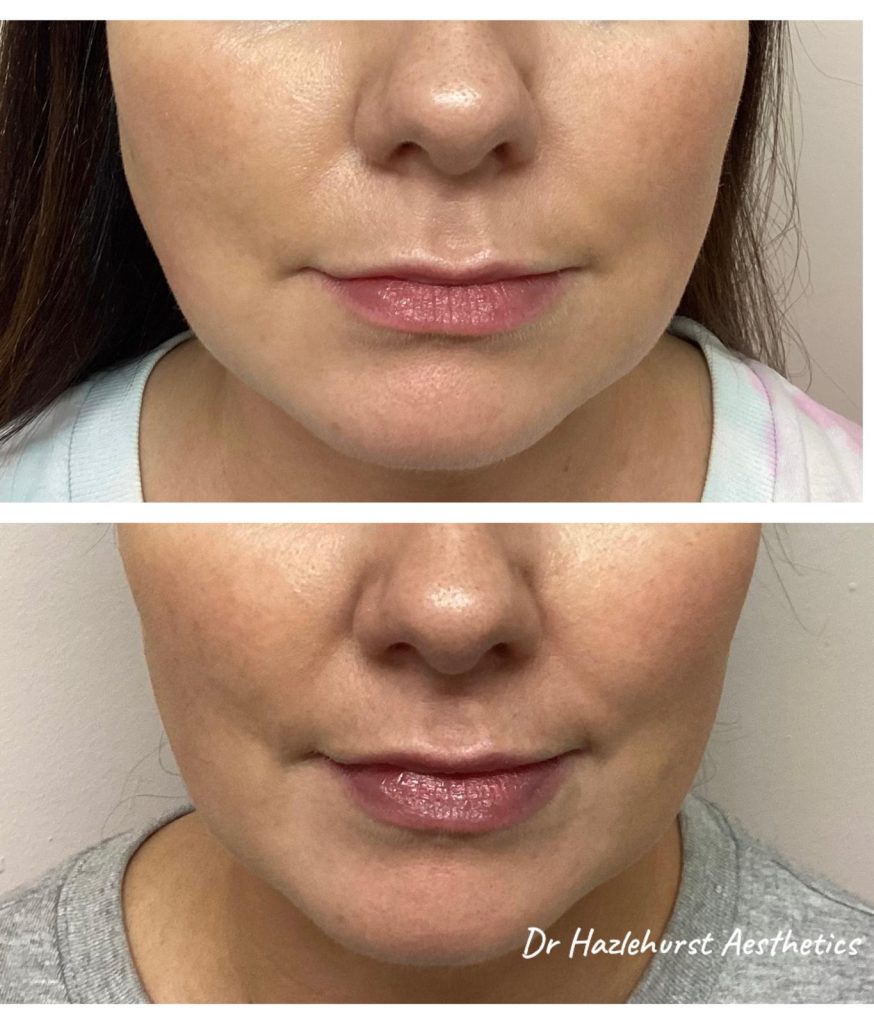
The following image shows the results of a masseter treatment with Dr Hazlehurst.

Before and after Masseter botox with Dr Kathryn Hazlehurst


What to expect during a Masseter Botox Treatment

The treatment involves injecting precise amounts of Botox into the masseter muscle. Depending on the size of the muscle, it may involve three or four injections on each side. Masseter Botox injections are a little uncomfortable but are not painful.

The treatment can take around 20 minutes in total, but the appointment time is longer. This allows time for your assessment, for you to discuss your concerns and the likely outcome, and to discuss the risks and benefits of the treatment.


When do the results of Masseter Botox kick in?

The results of Botox in the masseter are not instant. Botox starts to work at 2 weeks, and at this time the muscle becomes weaker and works less effectively. The masseter muscle then takes another 4-6 weeks to reduce in size. Once the masseter is smaller in appearance, the jawline looks softer in appearance.

The results of a single treatment can last up to 4 – 6 months,


How many Botox treatments will I need?

Masseter Botox usually needs to be repeated every 4-6 months to achieve the best results. With regular treatments, the masseter muscle tends to decrease in size, resulting in a slimmer jawline.

The treatment frequency can be reduced with time as the muscle continues to reduce in size (atrophy).

For those seeking this treatment for pain relief, a single treatment can result in a permanent change to muscle and a long-lasting reduction in clenching and grinding. However, this often depends on the cause of the problem, and some people may need additional treatment to maintain the results.


Does Masseter Botox cause Ageing or Sagging?

A strong jawline can be beneficial and may delay some signs of ageing. In younger patients with elastic skin, Botox to the masseter rarely causes sagging.

In older patients, reducing the masseter muscle can cause volume loss in the treated area, and the skin may therefore appear to sag. This could be interpreted as ageing, but it is just due to simple volume loss. If you do develop any sagging, this will reverse over time if you stop having the treatment.

During your consultation, this will be discussed with you so you can understand the pros and cons of the treatment and decide.


Who Performs Masseter Botox at Cheshire Lasers?

The following medical practitioners perform Masseter Botox for cosmetic reasons:

Click on their name to view their prices and availability.


Cheshire Lasers Aftercare Advice after Masseter Botox

  • Avoid Makeup for 12 hours after treatment
  • Gently move the treatment areas by frowning, smiling and lifting the eyebrows to optimise your results
  • Avoid strenuous physical activity for 2 days; this includes horse riding.
  • Do not rub or massage the treatment areas, as this may increase the risk of complications by spreading the product
  • Try not to take alcohol, aspirin and ibuprofen for 24 hours, as they can increase the risk of bruising and swelling
  • To reduce the risk of complications, do not undertake activities that may disturb the treated area for up to 2 weeks. Things to consider as a risk include:
    • Facial massage
    • Eyebrow waxing
    • Eyelash extensions
    • Saunas
    • Microblading
    • Facial Treatments such as Radiofrequency, HydraFacial, Microdermabrasion and CACI