Dr Teri Johnson MBChB is Medical Director of Cheshire Lasers in Middlewich, established 2008. She qualified in medicine at Liverpool University in 1993 and was a GP partner at The Oaklands Medical Centre for 25 years, retiring from general practice in 2025. She is GMC registered, a full member of the British College of Aesthetic Medicine, a BCAM appraiser since 2015, and Save Face accredited.
Earwax is produced by glands in the ear canal the colour can vary from yellow to bright orange, to dark brown.
It has the important function of keeping the ears clean and helps to protect the sensitive ear canal from things like bacteria and debris that can cause infections. In a healthy ear, the wax collects dirt, dead skin cells and bacteria and simply falls out without you noticing, cleaning as it goes.
Why do we get a build-up of Earwax?
Our ears are self-cleaning, with the help of cilia which are small hairs in the ear canal, which help gently and slowly remove the wax. Normally, it produces enough earwax to protect the ear without causing a build-up, but sometimes, this wax can become hard and impacted.
Some people are more prone to ear wax, especially if you have hairy or narrow ear canals or if you are unlucky and make more wax than normal. As we age, our wax can become hard, making it more difficult to fall out.
The use of cotton buds in an effort to ‘clean’ the ears from excess wax can damage the cilia hairs along the ear canal, which helps remove the wax and can actually cause earwax to build up. Cotton buds can also push the wax further into the ear, which leads to impacted wax.
The use of hearing aids, earbuds, earphones, earplugs and any other trauma to the ear canal can also lead to a build-up of wax.
Problems caused by Earwax build-up
Earwax build-up can lead to problems like hearing loss, tinnitus and discomfort.
The discomfort can vary and sometimes may cause only mild irritation but it can be much more severe and has even been known to cause severe discomfort enough for people to present to Accident and Emergency departments because of the distress caused.
How can you treat earwax build-up?
Do not use your fingers or any objects like cotton buds to remove earwax. This will push it in and make it worse.
Earwax usually falls out on its own. If it does not and blocks your ear use ear drops. Put 2 to 3 drops of olive or almond oil in your ear twice a day for several days. Over 2 weeks lumps of earwax should fall out of your ear this tends to happen more often at night when you’re lying down.
Do not use drops if you have a hole in your eardrum (a perforated eardrum). Speak to a pharmacist about earwax build-up. They can give advice and recommend chemical drops to dissolve the earwax. The earwax usually falls out on its own or dissolves a week or two.
See a nurse at your GP practice if:
your ear will not clear
your ear is badly blocked
you can’t hear anything
Traditionally, medical professionals would use ear syringing to remove an earwax build-up.
This would involve irrigating the whole ear canal with water to loosen the wax built up to try and clear it. This procedure can also damage the cilia in the ears leading to further wax build up later. There is also a small risk of infections and a very rare risk of damage to the eardrum. Ear Microsuction is now the preferred method of wax removal; however, this is not available in most GP surgeries.
Preventing earwax build-up
Once your ears are better, you can keep using ear drops to soften the wax; this will help it fall out easier, preventing a further build-up.
Ear Wax Removal Treatments at Cheshire Lasers in Middlewich
At Cheshire Lasers Middlewich, we provide Hopi Ear Candling yo help clear ear wax.
Cheshire Lasers is excited to share some of our before and after images taken after a course of Ultraformer MF2 Wrinkle Treatments.
Before and After two Ultraformer MF2 Wrinkle treatments for the upper lip :
This photo shows the improvements we have seen after two treatments. The collagen stimulation has improved the upper lip/smokers lines without the need for dermal fillers.
Before and After three Ultraformer MF2 Wrinkle treatments for the eye area :
This photo shows the improvements we have seen after three treatments. The skin looks plumper and tighter due to the collagen stimulation in the skin.
Before and After two Ultraformer MF2 Wrinkle treatments for the eye area :
This photo shows the improvements we have seen after two treatments. A third treatment was needed 4 months later to maintain the results.
Before and After a Single Ultraformer MF2 Wrinkle treatment under the eye :
This photo shows the improvements we have seen just 2 weeks after a single treatment. The results should improve further over the next few weeks. For best results, a course of three or sometimes four treatments is required.
Here is a review after an Ultraformer MF2 Treatment:
5/5 stars ⭐️⭐️⭐️⭐️⭐️
Absolutely fabulous service as always at Cheshire Lasers by all the staff I have met.
After having the Ultraformer treatment with Natasha, who is professional caring and explains every step. I am so very pleased with the results. I had the treatment for the under-eye area and has brightened, plumped and tightened exactly what I wanted. The treatment itself is quick painless and has no downtime, brilliant!
Will carry on having this as a maintenance treatment when needed and would highly recommend it to anyone looking to improve their under eye area.
Lucia
Botox is the name most people use for a range of various cosmetic and medical treatments.Botox is one of the first brand names used for this prescription only treatment and is produced by Allergan.
The term Botox usually refers to the use of Botulinum Toxin type A to reduce the appearance of fine lines and wrinkles. Botulinum Toxin is a protein which acts as a neurotoxin produced by the bacterium Clostridium Botulinum.
Botulinum Toxin has been around since the 1980’s when it was first used for facial muscle spasms and crossed eyes (strabismus).
Data shows treatments are safe with a few short term side effects such as minimal bruising at the injection sites and minor headaches which are short lived. Some people worry that Botox may be dangerous, however administered in the correct manner by a skilled medical professional carries very little risk.
Botox treatments are performed by the following doctors at Cheshire Lasers:
Cyspera was the original and first cysteamine cream. It contained 5% cysteamine, which can lighten skin and treat hyperpigmentation disorders such as age spots, melasma, and post-inflammatory hyperpigmentation.
Local side effects at the site of application may include:
Temporary heating up or burning sensation and redness that clears within 30 minutes
More persistent irritation and dryness, which you can treat with an emollient.
A burning sensation and mild redness might occur immediately after application, but it will usually disappear after 30 minutes. This is a normal reaction and may happen during the first few days of application.
No significant side effects, other than light to mild irritation, are reported in only a few cases.
In case of sustained redness, irritation or dry-skin, suspend Cysteamine application and carefully hydrate the area with your basic hydration cream. You can then gradually resume Cysteamine application once your skin has recovered — once again, not washing it off your face until it has been on the skin for 15 minutes.
Undesirable side effects are rare if:
You leave the cream on for longer than 15 minutes of exposure.
You do not wash your face less than 1 hour before application.
How do I avoid cysteamine cream side effects?
You can minimise side effects by:
Avoid washing your face just before applying.
(always wait for at least 1hr before applying)
Avoid prolonged application time use for 15 minutes only.
Avoiding concomitant use with other topical products.
Cheshire Lasers’ prices Cysteamine cream
The original Cyspera Cream is no longer available. You can find the prices of the available alternatives here:
At Cheshire Lasers Clinic, Sharron Roughton and Tara Shotton provide Reflexology for Menopausal Transition Symptoms.
What is Reflexology?
Reflexology is based on the principle that certain reflex points on the feet are linked to different organs of the body. When the points on the foot are stimulated by massage, it is thought that this then stimulates the corresponding organ.
Reflexology can help manage and improve symptoms during Perimenopause, Menopause, and beyond.
It offers a holistic approach to hormonal regulation and supports women through the natural life cycle. Reflexology is thought to help manage and improve symptoms and support health and general well-being.
Menopause reflexology focuses on key reflexes for common menopausal symptoms. The treatment aims to reduce symptoms on a physical and emotional level.
Reflexology can be helpful for ladies looking for a natural approach to managing their menopausal symptoms and for those on HRT.
You can book a course of treatment as part of your menopause care or you can book a one-off treatment for relaxation or an ongoing management of symptoms.
What is the Perimenopause?
Before menopause, a woman’s periods typically become irregular, which means that periods may be longer or shorter in duration or be lighter or heavier in the amount of flow. During this time, women often experience hot flushes/flashes; these typically last from 30 seconds to 10 minutes. They may be associated with shivering, sweating, and skin reddening. Hot flushes often stop occurring after a year or two. Other symptoms may include poor memory, general aches and pains, vaginal dryness, trouble sleeping, and mood changes, including anxiety. The severity of symptoms varies between women. These symptoms can occur at any time in the perimenopause and can affect women in their 40s until their later 50s and sometimes beyond.
What is the Menopause?
Menopause is the time in most women’s lives when menstrual periods stop permanently, and they are no longer able to bear children. Menopause typically occurs between 49 and 52 years of age. Medical professionals often define menopause as having occurred when a woman has not had any vaginal bleeding for a year. It is due to a decrease in hormone production by the ovaries.
The following studies demonstrate the benefits of Reflexology during the Menopause:
Dr Teri Johnson performs all the Sculptra Treatments Cheshire Lasers Clinic
What is Sculptra?
Sculptra is a facial treatment that gives you deep tissue regeneration to help reduce the signs of ageing in your face. Unlike traditional Dermal Fillers, Sculptra works to replace lost collagen and replenish volume in your face more subtly over time, giving you a more natural looking appearance.
Sculptra is one of Dr Teri Johnson’s favourite treatments, in fact she has Sculptra herself. She trained in this procedure in 2008 and has attended regular update courses since then to improve her techniques and make sure she is up to date with current practice. Dr Teri follows the latest recommendations for preparing and administering the treatment, she uses a cannula to inject the product most of the time but sometimes she still uses needles.
On average Dr Teri performs around 5 Sculptra treatments a week at Cheshire Laser.
Sculptra was previously known as New-Fill and was launched in the U.K. in the year 2000. It was rebranded under the new name Sculptra in 2004 and is growing in popularity in the U.K. and Europe.
Sanofi Aventis used to distribute Sculptra however Sinclair took over its distribution a few years ago.
The advantage of Sculptra is that larger areas can be treated with a longer lasting result.
What is Sculptra made from?
Sculptra is made from Poly-L-lactic acid a synthetic polymer manufactured from lactic acid it does not require a skin test.
ThePoly-L-lactic acid is completely broken down within the skin over a period of months, however the results (new collagen growth) can last for up to 3 to 4 years.
Sculptra can be used for:
Replacing lost volume caused by ageing
Smooth lines and wrinkles in the cheeks and chin
Deep folds and wrinkles
Volume defects e.g. sunken cheeks and temples
Contour enhancement
Improving skin texture
How does Sculptra work?
The Poly-L-lactic acid in Sculptra stimulates collagen production in the areas it is injected to replace lost collagen and replenish volume in your face. The results develop slowly over time, giving you a natural looking appearance.
How many treatments will I need?
The number of treatments required to achieve the desired affect depends on your age and how well you make collagen due the the product.
It also depends on how deep your wrinkles are as well as the amount of volume, lift and contouring you desire.
For optimal results 2-4 treatments are usually required using between 2 and 6 vials of Sculptra. Treatments can be every 6 weeks, however they can be spaced every 3-6 months if you are not in a rush to see the end results.
How long does Sculptra last?
In contrast to some other treatments that require frequent refresher sessions, clinical trials indicate that Sculptra is effective for up to three years and in some cases longer, most people find the results last around two or more years.
During a Sculptra Treatment:
Dr Teri will make sure your face is thoroughly cleansed.
She will then apply a cream to numb the skin.
Photos will be taken of your face, and you will be examined to decide which areas need treatment.
The treatment itself will take about 30 minutes, and Dr Teri will use either a cannula, a needle or both depending on your needs.
Dr Teri will then massage your face and advise you about aftercare.
After Sculptra Treatment:
Massage is very important after Sculptra treatments and should be performed for 5 minutes, 5 times a day over the first 5 days.
After this, massage twice daily for 5 minutes for 6 weeks.
Massage is very important after Sculptra treatment it ensures the even distribution of the product in the tissue and makes sure collagen production occurs evenly and not in clumps.
After treatment, you should notice gradual results over the next several weeks. In general, it takes approximately six weeks to see some effects and the effects continue to develop up yo a year after treatment, sometimes even longer.
Side Effects:
Common effects at the site of injection include:
Bleeding
Tenderness
Mild Discomfort
Redness
Bruising
Swelling
These side effects generally resolve in 2-6 days.
More rare side effects include:
Nodule formation (small bumps) after injection. This is very rare and can be caused by too much product being injected or lack of massage. These small bumps may not be visible, and you may notice them only when you press in the treated skin. These bumps tend to happen within the first 6 to 12 months after the first treatment. Typically resolution is spontaneous, over a period of months. Massaging regularly after treatment reduces the risk of nodules.
Tissue infection/abscess is very rare and can be treated with antibiotics.
Granuloma (tissue nodules) are very rare and can be treated with injection of steroid into the affected area.
Hypersensitivity/allergy is very very rare and can be treated with antihistamines.
Talking is one of the most important parts of all of our relationships. It strengthens our ties with other people and helps us to maintain positive mental health.
Therapy is a journey of change and talking therapies, such as counselling and psychotherapy, can help you improve your well-being and make positive changes towards a more satisfying life.
Counselling at Cheshire Lasers takes place at our clinic on Wheelock Street in Middlewich.
Counselling is….
A safe, confidential, non-judgemental place where you can bring any difficulties you may be experiencing.
The aim of counselling is to encourage you to find your own solutions. It’s not about giving advice.
Counselling will…
Help you to change some aspects of your thoughts, feelings and behaviours to enhance your life, giving you a better understanding and helping you to work towards growth and change.
Counselling is for…
People from all walks of life may be struggling with a variety of personal difficulties such as bereavement, illness, depression etc.
Whatever the difficulty, counselling will help you gain a better understanding of your experiences
Why have ‘Talking Therapy’?
People around you may not understand the difficulties you may be having in your life. Talking things through can be a way of looking at difficult experiences and finding new ways of doing things.
How long does therapy last?
Counselling sessions are always client-led, some people may need only a couple of sessions, and others may need months. Sessions will be reviewed and agreed upon on a regular basis.
Who has therapy?
People from all walks of life including stay-at-home parents/carers to teachers, legal and medical professionals, government members & high-profile business people.
Who provides this Counselling at Cheshire Lasers?
Cheshire Lasers houses a team of counsellors and psychotherapists in Middlewich, Cheshire. They all have different special interests and experience, and provide a range of different therapies to suit different people’s needs.
Noah Sisson-Curbishley
Noah is an accredited psychotherapist as well as a counsellor, and also offers EMDR and clinical hypnotherapy. They work with adults and children from age eleven.
Noah offers a traditional psychotherapeutic approach drawing on experience of working in a person-centred way and incorporating techniques and practices from other modalities including Narrative Therapy, sand tray work, Compassion Focused Therapy and Somatic Therapy. All these options can be tailored to your goals and can be discussed during a free consultation.
Noah can help with all kinds of personal challenges including (but not limited to) Abuse, Anxiety, Bereavement, Depression, Identity issues, post-traumatic stress, Relationships, Self-esteem, Self-harm, Sex-related issues, Sexual identity, Sexuality, Spirituality, Stress, and Traumaand many others.
Michaela Duffy is a counsellor and a registered member of the BACP. She offers a supportive, non-judgemental space where clients can explore their thoughts, feelings and experiences at their own pace.
Michaela works integratively, drawing together ideas and techniques from different counselling models so that sessions suit each individual rather than following a one-size-fits-all approach. Sessions last 60 minutes and are available in person, online or by phone.
Michaela can help with a wide range of concerns including anxiety, depression, PTSD, low self-esteem, burnout, loneliness, family and relationship difficulties, neurodiversity support, pregnancy and baby loss, and work-related stress. She works with young people from age 13 as well as adults of all ages.
The treatments on this page soften the lines around the mouth — also known as perioral lines or smokers lines. Our aim is a rejuvenated, refreshed appearance without any telltale signs of treatment.
Patients who come to Cheshire Lasers for this are usually over 40, and many are over 60. Smokers tend to get these lines earlier, but plenty of our patients have never smoked and still get them, because of their facial expressions or the anatomy of the skin in that area.
Dr Johnson has a special interest in treating this area and knows our full range of treatments and who is suitable for which. She will give you an honest consultation about your options, including doing nothing. The treatments are carried out by our doctors or by our highly skilled aestheticians, depending on what you need. If anything concerns you afterwards, we are contactable seven days a week.
Which Lip Line Treatment is the best for me?
It depends on what is causing your lines, which is why we start with a consultation rather than a treatment. Lines in this area come from three different places:
Fine surface lines or changes in skin texture
Deeper lines, caused by collagen and fat loss in the tissues supporting the skin, where the surface is still smooth
Both together
Some people need only one method of treatment. Others need a combination, because the different layers of the skin have to be addressed separately.
We will be straight with you about what is achievable. The longer you have had lines around the mouth, and the more damaged the skin texture, the less effective the results will be and the more treatment you are likely to need. For severely damaged, deeply wrinkled skin this area is very difficult to manage.
At your consultation, Dr Johnson will assess whether the cause is volume loss, skin texture, or both. She will go through the treatments open to you, the costs, how effective each is, the risks and benefits, any downtime, and how to maintain your results afterwards.
A consultation with Dr Johnson is £50. The fee is redeemable against injectable treatments carried out by Dr Johnson, or device treatments carried out by our aestheticians at Cheshire Lasers, if you go ahead within six months.
Microneedling — improves skin texture and stimulates collagen to support deeper lip lines
What causes the lines and wrinkles in the Perioral area?
As we age, the mouth area develops lines and wrinkles and the lips begin to reduce in size. The skin, the supporting dermis and the fat underneath all go through changes that make those lines more obvious.
Women tend to age more in this area than men, because over time they lose almost all of the fat in the perioral area. This fat acts like a mattress under the skin and gives a plumping effect. As the fat goes, the skin is then sat on the muscle, which means the dynamic lines of movement are visible. Facial expressions such as pursing the lips cause those dynamic lines.
What are smokers lines, and do you have to be a smoker to get them?
Smokers lines are the fine vertical lines that form on the upper lip and around the mouth. They are called smokers lines because the repeated pursing action of smoking tends to bring them on earlier.
You do not have to be a smoker to get them. We see them just as often in people who have never smoked, where they come from ordinary facial expressions, from the loss of fat and collagen that supports the skin, or simply from the anatomy of the skin in that area.
Women tend to age in this area more than men, as over time, they tend to lose all of the fat in the perioral area with age. This fat acts like a mattress under the skin and gives a plumping effect. As the fat goes, the skin is then sat on the muscle, which means the dynamic lines of movement are visible.
Facial expressions such as pursing the lips cause dynamic lines. These lines are usually more obvious in people who smoke; however, they are often seen in non-smokers who have the habit of repeatedly using their muscles for their facial expressions.
Dr Teri Johnson specialises in “Dermal Filler Lip Rejuvenation” a treatment that gently restores ageing lips and improves the perioral area.
Dermal fillers are one of the most effective treatments for more significant volume loss in the perioral area. The use of Dermal Fillers helps to subtly replace lost volume and hydration in the lips. Dermal Fillers also reduce the perioral lines (smokers lines) that develop due to fat loss and collagen loss. The filler plumps out this area so the skin has a soft support structure to sit on, this way the lines from the movement of the muscles underneath are no longer visible.
Dr Teri has spent many years perfecting using different Dermal Fillers to suit different people’s needs.
Before and after one syringe of dermal filler, three weeks after treatment.
Treating the perioral area with Botox reduces the movement of the orbicularis oris muscle. This treatment is usually reserved for people who overuse these muscles and often hold a pursed-lip expression when relaxed.
If a Botox treatment is overdone in this area, it can lead to problems with speech, eating etc. When performed correctly, this usually does not happen. However, it is common to be aware of slight mouth weakness for a day or two when the Botox first kicks in.
This treatment can be performed in combination with a Dermal Filler treatment. However, the two procedures are best performed a few weeks apart.
The Neogen treatment provides excellent results rejuvenating this area. It targets the deeper supporting tissues, stimulating collagen and improving the deeper lines in the lower skin layers while also targeting the upper layer, reducing the surface fine lines and texture.
At Cheshire Lasers, we use Dermaforce to deliver RadioFrequency (RF) Microneedling. This advanced treatment combines microneedling with Radiofrequency (RF) technology to effectively treat many cosmetic concerns, with excellent results. It can target multiple layers deeper in the dermis to stimulate collagen to reduce and support deeper lip lines. It also can target more superficial skin cells to resurface the skin and target stubborn lines engrained in the skin’s surface.
Our Ultraformer MF2 treatment is an alternative to injectable treatments for replacing lost volume under the skin with collagen. The ultrasound causes controlled heating in the dermis and stimulates collagen production, which develops over a few months. The plumping effect under the skin reduces the appearance of wrinkles after a course of treatments. The result with this treatment varies as everyone’s collagen production is different.
A second headpiece can be used during this treatment to address the epidermis (the top layer of skin) to help stimulate increased cell turnover. We tend to use this for those people suffering from thickened lines on the top layer of skin (the stratum corneum).
Before and after two Ultraformer MF2 treatments, one month apart. We usually recommend a course of three.
Radiofrequency is an alternative to our Ultraformer treatment. It is less aggressive and less uncomfortable; many people report that it is a pleasant, relaxing experience. A course of 6 to 8 treatments is often required for optimum results.
This treatment stimulates collagen under the skin for a plumping effect but also helps fine lines in the top layer by stimulating cell renewal. Again, results with this treatment vary as everyone’s collagen production is different.
Microdermabrasion works on the top layer of skin (stratum corneum) by exfoliating the dead cells on the top layer, which are often dull, dried out and creased. The treatment encourages faster cell turnover and allows new, less creased and less dehydrated cells to replace them on the surface. We recommend a course of at least three treatments to see the benefits.
Microneedling works on the top layer to stimulate cell renewal, improving skin texture. It also works in the dermis to stimulate collagen and plump out the dermis under the skin.
This treatment has more downtime than most of the others.
Costs for this treatment are similar if treating one area or the full face, so we usually recommend a full-face rejuvenation for cost-effectiveness.
Perioral Lines Before and After a Combination Treatment
At Cheshire Lasers, we regularly review our treatments, protocols, and client results.
We now combine microdermabrasion and radiofrequency to give lovely lip line improvements with minimal discomfort and no downtime.
Before and after three treatments combining microdermabrasion and radiofrequency, two to three weeks apart. Photographed several weeks after the last treatment.
Ultraformer is an advanced High-Intensity Focused Ultrasound (HIFU) treatment. It is a non-invasive treatment that uses focused ultrasound waves to penetrate deep into the skin and underlying tissues without damaging the surface to deliver a non-invasive face, neck and body lifting treatment.
Benefits
Tightens and firms the skin.
Destroys fat cells.
Increases the elasticity of the skin.
Ultrasound Energy has a Thermal Effect.
The body treatments focus the energy precisely to specific depths between 1.5mm to 13mm below the skin. The energy generates tiny pockets of heat in the targeted areas ( around 56-70c).
Fat Cell Disruption
This heat is enough to disrupt the fat cells and cause them to break down.
The destroyed fat cells are then naturally processed and eliminated by the body’s lymphatic system over the following weeks. This reduction in the fat cells leads to a reduction in body fat.
Skin Tightening
The heat generated by the ultrasound waves also stimulates the production of collagen. Collagen helps keep the skin firm and more elastic. By stimulating collagen production, HIFU helps tighten loose or sagging skin on the abdomen and thighs.
Results are not immediate and can take up to 12 weeks to become noticeable as the body processes and eliminates the destroyed fat cells; however, some clients may notice immediate tightening.
What parts of the body can the Ultraformer treat?
The Ultraformer III can treat most body parts. At Cheshire Lasers, we mainly treat the abdomen where it works the best; sometimes, we also treat above the knees and upper arms.
We can, however, also treat the face, jowl area, neck and chest.
How long does an Ultraformer Body Treatment take?
Ultraformer III has a fast shooting speed, which means some treatments take only 45-60 minutes.
How many Ultraformer Body Treatments will I need?
For body contouring, approximately three treatments are usually enough for most people; however, some may need less and some more for the best results.
Treatments are usually carried out every month.
The results can last up to a year, so you may decide to have further treatment when the results start to wear off.
When will I start to see results after an Ultraformer Body Treatment?
Ultraformer III can show some immediate results as the stimulating heat can make your skin look more rejuvenated, fresher, tighter and firmer. However, the final results develop 60 to 100 days after the treatment, when the fat reduction and collagen regeneration become more noticeable.
What is the recovery time for Ultraformer treatments?
You can go back to work and normal life immediately after the treatment.
Is the Ultraformer treatment painful?
During the treatment, you will feel warm pulses of ultrasound energy deep under the skin, causing the collagen and muscle layers to contract. Some people may find this uncomfortable, but others report no pain with the treatment at all. Some people will need to take some simple painkillers before the treatment; however, this depends on the pain sensitivity level of each individual, the area to be treated, and the size of the area to be treated.
Does Ultraformer have any side effects?
The heat levels created by the Ultraformer device only treat the targeted area and do not damage the surrounding tissue. The energy targets the deeper levels of the skin and not the upper layers, so there are usually few visible signs on the skin’s surface post-procedure. The only noticeable effects are usually tightening and redness an hour or two after treatment. A small percentage of patients may have slight swelling, tingling or tenderness to touch over the treated area, but these are mild and tend to last no more than a few days.
A small proportion of people may experience slight tingling or tenderness in the area treated for several weeks as the growth of new collagen occurs.
The most frequently reported side effects are:
Swelling
Redness
Tingling of the skin
Tenderness
Bruising
Is Ultraformer safe?
Ultraformer has been cleared by the Korean FDA after demonstrating safety in clinical studies. Tens of thousands of treatments have been performed worldwide without significant adverse events. Ultrasound energy has a proven track record and has been used in the medical profession for over 50 years, including pregnancy scans.
Contraindications to Ultraformer Treatments include:
Pregnancy
Metal implants in the treatment area
Tumours
Uncontrolled Epilepsy
Recent surgery
Heart conditions
Severe skin laxity
Excessive fat
How is the Ultraformer different from Radiofrequency (RF)?
Radio Frequency (e.g. Endymed, Thermaclinic) addresses issues in the superficial layers of the skin (e.g. fine lines, wrinkles, skin tone and texture). The Ultraformer addresses the deep skin layer and the foundational muscle layer that lifts and supports the skin, similar to cosmetic surgery. Therefore, the two technologies can be used together depending on your skin concerns.
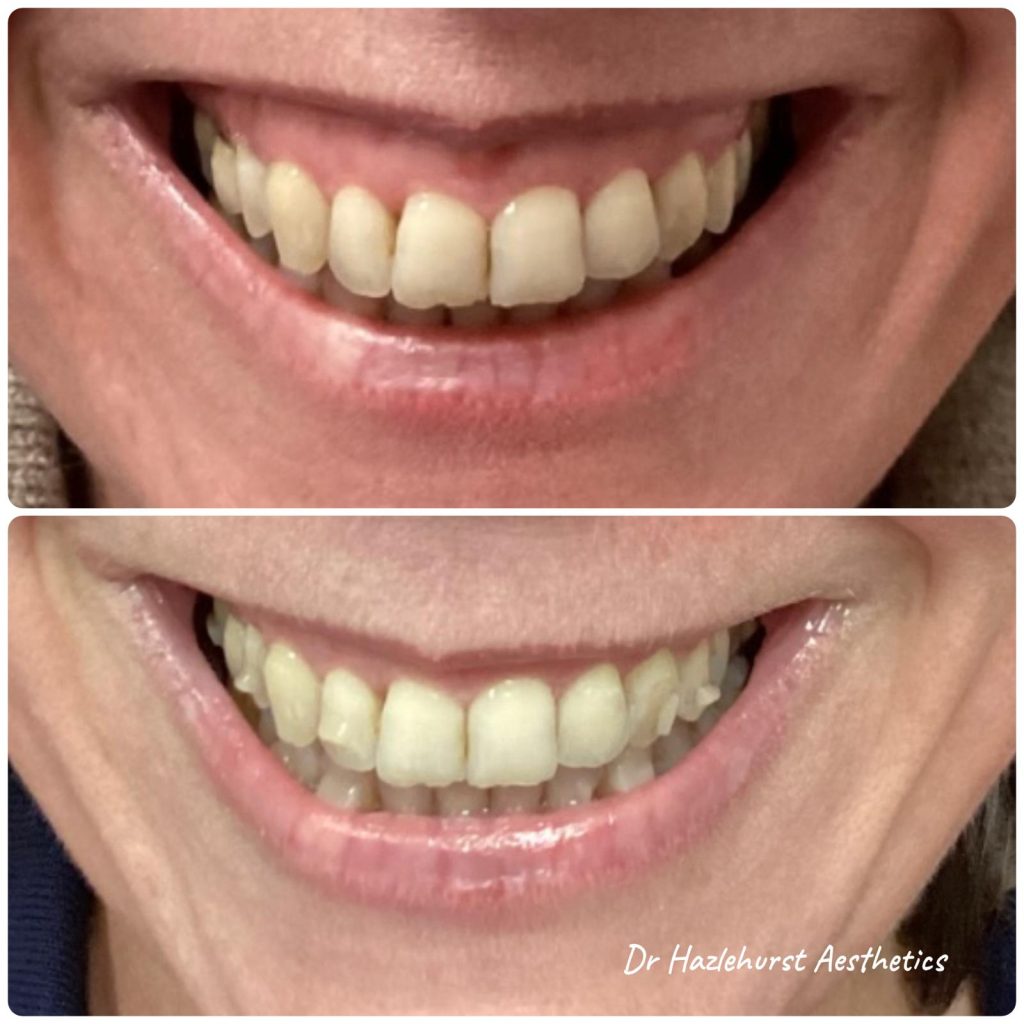
A gummy smile occurs when more of the upper gum is visible than desired when you smile. For many people, this is caused by overactive muscles that lift the upper lip too high.
How to Treat a Gummy Smile
Several treatments can improve a gummy smile, depending on the underlying cause. Common options include:
Botulinum toxin – Ideal for gummy smiles caused by overactive upper lip muscles. This is a quick, non-surgical treatment with results lasting around 3–4 months.
Lip repositioning surgery – A minor surgical procedure that limits how high the upper lip lifts when smiling, providing a longer-lasting result.
Dermal fillers – In some cases, fillers can provide additional support to the upper lip and reduce gum exposure. They are often used alongside botulinum toxin rather than as a standalone treatment.
Gingivectomy (gum contouring) – If excess gum tissue is the cause, a dentist or periodontist can reshape the gum line to expose more of the teeth.
Crown lengthening – This dental procedure removes excess gum tissue and, in some cases, a small amount of bone to reveal more of the natural tooth structure.
Orthodontic treatment – Braces or clear aligners may improve a gummy smile caused by the position of the teeth or jaw.
Orthognathic (jaw) surgery – For severe gummy smiles caused by excess growth of the upper jaw. This is typically reserved for significant skeletal concerns.
Here at Cheshire Laser, we provide Botulinum toxin and occasionally Dermal Fillers to create a more balanced, natural-looking smile.
At your consultation, your doctor will assess your concern and advise whether the treatments they provide are likely to be beneficial. Sometimes they recommend you see a cosmetic Dentist for a dental perspective also.
What does a botulinum toxin treatment for the gummy smile involve?
During treatment, a small amount of botulinum toxin is carefully injected into the muscles that elevate the upper lip. As these muscles relax, the lip sits slightly lower when you smile, reducing the amount of gum that is visible while preserving your natural facial expressions.
The procedure is quick, typically taking around 10–15 minutes, with little to no downtime. Most people can return to their normal activities immediately after their appointment. Results usually begin to appear within 3–7 days, with the full effect visible after about two weeks. The results generally last between 3 and 4 months, after which repeat treatments can help maintain your desired appearance.
Is botulinum toxin treatment for the gummy smile safe?
Botulinum toxin for a gummy smile is a safe and effective treatment when administered by a qualified medical professional.
Our doctors will tailor your treatment to your facial anatomy for natural-looking results that enhance your smile.
Who Performs Gummy Smile Treatments at Cheshire Lasers
Most of our doctors perform Gummy smile treatments with Botox.



 A large area is A4 size in total.