Dr Teri Johnson MBChB is Medical Director of Cheshire Lasers in Middlewich, established 2008. She qualified in medicine at Liverpool University in 1993 and was a GP partner at The Oaklands Medical Centre for 25 years, retiring from general practice in 2025. She is GMC registered, a full member of the British College of Aesthetic Medicine, a BCAM appraiser since 2015, and Save Face accredited.
ZO Skin Health and Medical Products are Available at Cheshire Lasers
Who created ZO Skin Health?
Nearly three decades ago, Dr Zein Obagi a leading dermatologist, redefined skincare to include the concept of creating and maintaining healthy skin instead of only treating skin disease. This new philosophy led to the development of some of the most widely recognized skincare products and solutions recommended by physicians. Dr Obagi has redefined the concept of skin health to include comprehensive solutions that bridge the gap between therapeutics and maintaining truly healthy skin.
In 2007, under the guidance of Dr Obagi, ZO Skin Health, Inc. introduced innovative results-oriented skin health solutions to treat everyone seeking healthier skin on a daily basis.
ZO Skin Health Products Target Every Patient. Every Age. Every Stage.
ZO Skin Health provides results-oriented therapies tailored to meet your specific needs. Delivering clinically proven results, these solutions maintain healthy skin that is strong, smooth and firm, evenly toned, and fully hydrated.
ZO Skin Health Skincare by Dr Zein Obagi is a prescription-strength, dispensed topical skincare system only available after a consultation with a ZO-trained health care professional. The products provide general improvements to skin health and appearance. The products have been thoroughly researched and clinically tested with fantastic results. ZO’s results-orientated therapies are tailored to suit your skin’s specific needs and are designed for you to apply at home. Everyone’s skin is different and that’s why ZO skin products are only available from an authorised clinic after a consultation.
ZO have created two ranges. The ‘Medical’ range treats disorders and more difficult skin conditions, whilst ‘Skin Health’ provides environmental protection and everyday skin health support.
Please note we usually have everything in stock. However, we can not sell ZO Skin Health products online, hence why it says out of stock for every item (so we can not be sold online).
Bio Nutri Mesotherapy is a treatment that involves injecting NCTF® 135HA (New Cellular Treatment Factor). A unique anti-ageing mesotherapy solution that provides the dermis with the essential ingredients it needs to thrive. It creates the optimal environment to stimulate fibroblasts, which produce collagen and elastin. The treatment provides the nutrients your skin needs to maintain a healthy, youthful appearance.
NCTF 135HA contains:
5% Free Hyaluronic acid
14 vitamins
6 minerals
23 amino acids
It improves hydration, radiance and elasticity in the skin. A course of treatments helps reduce fine lines and wrinkles, and dark circles.
What areas can Bio Nutri Mesotherapy treat?
Around the eyes
Around the mouth
Face
Neck
Décolleté
Back of hands
Lips
It is most often used under the eyes to improve skin texture and fine wrinkles.
What does a treatment involve?
First, the skin is treated with a light chemical peel.
The NCTF 135HA is placed just under the skin using a nano soft needle designed to deliver the product just where it is needed.
The procedure can be mildly uncomfortable and rarely needs local anaesthetic.
What side effects may I expect from the treatment?
After the procedure, visible papules may appear on the skin, which usually subside within several hours but can last up to 24 hours before full resolution.
Other side effects are usually mild and short-lived due to the nano soft needles.
You may also experience:
Redness of the skin
Slight discomfort
Tenderness
Slight bruising
Swelling
Occasionally, it can cause prolonged puffiness for one or two weeks when used under the eyes.
Extremely rare side effects may include infections and ulceration.
How many treatments will I need?
Most people will benefit from 4 treatments every 14 days.
Maintenance treatments are then required every 2-6 months.
This page answers detailed questions about the treatment. For an overview of advanced electrocautery, the lesions it removes and what it costs, see our advanced electrocautery page.
What is Advanced Electrocautery?
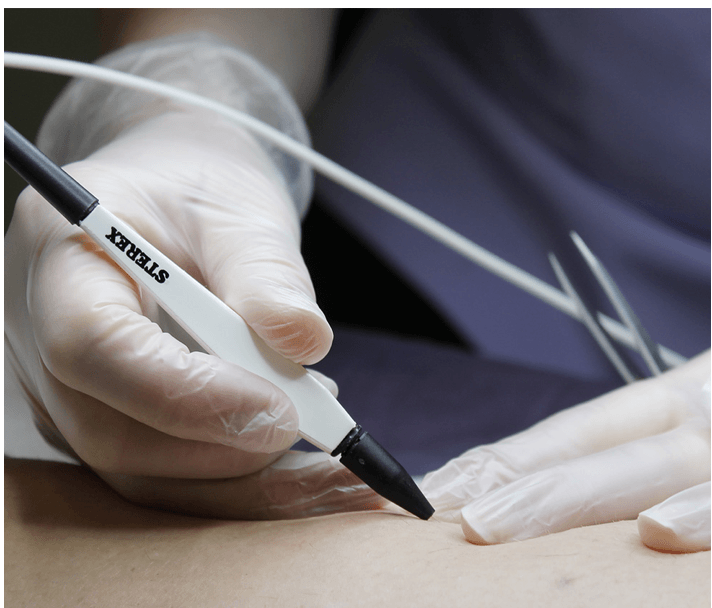
Electrocautery, also known as diathermy, uses electrical energy to create heat at the tip of a small needle, which enables the precise removal of skin lesions.
What does the procedure involve?
Although slight local discomfort is felt during the heat application, it does not usually require a local anaesthetic. The procedure often lasts a matter of seconds; however, this depends on the type of skin lesion, its thickness and size. For lesions that take longer to treat, topical anaesthetic or local anaesthetic injection can be used.
How does the skin appear after Electrocautery?
The area at the base of the lesion will appear dark or black initially & slightly tender to the touch, and the area around it will usually be red and slightly swollen.
Over the following days, a crust or scab usually forms as the area dries out and this will then slough off over the next week.
It’s essential not to pick at any scabs to prevent scarring. Usually, the treatment area will return to normal after a few weeks, although scarring and discolouration is possible. This includes hypo or hyperpigmentation (skin becoming lighter or darker).
Depending on the nature of the lesion, more than one treatment may be necessary and this is usually repeated at regular intervals if required.
Possible side effects shortly after treatment:
Pain –
Diathermy is usually well-tolerated but can sometimes be uncomfortable during or after treatment.
Using your aftercare cooling gel will help to make the area feel less uncomfortable after treatment. Apply with a damp, clean cotton wool pad (pads & gel can be kept in the fridge to aid cooling).
Swelling, skin sensitivity and redness –
This is a normal immediate response to heating the skin & may last for 48 hours, depending on the lesion treated. For a short while the area may also ooze a watery fluid, which will then crust & dry.
Crusting or scabbing – this is also a common consequence of treatment and any crusting or scabbing will usually resolve over the next week. Itching may occur as the skin heals.
Infection –
Infection can occur, but this is uncommon. If it does occur, the discomfort usually increases, and the area may develop a discharge. This will require treatment in the form of a topical antiseptic or antibiotic therapy.
If this occurs, it’s essential to let your Practitioner know as soon as possible so you can start treatment before it worsens.
Subsequent side effects:
Scarring –
Sometimes, the treated area may leave a small scar, which will fade over time.
Pigmentation changes –
The skin around the treatment site may lighten or darken in colour. This can occur in anyone but is much more common in people with darker skin tones. This usually improves with time but may be permanent.
Results are not always permanent –
This is more likely for some thread veins, which may refill over time and require further treatment.
Warts & skin tags can also reoccur, especially if you are susceptible to them.
Which Lesions Can Electrocautery Treat
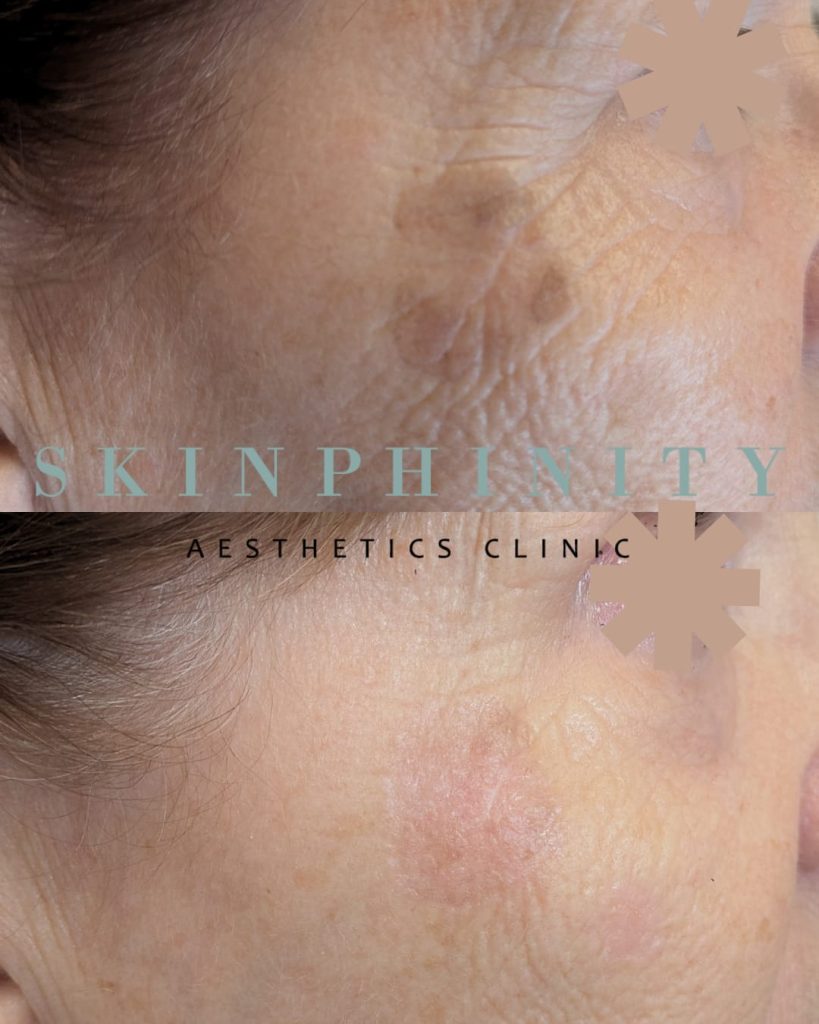
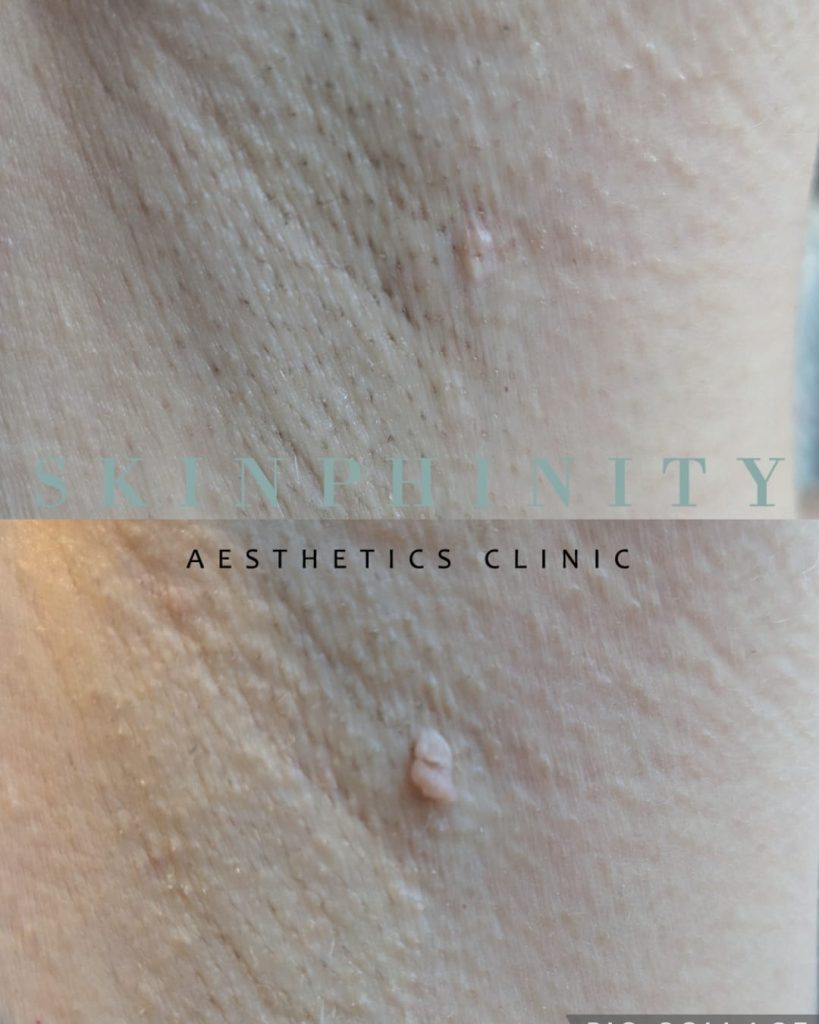
Electrocautery/ Diathermy is excellent for treating skin tags, milia, sebaceous hyperplasia, seborrhoeic keratosis, some cysts and facial telangiectasia.
As a guide, the treatment of one lesion with electrocautery is around £140
Treatment of additional lesions at the same appointment costs around £80 per lesion.
Some skin lesions respond better to cryotherapy (cold therapy) may be the best treatment.
Cryotherapy tends to be less uncomfortable but may need two or more treatments a month apart for best results.
Send us a photograph first
If you are not sure which treatment you need, email photographs of the area from a couple of different angles to cheshirelasers@hotmail.co.uk. It’s helpful if you let us know how long the lesion has been there and whether it’s changing in any way. We will ask our specialists to review your email and advise our reception team on who you should see. Sometimes we will ask you to book a consultation first.
How do I book a treatment?
You have two options:
Book a consultation with your chosen specialist.
They can assess your skin lesion/ concern. They can diagnose your problem and advise you on further management and the costs.
At Cheshire Lasers, we have a wide range of treatments for skin rejuvenation.
Cheshire Lasers uses the Intense Pulsed Light ( IPL) system for skin rejuvenation when there are brown spots (pigmentation) or redness caused by thread veins.
Pulsed light quickly removes brown and thread veins and stimulates the production of new collagen.
At Cheshire Lasers, we use a Lynton AQS System made by Lynton Lasers a local company from Holmes Chapel with a fantastic reputation.
IPL Skin Rejuvenation Consultation Procedure
Prior to any treatment our Level 4 Laser Technician will provide a full consultation. The consultation identifies your expectations and provides a complete explanation of the treatment. A medical history is taken to confirm suitability for treatment. If you wish to proceed, written informed consent is obtained, and a test patch is performed to confirm there are no adverse skin reactions to the light.
How does Intense Pulsed Light work?
Intense pulsed light systems release precisely controlled short pulses of filtered light that stimulate the fibroblast cells within the skin that produce collagen and elastin. This improves the radiancy and tightness of the skin, controlling enlarged pores, and giving a more uniform complexion.
What does an IPL Skin Rejuvenation Treatment involve?
After cleaning the skin a mild, we will apply a gentle skin peel to remove the top layers of dead skin.
To protect your eyes, you will need to wear goggles.
We will apply a layer of cool gel to the treatment area to guide the light into the skin.
The light applicator is placed onto the skin, and a quick light pulse is released. The applicator is then moved to the neighbouring area, which is repeated until the entire area is treated. The chilled gel is removed, and the area is cooled.
Am I suitable for treatment?
This treatment is only suitable for lighter skin tones.
At the bottom of this page, we list other skin rejuvenation treatments which we can discuss if you have a darker skin tone.
We can not recommend treatment if you have the following conditions:
pregnant or breastfeeding
infections on the skin
broken, angry inflamed skin
light-sensitive medication or medical conditions
medications that make skin delicate and sensitive to injury
recent sun exposure or planned sun exposure up to 4 weeks after treatment
keloid scarring
How Does the treatment feel?
You will not need anaesthesia for this treatment. Most patients describe the discomfort as moderate and acceptable and liken it to a quick pinprick.
Is IPL Skin Rejuvenation safe?
The skin of some patients becomes quite red after treatment. Very rarely the skin may become lighter or darker, or small blisters may form. However, most patients experience little or no side effects and any skin reaction usually disappears within a few hours.
What should I expect after the treatment?
Redness and a slight warming sensation are normal after treatment. We will cool the skin to ease these symptoms. You may see a darkening of any pigmented spots before they flake off, leading to an evening of skin tone. Skin tightening should increase over the following months as new collagen is regenerates within the dermis. Some patients notice a slight swelling over the cheekbones, which may last for up to 72 hours.
How many treatments are necessary?
Treatments should be every four weeks; you may need up to 6 treatments for maximum results.
After this, we recommend top-up sessions to maintain the results.
How long does each treatment take?
A facial treatment usually takes about 30 – 45 minutes.
Alternative Skin Rejuvenation Treatments
At Cheshire Lasers, we offer a range of treatments for skin Rejuvenation. IPL Treatment is the treatment of choice if you have vessels or patches of pigmentation you want to target.
Other excellent skin rejuvenation options include:
Cheshire Lasers is proud to offer Dermalux LED Light Therapy, a revolutionary non-invasive treatment that uses the power of light to rejuvenate, repair and revitalise the skin. It is clinically proven to reverse the visible signs of ageing, clear acne and blemishes, and accelerate healing.
The Dermalux treatment offers a natural, pain-free and effective way to achieve youthful and healthy skin. The visible effects can be immediate, after just one treatment. Skin becomes more hydrated, plump and radiant, and any redness and irritation are calmed. A course of treatments offers a more dramatic and lasting improvement in the appearance and health of the skin. Furthermore, you can enhance the results of light therapy by combining it with other skin treatments, e.g., microdermabrasion, skin peels, Micro-Needling, injectables, and Laser.
It also treats compromised and reactive skin conditions. It helps with acne, rosacea, pigmentation, and other inflammatory disorders such as eczema, dermatitis, and Psoriasis.
What is Dermalux?
Dermalux uses colour wavelengths of visible light that stimulate specific responses in the skin. Its effects on the skin are anti-ageing, anti-inflammatory, antibacterial, and promote healing.
Is Dermalux Safe?
Yes, it is safe, and anyone can have this treatment unless you have a condition that makes you light-sensitive.
Everyone can benefit from LED light therapy. LED’s emit a low-level light energy that will not burn or irritate the skin. It is suitable for all skin types and age groups. There is also no risk of unwanted side effects or downtime, which is often seen with more invasive procedures.
The technology of LED Light therapy is over 100 years old. It has been shown in independent clinical research to deliver powerful therapeutic benefits to living tissue. It is medically recognised and has approval to treat for a wide range of skin concerns. LED light is rapidly becoming one of the most powerful skincare treatments.
Our Aestheticians perform our Dermalux Treatments at Cheshire Lasers
What can Dermalux treat?
Skin Rejuvenation
Sun Damage
Acne and Problem Skin
Rosacea and Redness
Eczema, Psoriasis and Dermatitis
Sensitive and Inflammatory Conditions
Pigmentation
Wound Healing and Scarring
Restoring Radiance
How does LED Phototherapy work?
LED Phototherapy uses colour wavelengths of visible light which have specific rejuvenating benefits within the skin. Skin cells have the ability to absorb light and use it as a source of energy to fuel the repair and rejuvenation of damaged cells or neutralise bacteria. It is a natural biochemical reaction similar to that of plant photosynthesis. The increased energy enhances cellular metabolism which stimulates the production of collagen and elastin. This also boosts the circulation and accelerates tissue repair. Studies show LED light wavelengths stimulate skin cells to regenerate themselves on average 150% to 200% faster. They also show LED can increase hydration by up to 600%. This whole process results in radiant, youthful and naturally healthy skin.
What are the benefits of LED light therapy?
Red LED light
Used for skin rejuvenation, anti-ageing, and Healing. Red light has a powerful anti-ageing and anti-inflammatory effect on the skin. It is also an excellent treatment for sufferers of sensitive skin conditions such as rosacea, eczema and psoriasis. LED Red Light benefits include:
Minimises fine lines and wrinkles
Skin is smoother, firmer and plump
Evens skin tone
Increases hydration
Soothes irritation and redness
Stimulates blood and lymphatic circulation
Accelerates the healing process
Restores natural luminosity and glow
Blue LED light
Used for Acne and Congested Skin. Blue light has powerful anti-bacterial properties that decongest and purify acne and problematic skin and help to normalise oil production. LED Blue Light benefits include:
Assists in killing bacteria in the skin
Reduces active acne
Prevents breakouts
Shrinks enlarged pores
Helps to fight infection
A great alternative to medication
Blue light can also help in the treatment of Seasonal Affective Disorder (SAD) as it reduces the amount of melatonin released. It also has anti-spasmodic properties that relieve tension and headaches. These properties have shown to produce a ‘botox’ like effect in the skin. It is effective in the treatment of bacterial and viral infections such as cold sores and helps to safeguard against bacterial reaction when used in combination with resurfacing, invasive and ablative procedures.
Combined Red & Blue LED light
Helps improve sensitive and problematic skin. The red and blue light in combination offers enhanced benefits and is clinically proven to be one of the most effective treatments for inflammatory acne and scarring currently available. Combined Lights benefits include:
Improved acne treatment
Gently purifies without irritation
Normalises unbalanced skin
Reduces inflammation and swelling
Infra-Red LED light
Infra-Red Light in an invisible red light known as infrared. It is the most deeply absorbed wavelength and can penetrate the skin to a depth of up of 40 mm. The deep-reaching benefits also make it effective in the treatment of muscular and joint pain and inflammation. It also helps deeper lines and wrinkles, skin laxity and loss of skin density. It improves uneven skin tone and texture, age spots and hyperpigmentation, photo and environmental damage and stubborn, hormonal and cystic acne.
Infrared light also helps reduce muscular and joint pain, inflammation, swelling and bruising, poor circulation and sluggish lymphatic system, wound healing and scar reduction (including burns and ulcers), stretch marks and post-treatment healing.
Infrared light works synergistically with Red light to achieve optimum rejuvenation and repair. This combination of light therapy stimulates the body’s regenerative metabolism and enhances cellular function for improved strength, resilience and immunity making it a powerful anti-ageing and healing treatment.
You can also combine infrared with the blue light.
Can I see results straight away?
Following a Dermalux treatment, there are some immediate visible changes in the skin but most changes occur naturally over a series of treatments. Results may continue to improve up to 4-6 weeks after a course as LED Phototherapy continues to stimulate the natural cellular processes to rejuvenate and improve the quality of the skin.
How many Dermalux treatments do I need?
We recommend a course of treatments for optimal and lasting results. However, a single Dermalux session is an ideal ‘pick me up’ to replenish vital hydration, restore radiance or simply to calm irritated skin. You can combine Dermalux LED Phototherapy with other skin treatments to further enhance results.
At Cheshire Lasers, we provide the following Dermalux Treatments:
Express Dermalux 35-minute Facial – Includes a basic facial and a 25-minute light treatment Classic Dermalux 55-minute Facial – Includes a standard facial and 25-minute light treatment
Prepaid courses are popular as a discount is applied for paying for a course of treatments in advance. Not everyone can afford to pay for a course upfront and many people pay for treatments as they go at a non-discounted price.
Please read our terms and conditions for prepaid IPL and laser courses. You will be asked to sign a form at your consultation if you are happy with our terms and conditions and wish to purchase a prepaid course.
Laser and IPL Courses
Prepaid courses are non-transferable and are non-refundable.
Prepaid value cannot be exchanged for a different treatment.
Prepaid courses cannot be split or shared.
More than 48 hours cancellation notice must be given for each treatment otherwise you lose 50% of the value of the treatment. More than 72 hours notice must be given for appointments booked on Mondays as we are closed on Sundays.
Remaining treatments are only refundable for medical reasons. Any refund agreed is calculated by deducting the full list price of all treatments already taken, plus any charged for non-attendance or late cancellation, from the total price of the course of treatment. Free treatments given as part of a course have no refund value.
If you do not attend an appointment or you attend with a contraindication, e.g. an active tan or fake tan on the treatment area and cannot be treated you will lose this treatment in your course.
Treatments on a course must be completed within 12 months of purchase and cannot be carried forward, transferred, or refunded.
During the course and for 4 weeks after treatment, it is your responsibility to stay out of the sun and to avoid any tan on the treated area.
If you have not had a treatment for more than 6 months, you will need another test patch, for which you will be charged £25.
The term ‘cryotherapy’ literally means ‘treatment using low temperature’. The treatment removes / treats skin lesions by freezing them.
Cryotherapy can treat a variety of skin lesions
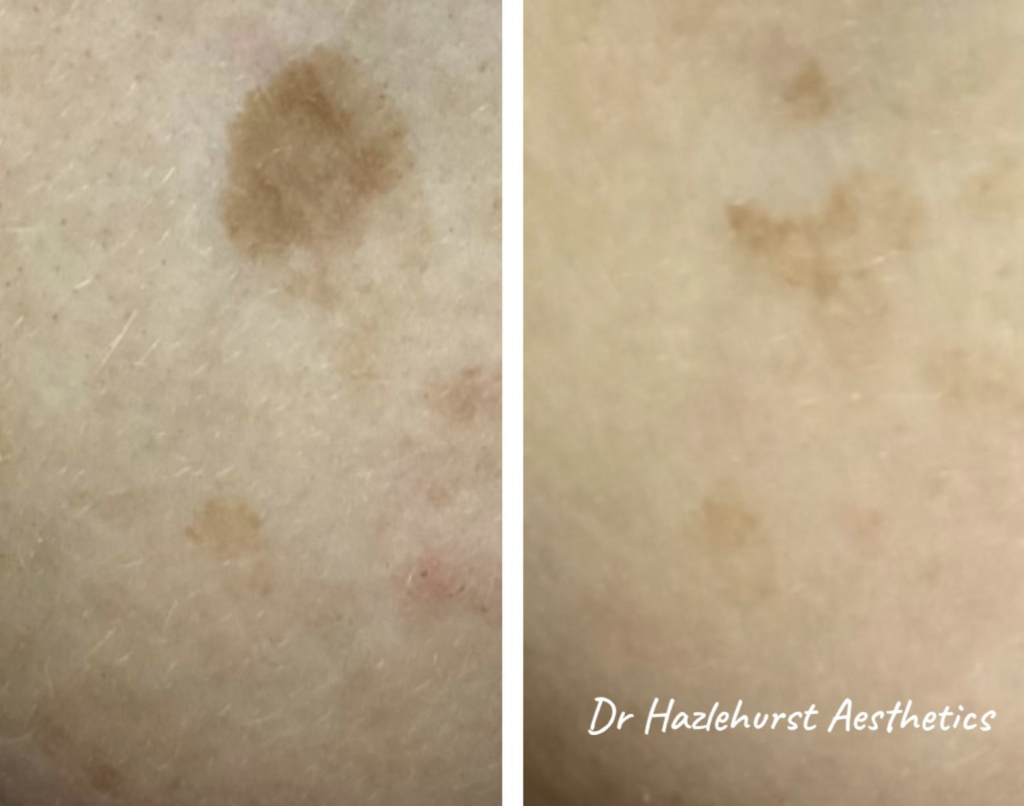
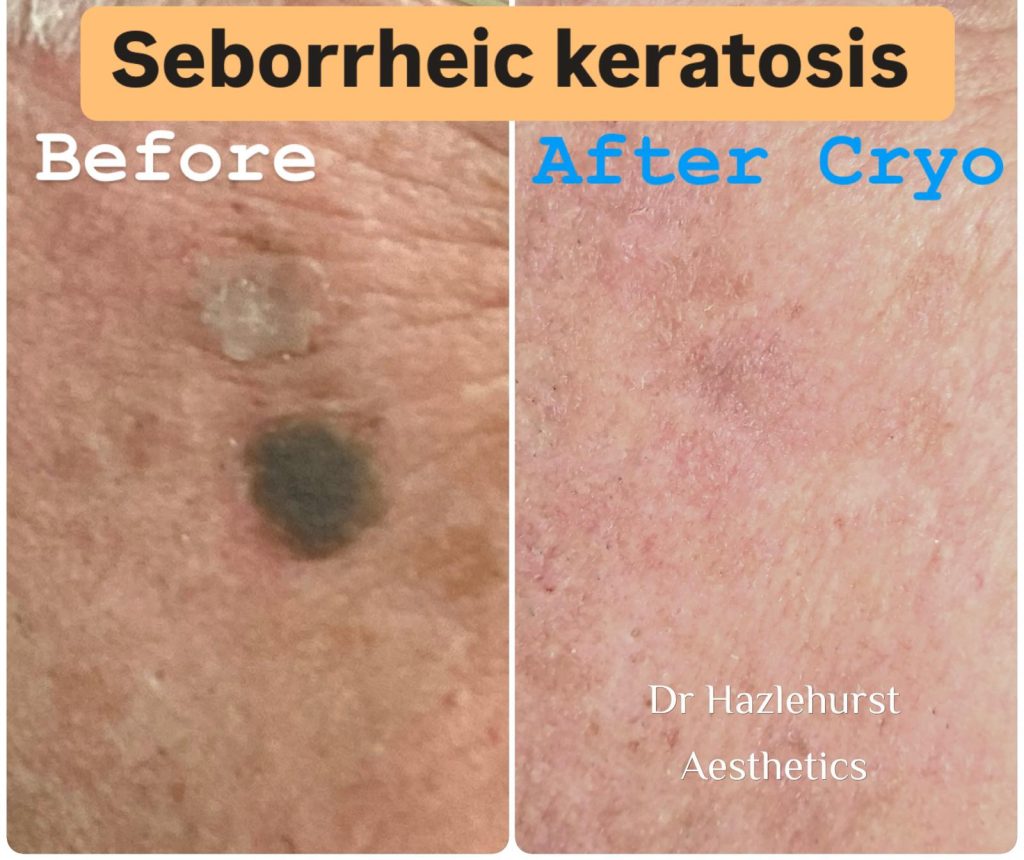
A wide variety of superficial benign (non-cancerous) lesions can be treated with cryotherapy. It is most commonly used to remove skin tags, viral warts, seborrhoeic keratosis,age spots and other benign lesions.
What does the procedure involve?
Cryotherapy can be performed in clinic without any special preparation
At Cheshire Lasers, Dr Kathryn Hazlehurst, Dr Kyra Drinnan, and Dr Will Allen perform cryotherapy. They use a gas canister that sprays the skin lesion with a gas that freezes the lesion, bringing it down to temperatures as low as -103 degrees.
Although there is slight local pain felt, cryotherapy does not normally require a local or topical anaesthetic and the procedure itself lasts a matter of seconds; the precise time depending on the thickness and size of the lesion. The frozen skin becomes white and takes one to two minutes to thaw to normal skin temperature. The process is repeated once the skin has thawed out, up to 6 cycles.
Over the succeeding few days, a scab will form, and this will take one to two weeks (and occasionally a little longer) to fall off. Usually, the treated area will eventually look normal, although scarring and discolouration is possible, depending on your skin type & healing abilities.
How many treatments do I need?
This depends on the nature of the lesion and its size. More than one treatment may be necessary; if so, we recommend a repeat treatment after 2-3 weeks.
How should I care for the treated area?
Try to keep areas dry & not knock any scabs. It is important not to pick at the scab, as this will encourage scarring.
What are the side effects of Cryotherapy?
Immediate common side effects include:
Pain
Cryotherapy is uncomfortable, it is usualy only painful if a deep freeze is necessary.
This discomfort can occur both at the time of treatment and for a variable time thereafter. Painkillers (such as paracetamol) taken for the first 24 hours may relieve that discomfort; also taking a painkiller an hour or so prior to anticipated treatment can reduce the discomfort.
Swelling and Redness
This is a normal immediate response to freezing the skin, and usually settles after two to three days. For a short while the treated area may ooze a little watery fluid. Cryotherapy close to the eyes may induce prominent puffiness of the eyelids which settles within days
Blistering
Blistering can be a consequence of cryotherapy, and blisters settle after a few days as the scab forms. Some people blister more easily than others. Occasionally, the blisters may become filled with blood; this is harmless, and only if a blister is very uncomfortable would it be necessary to puncture it, using a sterile needle in a clinic.
Rare, less common subsequent side effects include:
Infection
Infection is uncommonly, infection can occur, resulting in increased pain and the formation of pus: this may require topical antiseptic or antibiotic therapy.
Scarring
Rarely, a scar will form, especially if a deep freeze has been necessary & depending on skin type.
Pigmentation changes
The skin at and around the treatment site may lighten or darken in colour, especially in dark-skinned people. This usually improves with time, but may be permanent, depending on your skin.
Numbness
Numbness can occur if a superficial nerve is frozen. In which case numbness of the area of skin the nerve supplies can occur. Normal feeling usually returns within a matter of months. Treatment may not be effective, or the condition may recur, particularly skin warts.
How much does cryotherapy cost?
Cryotherapy at Cheshire Lasers starts from £100 for one lesion. Additional lesions treated at the same appointment cost less, and repeat treatments start from £50.
The price depends on the lesion, its size and which doctor you see. Each doctor sets their own prices and consultation arrangements:
Dr Kathryn Hazlehurst — consultation £50, taken off the price of your first treatment. She can carry out skin lesion removal during the consultation, and treats adults aged 18 and over.
Dr Kyra Drinnan — £150 for one lesion or small area, including the consultation. Follow-up treatments £50. She treats warts for children aged 5 and over.
Dr Will Allen — consultation £100, which is not deducted from the treatment price. He removes larger and more complex lesions.
Send us a photograph first
If you are not sure which treatment you need, email photographs of the area from a couple of different angles to cheshirelasers@hotmail.co.uk. It’s helpful if you let us know how long the lesion has been there and whether it’s changing in any way. We will ask our specialists to review your email and advise our reception team on who you should see. Sometimes we will ask you to book a consultation first.
Hard skin, corns and calluses mainly build up over high-pressure areas on the feet. Samantha can skillfully treat these areas using a scalpel blade to remove the hardened skin. Hence, this provides comfort and improves overall appearance.
Samantha will offer tailored advice on preventing recurrence and on using in-shoe appliances/cushioning devices to help.
Treatment for thickened, ingrown and fungal nails
Samantha can thin down thickened nails so they feel more comfortable and also improve their appearance.
She can cut back ingrown nails to make them feel more comfortable and also advise on nail surgery, which can provide a more permanent solution.
Fungal nails are often unsightly and can become uncomfortable if the nail plate becomes thickened. Samantha can thin the affected nails and advise on using antifungal preparations.
Cracked heels
Hard skin can build up around the heel area and can then start to crack. As well as being unsightly, these cracks can become very deep, causing bleeding and pain.
Samantha can skillfully treat these areas using a scalpel blade to remove the hardened skin. She can also recommend specialist creams and treatments that can improve the overall condition of the skin and prevent recurrence.
Verrucae
Verrucae are warts that can be found anywhere on the foot. They are harmless but can become painful if they develop on weight-bearing areas. Evidence suggests that most verrucae will eventually disappear on their own within 2 years.
A verruca can be made to feel more comfortable by reducing overlying hard skin, and advice can be given on the correct use of home treatments.
Alternatively, podiatrists can use stronger acid-based treatments – these are higher in strength than over-the-counter preparations and are applied to the skin at weekly intervals.
Samantha can advise you about home management of verrucae but currently does not offer regular treatments due to her high caseload. You can, however, book in to see one of our doctors for cryotherapy.
Foot ulcers and wounds
Many factors prevent foot ulcers and wounds from healing. These include pressure and friction to the area, poor circulation and general health problems.
After a thorough assessment, a podiatrist can identify these influencing factors and develop a suitable treatment regimen. Treatment may involve specialist dressings, padding, and footwear advice.